Updates

  1. Person pages list letters, writing, profiles and links as sortable tables with filters, and show each person's companies as links; Fund letters show each letter's description in its own column.
  2. Experts show a checked job title and a short description of each person; 30 more people have photographs.
  3. Every company, fund, university and publication the experts work for has a page listing the people there.
  4. Fund letters show each letter's thesis and filter by it; 225 person pages list the essays, columns and newsletter issues the person wrote.
  5. Person pages list every essay and newsletter issue a person wrote, and their own books as a table in List view.
  6. Recommends shows the five largest kinds of book and the rest under More; browse pictures load sooner.
  7. Podcasts and talks link the original episode, filter by Audio and video or Press, and list each publisher once.
  8. Pages are wider, Recommends has List and Grid, and a filter clicked again turns off.
  9. Book cards sit in a ruled grid with Open Library and Goodreads links and each book's one-line note.
  10. Funds is now Investors; each investor's styles are buttons that filter the table.
  11. Podcasts and talks on a person's page filter by year and publisher and show as a list or a grid of pictures.
  12. Quotes show only people's own words: 472 summaries written by list sites are gone.
  13. Country pages open from Browse again, and every link on the shelf lands on a page.
  14. Subject and person pages show their sections as tabs, and each book appears once on a person's page.
  15. Book cards show the quote, who said it and the source; grids show five cards to a row.
  16. On a phone, a menu holds the sections, search, Updates, Feedback and dark mode.
  17. Feedback takes a screenshot of the page with no browser prompt, opens a screenshot full size when you click it, and clears itself once sent.
  18. Book cards are centred, search names the topic each book sits in, and any text cut short shows whole on hover.
  19. Search groups its results by kind: people, companies, geographies, subjects, topics, books, funds, fund letters and papers.
  20. The Books table lists who recommended each book by name, and the browser tab names the section you are in.
  21. Feedback can take a screenshot of the page, or one you paste or choose, and opens in the corner beside Updates.
  22. Each rail button reopens its section where you left it, and Browse, Table and People show on every book and subject page.
  23. Filters grey out choices that hold nothing instead of hiding them, and Books › People filters by authors or recommenders.
  24. Feedback takes a subject line and up to three screenshots.
  25. Biographies are grouped by the person they are about: 41 new pages, from Abraham Lincoln to Lee Kuan Yew.
  26. Sport splits into 23 sports, and Religion into one topic per faith.
  27. Book lists show as cards: the cover, one recommendation quote and every recommender by name.
  28. Seventeen subjects that had two or three pages under different names now have one page each.
  29. Every page lists its Experts as authors and recommenders, with a link to them on the Experts tab.
  30. Economics, Financial history, Financial panics and Accounting are subjects of their own, with one page per financial crisis.
  31. Book, person and subject pages open inside the app, so the tabs stay in view.
  32. 996 more book covers, and photographs or logos for 227 more people and companies.
  33. Books › Browse shows every subject as cards, and the rail holds Fund letters, Papers, Experts, Books and Funds.
  34. Every topic over 150 books splits into narrower topics, each with a page of its own.

Send feedback

What is it?
Screenshots, up to 3 (optional)
or paste one with Ctrl+V

We use your email only to reply to you.

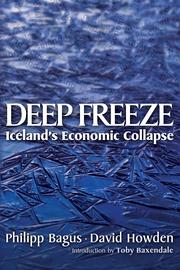
Deep Freeze

Deep Freeze

Philipp Bagus, David Howden
2011
T4 156 pages · about 2h 36m to read Open Librarygoodreads

Austrian-school reading of the credit boom and currency mismatch.

Summary

Bagus and Howden, both economists working in the Austrian tradition, wrote an analysis of the Icelandic banking collapse from that theoretical perspective.

Their account applies Austrian business cycle theory to the case. Credit expansion not backed by real saving distorts the structure of production by making long-duration investments appear profitable at artificially low interest rates. In Iceland the expansion was funded externally rather than domestically: the banks borrowed short-term in foreign wholesale markets and lent long-term, which they treat as a maturity mismatch that is the defining feature of fractional reserve banking and the source of its instability.

They add a currency dimension. The banks' liabilities were in foreign currency while a central bank can only supply its own, which meant no lender of last resort existed for the actual exposure. They argue this makes the Icelandic case a clean demonstration that maturity mismatch rather than any particular asset choice is what destroys banks.

The policy analysis attacks the deposit insurance and implicit guarantee arrangements, arguing that they permitted risk-taking depositors would otherwise have restrained, and attacks the European Economic Area framework that let Icelandic banks take deposits across Europe while home supervision remained with a regulator that could not possibly support them.

Their prescription is full reserve banking, meaning that demand deposits should be backed one for one and that maturity transformation should be confined to instruments where holders accept the risk explicitly.

The Austrian framework is heterodox and its central claims are not accepted by most economists. The specific observation, that a banking system with foreign currency liabilities has no lender of last resort, is correct and is accepted independently of the theory. Johnsen's account, also in this reference, covers the same collapse from the investigation record without the theoretical commitment.

Key takeaways 7

  1. Icelandic banks borrowed short-term in foreign wholesale markets and lent long-term, which is a maturity mismatch in a foreign currency.
  2. A central bank can only supply its own currency, so no lender of last resort existed for foreign currency liabilities.
  3. Credit expansion not backed by real saving makes long-duration investments appear profitable at artificially low rates.
  4. Deposit insurance and implicit guarantees permitted risk-taking that depositors would otherwise have restrained.
  5. European rules let Icelandic banks take deposits across the continent while supervision remained with a regulator that could not support them.
  6. Maturity mismatch rather than any particular asset choice is what makes fractional reserve banking unstable in this account.
  7. The Austrian framework applied here is heterodox, though the foreign currency lender of last resort point is accepted independently of it.

Who should read it

Readers who want the Austrian analysis of a banking collapse, and anyone interested in the foreign currency liability problem for small open economies.

Similar books 6

Chosen by shared topics, the entries that hold them, and the people who recommended both.
Michael Lewis · 2011

How Iceland, Greece, Ireland, Germany and California each spent cheap credit.

Jason Manolopoulos · 2011

Written by a hedge fund manager; strongest on the bond market's role in the build-up.

Eirikur Bergmann · 2014

Political economy of the boom, the Icesave dispute and the aftermath.

Valur Ingimundarson, Philippe Urfalino, Irma Erlingsdottir · 2016

Academic collection on blame, protest and institutional reconstruction after 2008.

Ásgeir Jónsson · 2009

By Kaupthing's former chief economist; insider view of the funding model that failed.

Leonor Freire Costa, Pedro Lains, Susana Münch Miranda · 2016

Portugal's economy over nine centuries, from imperial trade to EU convergence.

Where it sits in the reference 2

Geographies
Economics

Topics

EconomicsFinancial History