Updates

  1. Person pages list letters, writing, profiles and links as sortable tables with filters, and show each person's companies as links; Fund letters show each letter's description in its own column.
  2. Experts show a checked job title and a short description of each person; 30 more people have photographs.
  3. Every company, fund, university and publication the experts work for has a page listing the people there.
  4. Fund letters show each letter's thesis and filter by it; 225 person pages list the essays, columns and newsletter issues the person wrote.
  5. Person pages list every essay and newsletter issue a person wrote, and their own books as a table in List view.
  6. Recommends shows the five largest kinds of book and the rest under More; browse pictures load sooner.
  7. Podcasts and talks link the original episode, filter by Audio and video or Press, and list each publisher once.
  8. Pages are wider, Recommends has List and Grid, and a filter clicked again turns off.
  9. Book cards sit in a ruled grid with Open Library and Goodreads links and each book's one-line note.
  10. Funds is now Investors; each investor's styles are buttons that filter the table.
  11. Podcasts and talks on a person's page filter by year and publisher and show as a list or a grid of pictures.
  12. Quotes show only people's own words: 472 summaries written by list sites are gone.
  13. Country pages open from Browse again, and every link on the shelf lands on a page.
  14. Subject and person pages show their sections as tabs, and each book appears once on a person's page.
  15. Book cards show the quote, who said it and the source; grids show five cards to a row.
  16. On a phone, a menu holds the sections, search, Updates, Feedback and dark mode.
  17. Feedback takes a screenshot of the page with no browser prompt, opens a screenshot full size when you click it, and clears itself once sent.
  18. Book cards are centred, search names the topic each book sits in, and any text cut short shows whole on hover.
  19. Search groups its results by kind: people, companies, geographies, subjects, topics, books, funds, fund letters and papers.
  20. The Books table lists who recommended each book by name, and the browser tab names the section you are in.
  21. Feedback can take a screenshot of the page, or one you paste or choose, and opens in the corner beside Updates.
  22. Each rail button reopens its section where you left it, and Browse, Table and People show on every book and subject page.
  23. Filters grey out choices that hold nothing instead of hiding them, and Books › People filters by authors or recommenders.
  24. Feedback takes a subject line and up to three screenshots.
  25. Biographies are grouped by the person they are about: 41 new pages, from Abraham Lincoln to Lee Kuan Yew.
  26. Sport splits into 23 sports, and Religion into one topic per faith.
  27. Book lists show as cards: the cover, one recommendation quote and every recommender by name.
  28. Seventeen subjects that had two or three pages under different names now have one page each.
  29. Every page lists its Experts as authors and recommenders, with a link to them on the Experts tab.
  30. Economics, Financial history, Financial panics and Accounting are subjects of their own, with one page per financial crisis.
  31. Book, person and subject pages open inside the app, so the tabs stay in view.
  32. 996 more book covers, and photographs or logos for 227 more people and companies.
  33. Books › Browse shows every subject as cards, and the rail holds Fund letters, Papers, Experts, Books and Funds.
  34. Every topic over 150 books splits into narrower topics, each with a page of its own.

Send feedback

What is it?
Screenshots, up to 3 (optional)
or paste one with Ctrl+V

We use your email only to reply to you.

Greece's 'Odious' Debt

Greece's 'Odious' Debt

Jason Manolopoulos
2011
T4 287 pages · about 4h 47m to read Open Librarygoodreads

Written by a hedge fund manager; strongest on the bond market's role in the build-up.

Summary

Manolopoulos, a hedge fund manager of Greek origin, wrote this during the Greek crisis as an analysis of how the debt was accumulated and who was responsible.

His argument distributes blame widely. On the Greek side he covers the clientelist political system in which both major parties expanded public employment and pensions to reward supporters, the tax evasion that left revenue far below what the spending required, the statistical misreporting that concealed the deficit's true size, and the absence of any constituency for reform.

On the creditor side he argues that European banks and investors lent to Greece at spreads close to German rates for a decade, which was a judgement that a Greek default was nearly impossible, and that this judgement was their own. He argues that the convergence trade, in which investors bought peripheral bonds expecting spreads to compress, was a speculative position that happened to fund a government that should not have been able to borrow.

On the institutional side he covers the euro's construction, the acceptance of Greece into the currency on figures that were known to be doubtful, and the absence of any mechanism for handling a member state's insolvency.

His treatment of the crisis response argues that the 2010 programme protected French and German banks by replacing private claims with official ones, and that the resulting official debt was harder to restructure.

The title's reference to odious debt invokes a legal doctrine about debts incurred by illegitimate regimes against a population's interest, which does not straightforwardly apply to a democratic Greece, and Manolopoulos uses it more loosely than the doctrine permits. The book was published in 2011 and the subsequent restructuring and programmes are outside it. Its distribution of responsibility across borrowers, lenders and institutions is its most useful feature.

Key takeaways 7

  1. Both major Greek parties expanded public employment and pensions to reward supporters, which built the spending that revenue could not fund.
  2. Tax evasion left revenue far below what the spending required, which no government had an incentive to address.
  3. European banks and investors lent to Greece at spreads close to German rates for a decade, which was their own credit judgement.
  4. The convergence trade in peripheral bonds was a speculative position that happened to fund a government that should not have been able to borrow.
  5. Greece was admitted to the euro on figures known to be doubtful, and no mechanism existed for handling a member state's insolvency.
  6. The 2010 programme replaced private claims with official ones, which protected the lenders and made restructuring harder.
  7. Responsibility for a debt crisis is distributed across borrowers, lenders and the institutions that permitted both.

Who should read it

Readers who want the Greek crisis analysed with responsibility distributed across borrowers, creditors and institutions rather than assigned to one side.

Similar books 6

Chosen by shared topics, the entries that hold them, and the people who recommended both.

Yanis Varoufakis · 2016

The euro's design flaws traced back through the postwar monetary system.

Costas Meghir, Christopher A. Pissarides, Dimitri Vayanos, Nikolaos Vettas · 2017

How the Greek economy actually works: its product markets, courts and firms.

Yannis Palaiologos · 2014

Reporting on how Greek institutions failed, sector by sector.
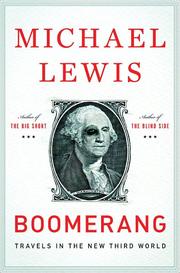
Michael Lewis · 2011

How Iceland, Greece, Ireland, Germany and California each spent cheap credit.

Peadar Kirby · 2010

Structural reading of why the growth model was fragile from the start.

Martin Sandbu · 2015

Argues the currency was not the problem, the crisis management was; the best contrarian case.

Where it sits in the reference 2

Geographies
Economics

Topics

EconomicsFinancial HistoryPolitics and GovernmentEurope, Britain and Russia