Updates

  1. Person pages list letters, writing, profiles and links as sortable tables with filters, and show each person's companies as links; Fund letters show each letter's description in its own column.
  2. Experts show a checked job title and a short description of each person; 30 more people have photographs.
  3. Every company, fund, university and publication the experts work for has a page listing the people there.
  4. Fund letters show each letter's thesis and filter by it; 225 person pages list the essays, columns and newsletter issues the person wrote.
  5. Person pages list every essay and newsletter issue a person wrote, and their own books as a table in List view.
  6. Recommends shows the five largest kinds of book and the rest under More; browse pictures load sooner.
  7. Podcasts and talks link the original episode, filter by Audio and video or Press, and list each publisher once.
  8. Pages are wider, Recommends has List and Grid, and a filter clicked again turns off.
  9. Book cards sit in a ruled grid with Open Library and Goodreads links and each book's one-line note.
  10. Funds is now Investors; each investor's styles are buttons that filter the table.
  11. Podcasts and talks on a person's page filter by year and publisher and show as a list or a grid of pictures.
  12. Quotes show only people's own words: 472 summaries written by list sites are gone.
  13. Country pages open from Browse again, and every link on the shelf lands on a page.
  14. Subject and person pages show their sections as tabs, and each book appears once on a person's page.
  15. Book cards show the quote, who said it and the source; grids show five cards to a row.
  16. On a phone, a menu holds the sections, search, Updates, Feedback and dark mode.
  17. Feedback takes a screenshot of the page with no browser prompt, opens a screenshot full size when you click it, and clears itself once sent.
  18. Book cards are centred, search names the topic each book sits in, and any text cut short shows whole on hover.
  19. Search groups its results by kind: people, companies, geographies, subjects, topics, books, funds, fund letters and papers.
  20. The Books table lists who recommended each book by name, and the browser tab names the section you are in.
  21. Feedback can take a screenshot of the page, or one you paste or choose, and opens in the corner beside Updates.
  22. Each rail button reopens its section where you left it, and Browse, Table and People show on every book and subject page.
  23. Filters grey out choices that hold nothing instead of hiding them, and Books › People filters by authors or recommenders.
  24. Feedback takes a subject line and up to three screenshots.
  25. Biographies are grouped by the person they are about: 41 new pages, from Abraham Lincoln to Lee Kuan Yew.
  26. Sport splits into 23 sports, and Religion into one topic per faith.
  27. Book lists show as cards: the cover, one recommendation quote and every recommender by name.
  28. Seventeen subjects that had two or three pages under different names now have one page each.
  29. Every page lists its Experts as authors and recommenders, with a link to them on the Experts tab.
  30. Economics, Financial history, Financial panics and Accounting are subjects of their own, with one page per financial crisis.
  31. Book, person and subject pages open inside the app, so the tabs stay in view.
  32. 996 more book covers, and photographs or logos for 227 more people and companies.
  33. Books › Browse shows every subject as cards, and the rail holds Fund letters, Papers, Experts, Books and Funds.
  34. Every topic over 150 books splits into narrower topics, each with a page of its own.

Send feedback

What is it?
Screenshots, up to 3 (optional)
or paste one with Ctrl+V

We use your email only to reply to you.

And the Weak Suffer What They Must?

And the Weak Suffer What They Must?

Yanis Varoufakis
2016
T2 337 pages · about 5h 37m to read Open Librarygoodreads

The structural case against the euro's design, from the Greek side of it.

Summary

Varoufakis wrote this as the analytical companion to his account of the 2015 Greek negotiations, tracing the eurozone's design problems back through the postwar international monetary system.

The historical argument starts with Bretton Woods, which he presents as a system that worked because the United States ran surpluses and recycled them, and which broke in 1971 when that stopped. He argues that the subsequent arrangement, in which the United States ran deficits and absorbed the world's surpluses while foreign capital funded them, provided a recycling mechanism of a different kind, and that Europe's response was to attempt fixed exchange rates without any recycling mechanism at all.

His central claim about the euro is structural. A monetary union with a single interest rate, no fiscal transfers, no banking union at inception and no mechanism for recycling surpluses from creditor to debtor states must produce divergence. Capital flows from surplus countries into deficit countries during the boom, inflating them, then reverses in the bust, leaving debts that cannot be devalued away and adjustment that must fall entirely on wages and employment. He argues that this was known at the design stage and accepted for political reasons, and that the crisis response, which extended loans conditional on austerity, made the arithmetic worse rather than better.

His proposed remedies include a European investment programme funded by the European Investment Bank, a banking union with genuine risk-sharing, and debt restructuring.

Varoufakis writes polemically and treats his opponents' positions unsympathetically. The structural analysis of an incomplete monetary union is mainstream and predates him, appearing in the optimal currency area literature and in warnings from economists at the time of the Maastricht Treaty. What is distinctive is the framing around surplus recycling, which is his own and which not all economists accept. Since publication the eurozone has added elements of banking union and, in 2020, common fiscal issuance, which addresses part of his critique.

Key takeaways 7

  1. A monetary union without a mechanism for recycling surpluses from creditor to debtor regions will diverge rather than converge.
  2. Bretton Woods worked while the surplus country recycled its surpluses, and it broke when the United States moved into deficit.
  3. Capital flowing from surplus to deficit eurozone members during the boom created the debts that could not be adjusted in the bust.
  4. Without devaluation, adjustment in a monetary union falls entirely on wages and employment, which is politically unsustainable.
  5. Lending to an insolvent state conditional on austerity increases the debt ratio rather than reducing it.
  6. The euro's design flaws were identified before its creation and accepted for political rather than economic reasons.
  7. Banking union without shared deposit insurance leaves each state responsible for its own banks, which links sovereign and bank risk.

Who should read it

Investors and operators exposed to European sovereign and banking risk who want the structural critique of the monetary union stated in full.

Similar books 6

Chosen by shared topics, the entries that hold them, and the people who recommended both.

Costas Meghir, Christopher A. Pissarides, Dimitri Vayanos, Nikolaos Vettas · 2017

How the Greek economy actually works: its product markets, courts and firms.

Jason Manolopoulos · 2011

Written by a hedge fund manager; strongest on the bond market's role in the build-up.

Yannis Palaiologos · 2014

Reporting on how Greek institutions failed, sector by sector.

Markus K. Brunnermeier, Harold James, Jean-Pierre Landau · 2016

The euro crisis as a clash between German and French economic traditions.
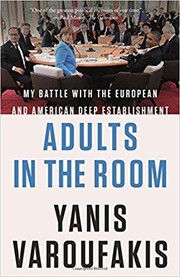
Yanis Varoufakis · 2017

Greece's 2015 debt talks with its creditors, by its finance minister at the time.
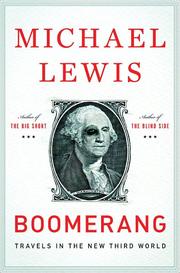
Michael Lewis · 2011

How Iceland, Greece, Ireland, Germany and California each spent cheap credit.

Where it sits in the reference 3

Geographies
Secular themes
Economics

Topics

EconomicsPolitics and GovernmentEurope, Britain and Russia