
Wall Street Under Oath
The investigator's own account of the hearings that produced the SEC
Summary
Pecora served as chief counsel to the Senate Committee on Banking and Currency from January 1933, and his questioning of bankers over the following fifteen months produced the record that supported the Securities Act of 1933, the Glass-Steagall Act and the Securities Exchange Act of 1934. He wrote this account in 1939, after serving as a commissioner of the Securities and Exchange Commission.
The book reports what the hearings established. National City Bank sold Peruvian government bonds to retail customers while its own officers had internal reports describing Peru as a bad credit risk. The same bank moved bad loans off its books by selling them to an affiliate it controlled. Charles Mitchell, its chairman, avoided income tax by selling stock to his wife at a loss and repurchasing it. J P Morgan and Company maintained preferred lists offering favoured public officials, politicians and business figures the chance to buy new issues below the price at which they would trade. Several Morgan partners had paid no income tax in 1931 and 1932. Investment trusts sold to the public were used to support the sponsoring firm's own underwritings.
Pecora's argument from this evidence is that the securities business had no meaningful separation between the interests of the seller and the buyer, that the affiliate structure allowed commercial banks to dump risk on depositors and customers, and that the remedy was compulsory disclosure, separation of commercial from investment banking, and a federal regulator.
The book is a participant's account written to defend the New Deal securities legislation, and it reads as advocacy. Historians have since argued that the abuses were less universal than Pecora presented and that the affiliates performed better than the hearings suggested. The primary record of the hearings remains the stronger source, but this is the accessible version and the description of the specific mechanisms is accurate.
Key takeaways 7
- National City Bank sold foreign government bonds to retail customers while holding internal assessments that the credits were unsound.
- Bank securities affiliates allowed commercial banks to move bad loans off the balance sheet by selling them to the public.
- J P Morgan and Company allocated new issues below market price to a list of politically useful recipients.
- Several leading bankers paid no federal income tax during the depression years through arranged losses.
- Investment trusts marketed to the public were used to absorb securities the sponsoring house could not sell.
- Compulsory disclosure of material facts, rather than merit review of securities, became the organising principle of the resulting legislation.
- Public hearings with documentary evidence changed financial regulation where years of argument had not.
Who should read it
Anyone working on financial regulation or conflicts of interest who wants the primary case that produced American securities law.
Who recommended it 1 · 1 direct
“It's a passage from one of my favorite books, "Wall Street Under Oath.”
Similar books 6
Chosen by shared topics, the entries that hold them, and the people who recommended both.

The 1929 Wall Street crash: the greed and folly behind America's greatest collapse.
Recommended by: Bill Gates, Howard Marks

The Austrian account of 1929 and the policy response that followed
“It's a timeless and timely classic.” — Christopher Bloomstran
Source: Semper Augustus 2020 Letter to Clients, 'To Read or Not to Read', p. 57
Recommended by: Christopher Bloomstran, Mohnish Pabrai

Whether a nation's banks are stable or crisis-prone is decided by its politics.
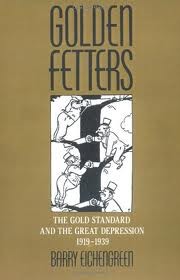
How the gold standard spread the Depression, and why leaving it early meant recovery.
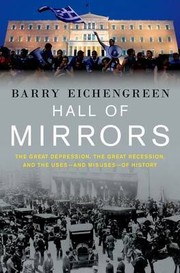
How 1930s lessons guided policy in 2008, averting a depression but adding errors.
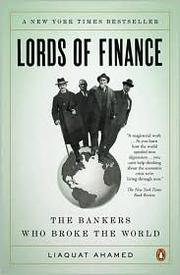
How four central bankers and the gold standard turned a slump into the Depression.
“I'm going to use "classic" again but rightfully so.” — Christopher Bloomstran
Source: Semper Augustus 2020 Letter to Clients, 'To Read or Not to Read', p. 57
Recommended by: Christopher Bloomstran, Mohnish Pabrai
Where it sits in the reference 2
Topics