
Updates

  1. Person pages list letters, writing, profiles and links as sortable tables with filters, and show each person's companies as links; Fund letters show each letter's description in its own column.
  2. Experts show a checked job title and a short description of each person; 30 more people have photographs.
  3. Every company, fund, university and publication the experts work for has a page listing the people there.
  4. Fund letters show each letter's thesis and filter by it; 225 person pages list the essays, columns and newsletter issues the person wrote.
  5. Person pages list every essay and newsletter issue a person wrote, and their own books as a table in List view.
  6. Recommends shows the five largest kinds of book and the rest under More; browse pictures load sooner.
  7. Podcasts and talks link the original episode, filter by Audio and video or Press, and list each publisher once.
  8. Pages are wider, Recommends has List and Grid, and a filter clicked again turns off.
  9. Book cards sit in a ruled grid with Open Library and Goodreads links and each book's one-line note.
  10. Funds is now Investors; each investor's styles are buttons that filter the table.
  11. Podcasts and talks on a person's page filter by year and publisher and show as a list or a grid of pictures.
  12. Quotes show only people's own words: 472 summaries written by list sites are gone.
  13. Country pages open from Browse again, and every link on the shelf lands on a page.
  14. Subject and person pages show their sections as tabs, and each book appears once on a person's page.
  15. Book cards show the quote, who said it and the source; grids show five cards to a row.
  16. On a phone, a menu holds the sections, search, Updates, Feedback and dark mode.
  17. Feedback takes a screenshot of the page with no browser prompt, opens a screenshot full size when you click it, and clears itself once sent.
  18. Book cards are centred, search names the topic each book sits in, and any text cut short shows whole on hover.
  19. Search groups its results by kind: people, companies, geographies, subjects, topics, books, funds, fund letters and papers.
  20. The Books table lists who recommended each book by name, and the browser tab names the section you are in.
  21. Feedback can take a screenshot of the page, or one you paste or choose, and opens in the corner beside Updates.
  22. Each rail button reopens its section where you left it, and Browse, Table and People show on every book and subject page.
  23. Filters grey out choices that hold nothing instead of hiding them, and Books › People filters by authors or recommenders.
  24. Feedback takes a subject line and up to three screenshots.
  25. Biographies are grouped by the person they are about: 41 new pages, from Abraham Lincoln to Lee Kuan Yew.
  26. Sport splits into 23 sports, and Religion into one topic per faith.
  27. Book lists show as cards: the cover, one recommendation quote and every recommender by name.
  28. Seventeen subjects that had two or three pages under different names now have one page each.
  29. Every page lists its Experts as authors and recommenders, with a link to them on the Experts tab.
  30. Economics, Financial history, Financial panics and Accounting are subjects of their own, with one page per financial crisis.
  31. Book, person and subject pages open inside the app, so the tabs stay in view.
  32. 996 more book covers, and photographs or logos for 227 more people and companies.
  33. Books › Browse shows every subject as cards, and the rail holds Fund letters, Papers, Experts, Books and Funds.
  34. Every topic over 150 books splits into narrower topics, each with a page of its own.

Send feedback

What is it?
Screenshots, up to 3 (optional)
or paste one with Ctrl+V

We use your email only to reply to you.

America's Great Depression

America's Great Depression

Murray N. Rothbard
1963
T3 361 pages · about 6h 1m to read Open Librarygoodreads

The Austrian account of 1929 and the policy response that followed

Summary

Rothbard applies Austrian business cycle theory to the American Depression. His argument has two parts. First, the boom of the 1920s was created by credit expansion, specifically by Federal Reserve open market operations and by the inflation of bank reserves undertaken partly to help Britain return to and hold the gold standard. That credit expansion, in the Mises-Hayek framework he uses, distorted the structure of production by lowering interest rates below the natural rate and directing investment into capital goods that consumer demand would not support.

Second, and more distinctively, he argues that the Depression was made long and deep by intervention rather than by laissez-faire. He documents Herbert Hoover's actions in detail, including the pressure on employers to maintain nominal wages, public works spending, the Reconstruction Finance Corporation, agricultural support and the Smoot-Hawley tariff, and argues that Hoover was an interventionist whose programme Roosevelt extended. The claim that the liquidation was prevented rather than allowed is the core of the book and it directly contradicts the conventional account of Hoover as a do-nothing president.

The book is polemical and openly ideological, published by the Mises Institute, and it makes no attempt at balance. Its treatment of the monetary data has been criticised, particularly its definition of the money supply and the claim that the 1920s were inflationary when consumer prices were roughly flat. Mainstream monetary historians reject the central thesis, and the empirical support for Austrian cycle theory remains weak. It is worth reading as the strongest statement of the Austrian position and for the Hoover documentation, which is genuinely useful and is now accepted by many historians who reject Rothbard's theory.

Key takeaways 7

  1. The 1920s boom was created by Federal Reserve credit expansion, and stable consumer prices concealed the distortion because productivity growth should have produced falling prices.
  2. Credit expansion misdirects investment into longer production processes that consumer time preference will not sustain, which makes the subsequent bust a necessary correction rather than an avoidable failure.
  3. Herbert Hoover was an active interventionist whose programme included wage maintenance, public works and agricultural support, and Roosevelt continued rather than reversed it.
  4. Pressure on employers to hold nominal wages while prices fell raised real wages and caused the persistent unemployment of the 1930s.
  5. Government intervention prevented the liquidation of malinvestment, which is what turned a recession into a depression lasting more than a decade.
  6. The Smoot-Hawley tariff deepened the contraction by destroying export markets and provoking retaliation.
  7. Central banking itself, rather than any particular policy error, is the institution that generates the credit cycle.

Who should read it

Investors who want the Austrian account of the Depression stated at full strength, read with the knowledge that its monetary claims are rejected by most historians.

Who recommended it 2 · 2 direct

“It's a timeless and timely classic.”

Similar books 6

Chosen by shared topics, the entries that hold them, and the people who recommended both.

Barry Eichengreen · 2015

How 1930s lessons guided policy in 2008, averting a depression but adding errors.

Ben S. Bernanke · 2000

Papers on the Depression's causes, from the gold standard to failing banks.

Charles P. Kindleberger · 1973

The Depression ran deep because no country would act as the world's stabiliser.

Barry Eichengreen · 1992

How the gold standard spread the Depression, and why leaving it early meant recovery.
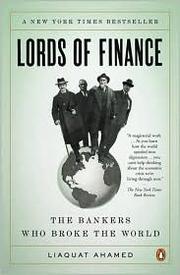
Liaquat Ahamed · 2009

How four central bankers and the gold standard turned a slump into the Depression.

“I'm going to use "classic" again but rightfully so.” — Christopher Bloomstran

Source: Semper Augustus 2020 Letter to Clients, 'To Read or Not to Read', p. 57

Recommended by: Christopher Bloomstran, Mohnish Pabrai
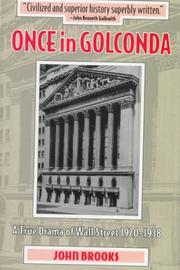
John Brooks · 1969

Wall Street from 1920 to 1938: the boom, the crash, the Depression and reform.

Where it sits in the reference 2

Financial panics
Economics

Topics

Financial HistoryEconomicsGeneral HistoryFinancial History