
Once in Golconda
Wall Street from 1920 to 1938, told through its people.
Summary
Brooks writes the history of Wall Street from 1920 to 1938, covering the boom, the 1929 crash, the depression years and the reform legislation that followed. The title refers to a legendary Indian city whose inhabitants all became rich. The central figure is Richard Whitney, president of the New York Stock Exchange, who was celebrated for his conspicuous buying on the exchange floor during the 1929 crash and who was convicted of embezzlement in 1938 after using client and exchange funds to cover losses in his own failing business.
Brooks uses Whitney to structure the wider account. The exchange in this period was a private club that regulated itself, resisted disclosure requirements and treated outside supervision as an insult, and Whitney led that resistance personally. His conviction destroyed the argument that self-regulation was sufficient and made the reform legislation politically unstoppable.
The wider material covers the mechanics of the boom, including pools that manipulated individual stocks, the margin arrangements that amplified both the rise and the collapse, the bankers' attempt to support the market in October 1929, and the Pecora hearings that documented what the major banks had been selling to the public.
Brooks was a New Yorker writer and the prose carries the book. It is narrative history without economic analysis, so a reader wanting to understand the depression's causes should look elsewhere. It is the best available account of how the financial establishment of the period understood itself and of what its self-regulation actually consisted of.
Key takeaways 8
- The New York Stock Exchange in this period was a private club that regulated itself and treated outside supervision as an insult.
- Richard Whitney led the resistance to disclosure and regulation, and was convicted of embezzling client and exchange funds in 1938.
- His conviction destroyed the argument for self-regulation and made the reform legislation politically unstoppable.
- Pools that manipulated individual stocks operated openly and were not considered improper by the participants.
- Margin arrangements amplified both the rise and the collapse, and the mechanism was understood by participants at the time.
- The bankers' attempt to support the market in October 1929 succeeded briefly and demonstrated that private resources were insufficient.
- The Pecora hearings documented what major banks had been selling to the public, which produced the securities legislation that followed.
- The establishment of the period believed its own conduct was proper, which is why the disclosures were as damaging as they were.
Who should read it
Readers who want the history of Wall Street's self-regulating period and how its failure produced the modern securities regime.
About John Brooks
Staff writer at The New Yorker who reported on Wall Street and corporate life for three decades; died in 1993.
Business Adventures collects twelve reported case studies - the Edsel launch, the 1962 market break, the Texas Gulf Sulphur insider-trading case - that show how judgment failed inside real firms rather than in theory. Once in Golconda and The Go-Go Years narrate the 1920s boom and the 1960s conglomerate mania from the participants' side, at the level of individual decisions.
Who recommended it 2 · 1 direct
Similar books 6
Chosen by shared topics, the entries that hold them, and the people who recommended both.
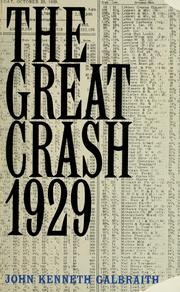
The late-1920s boom in margin loans and investment trusts, and the 1929 crash.
Recommended by: Mohnish Pabrai

The Austrian account of 1929 and the policy response that followed
“It's a timeless and timely classic.” — Christopher Bloomstran
Source: Semper Augustus 2020 Letter to Clients, 'To Read or Not to Read', p. 57
Recommended by: Christopher Bloomstran, Mohnish Pabrai
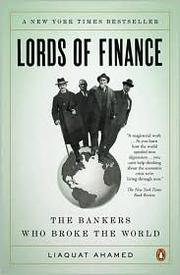
How four central bankers and the gold standard turned a slump into the Depression.
“I'm going to use "classic" again but rightfully so.” — Christopher Bloomstran
Source: Semper Augustus 2020 Letter to Clients, 'To Read or Not to Read', p. 57
Recommended by: Christopher Bloomstran, Mohnish Pabrai

A reference history of US securities markets from the 1929 crash to 1933.
Recommended by: Mohnish Pabrai

Wall Street in the 1960s: performance funds, conglomerates and the paperwork crisis.
“Both books are outstanding histories of Rockefeller and Standard Oil and then of the booming 1960s.” — Christopher Bloomstran
Source: Semper Augustus 2022 Letter to Clients, 'Books and Stuff', p. 75
Recommended by: Christopher Bloomstran, Mohnish Pabrai

An Ohio lawyer's diary of the Depression years as he lived through them.
Recommended by: Mohnish Pabrai, Morgan Housel and 1 other
Where it sits in the reference 3
Topics