
The Go-Go Years
The 1960s conglomerate mania and its unwinding.
Summary
Brooks covers Wall Street in the 1960s, from the 1962 market break through the conglomerate boom, the performance fund era and the back office paperwork crisis that ended the decade, published in 1973.
The central subject is the performance cult. Brooks documents the rise of fund managers celebrated for short-term returns, including Gerald Tsai at Fidelity and then at the Manhattan Fund, and the shift in what investors demanded from funds. He shows how the pressure to produce quarterly results changed portfolio behaviour, concentrated holdings in a small number of favoured growth stocks, and produced the valuations that collapsed afterwards.
The conglomerate material covers how companies including Litton, Ling-Temco-Vought and Gulf and Western used their own high multiples to acquire lower-multiple businesses, which produced apparent earnings growth arithmetically without any operational improvement, and which stopped working once the market recognised the mechanism. The back office crisis is the most unusual section. Trading volume exceeded the capacity of the paper-based settlement systems, firms lost track of securities, failures to deliver accumulated to enormous levels, and a substantial number of member firms failed, which produced the move to centralised clearing.
Brooks also covers the 1970 Penn Central failure and the near-collapse of the commercial paper market. The book is narrative history by a New Yorker writer and contains no analysis of the underlying economics. The institutional detail is entirely of its period. The mechanism by which a high multiple acquiring a low multiple manufactures earnings growth recurs in every subsequent cycle.
Key takeaways 8
- Demand for short-term fund performance changed portfolio behaviour, concentrating holdings in a small number of favoured growth stocks.
- Celebrated fund managers were made and destroyed within a few years, and the records that produced the celebrity did not persist.
- A company with a high multiple acquiring companies with lower multiples manufactures earnings growth arithmetically without any operational improvement.
- The conglomerate mechanism stopped working as soon as the market recognised what was producing the earnings growth.
- Trading volume exceeded the capacity of paper-based settlement systems, which caused firms to lose track of securities entirely.
- A substantial number of member firms failed in the back office crisis, which produced the move to centralised clearing.
- Operational capacity rather than market direction destroyed firms in this episode, which is a risk that receives almost no attention.
- The Penn Central failure nearly closed the commercial paper market, which demonstrated how a single corporate failure transmits to funding markets.
Who should read it
Investors who want the 1960s cycle including the conglomerate multiple mechanism and an operational crisis that destroyed firms without any market decline.
About John Brooks
Staff writer at The New Yorker who reported on Wall Street and corporate life for three decades; died in 1993.
Business Adventures collects twelve reported case studies - the Edsel launch, the 1962 market break, the Texas Gulf Sulphur insider-trading case - that show how judgment failed inside real firms rather than in theory. Once in Golconda and The Go-Go Years narrate the 1920s boom and the 1960s conglomerate mania from the participants' side, at the level of individual decisions.
Who recommended it 2 · 2 direct
“Both books are outstanding histories of Rockefeller and Standard Oil and then of the booming 1960s.”
Similar books 6
Chosen by shared topics, the entries that hold them, and the people who recommended both.

Wall Street from 1920 to 1938: the boom, the crash, the Depression and reform.
Recommended by: Mohnish Pabrai, Brendan Moynihan
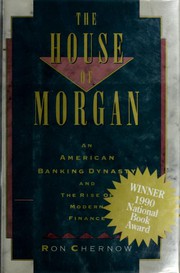
The Morgan banks from 1830s London to J.P. Morgan and Morgan Stanley in the 1980s.
Recommended by: Mohnish Pabrai, Paul Graham

Two centuries of a Jewish banking family from Hamburg to London and New York.
Recommended by: Mohnish Pabrai

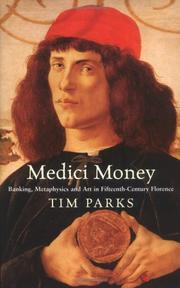

The four-volume history of the world's oldest continuous financial centre.
Where it sits in the reference 3
Topics