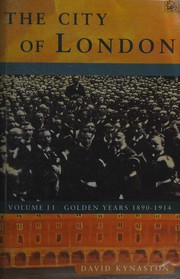
The City of London
The four-volume history of the world's oldest continuous financial centre.
Summary
Kynaston wrote a four-volume history of the City of London covering roughly 1815 to 2000, based on extensive archival work in the records of banks, brokers, exchanges and firms. The volumes are A World of Its Own, Golden Years, Illusions of Gold and A Club No More.
The method is narrative and social rather than analytical. Kynaston reconstructs how the City actually worked in each period: who the participants were, how business was transacted, what the physical spaces and daily routines were, how firms recruited and how relationships governed transactions. He uses diaries, letters and contemporary journalism heavily, so the books convey what participants thought was happening at the time rather than what historians later concluded.
The institutional history covers the merchant banks and their acceptance business, the discount market, the Stock Exchange's jobber and broker separation, the insurance market at Lloyd's, the Bank of England's evolving role and its informal governance of the City through what was called the Governor's eyebrows, the effect of two wars and of exchange controls, the eurodollar and eurobond markets that revived the City in the 1960s and 1970s, and Big Bang in 1986, which ended fixed commissions and the separation of capacity and led to the acquisition of most British firms by foreign banks.
The recurring theme is the transition from a closed community governed by reputation and informal sanction to a competitive international market governed by regulation and contract.
The scale is the difficulty: four volumes and several thousand pages. Kynaston does not offer economic analysis, so readers wanting explanations of why the City succeeded or failed at particular moments must supply their own. It is a reference and a source rather than a book to read through.
Key takeaways 7
- The City operated for most of its history as a closed community governed by reputation and informal sanction rather than by regulation.
- The Bank of England exercised authority over the City through informal signals rather than through legal powers.
- Separation of brokers and jobbers on the Stock Exchange structured British equity trading until 1986 and had no equivalent elsewhere.
- The eurodollar and eurobond markets revived the City in the 1960s by locating dollar business outside American regulation.
- Big Bang ended fixed commissions and the separation of capacity, which led directly to foreign acquisition of nearly every British firm.
- Merchant banking rested on the acceptance business, meaning guaranteeing trade bills, rather than on advice or investment.
- Contemporaneous diaries and letters show participants misunderstanding events that later appear obvious in outline.
Who should read it
Readers researching British financial history who need a detailed archival source, used as a reference rather than read end to end.
About David Kynaston
British financial historian; wrote the four-volume history of the City of London and the official history of the Bank of England.
Till Time's Last Sand records three centuries of Bank of England decisions from the institution's own archives, including the reasoning behind rate moves and rescues that later monetary policy was built on. The City of London documents how London's markets, firms and clearing arrangements actually operated between 1815 and 2000, at a level of detail no other account reaches.
Similar books 6
Chosen by shared topics, the entries that hold them, and the people who recommended both.
How Big Bang handed the City's investment banks to foreign owners.
Authorised modern history of HSBC, the territory's dominant financial institution.
The Bank of England from 1694, by its best narrative historian.
Wall Street in the 1960s: performance funds, conglomerates and the paperwork crisis.
“Both books are outstanding histories of Rockefeller and Standard Oil and then of the booming 1960s.” — Christopher Bloomstran
Source: Semper Augustus 2022 Letter to Clients, 'Books and Stuff', p. 75
Recommended by: Christopher Bloomstran, Mohnish Pabrai
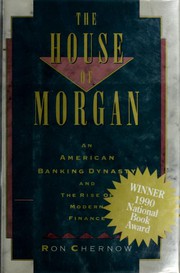
The Morgan banks from 1830s London to J.P. Morgan and Morgan Stanley in the 1980s.
Recommended by: Mohnish Pabrai, Paul Graham
Where it sits in the reference 3
Topics