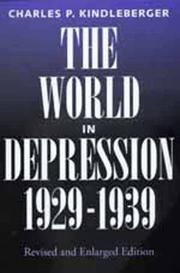
The World in Depression, 1929-1939
Classic account with Creditanstalt as the hinge of the crisis.
Summary
Kindleberger wrote an international economic history of the Depression, arguing that its severity and length are explained by the absence of a country willing and able to perform the stabilising functions the world economy required.
His hypothesis, which became known as hegemonic stability theory, identifies five functions: maintaining an open market for distress goods, providing counter-cyclical long-term lending, policing a stable system of exchange rates, coordinating macroeconomic policies, and acting as lender of last resort in a financial crisis. Britain had performed these before 1914 and could no longer afford to. The United States could afford to and would not. The result was a system in which no one performed them, and each country pursued policies that were rational individually and destructive collectively, including tariffs, competitive devaluation and the withdrawal of credit.
The historical narrative covers the international transmission mechanism in detail: the Austrian Creditanstalt failure in 1931 and its spread through central Europe, the sterling devaluation, the collapse of the international payments system, and the World Economic Conference of 1933 which failed because no participant would subordinate domestic objectives.
The book is the standard international account of the Depression and complements the monetary and domestic explanations rather than replacing them. Hegemonic stability theory has been substantially criticised in international relations, particularly the claim that a single dominant power is necessary rather than merely sufficient for stability, and the account of American unwillingness has been refined by later work on the constraints policymakers faced.
Key takeaways 7
- The Depression was as severe and as long as it was because no country performed the stabilising functions the international economy required.
- Britain could no longer afford to perform those functions and the United States was unwilling to, which left the system with no stabiliser.
- An open market for distress goods, counter-cyclical lending and a lender of last resort are the functions that prevent a national downturn becoming an international one.
- The Creditanstalt failure in 1931 transmitted the crisis through central Europe because no international mechanism existed to contain a bank failure across borders.
- Tariffs, competitive devaluation and credit withdrawal were individually rational national responses that collectively deepened the contraction.
- International cooperation failed because every participant refused to subordinate domestic objectives, which is what the 1933 World Economic Conference demonstrated.
- Stabilising the world economy requires a country both able and willing to bear costs that do not benefit it directly.
Who should read it
Macro investors and policy readers who want the international transmission account of the Depression and the origins of hegemonic stability theory.
About Charles P. Kindleberger
Professor of economics at MIT and a State Department economist who helped draft the Marshall Plan; died in 2003.
Manias, Panics and Crashes turns Hyman Minsky's financial instability hypothesis into a repeatable sequence - displacement, credit expansion, euphoria, distress, revulsion - and tests it against four centuries of episodes, which is why later crisis writing keeps returning to it. The World in Depression advances the argument that the 1930s slump deepened because no state would act as lender of last resort.
Similar books 6
Chosen by shared topics, the entries that hold them, and the people who recommended both.

The Austrian account of 1929 and the policy response that followed
“It's a timeless and timely classic.” — Christopher Bloomstran
Source: Semper Augustus 2020 Letter to Clients, 'To Read or Not to Read', p. 57
Recommended by: Christopher Bloomstran, Mohnish Pabrai

Papers on the Depression's causes, from the gold standard to failing banks.

How the gold standard spread the Depression, and why leaving it early meant recovery.

How 1930s lessons guided policy in 2008, averting a depression but adding errors.
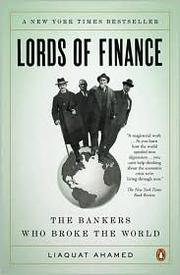
How four central bankers and the gold standard turned a slump into the Depression.
“I'm going to use "classic" again but rightfully so.” — Christopher Bloomstran
Source: Semper Augustus 2020 Letter to Clients, 'To Read or Not to Read', p. 57
Recommended by: Christopher Bloomstran, Mohnish Pabrai

Financial crises follow a repeated sequence of boom, mania, panic and crash.
Recommended by: Howard Marks, Li Lu
Where it sits in the reference 4
Topics