
The Great Convergence
The best analytic account of why the second unbundling differs from the first.
Summary
Baldwin, a trade economist, argues that globalisation has proceeded in two distinct phases separated by a change in what could be moved cheaply, and that conflating them produces confused policy.
His framework rests on three separation costs. Before the nineteenth century, moving goods was expensive, so production and consumption occurred in the same place. Steam power and then containerisation reduced the cost of moving goods, which unbundled production from consumption and produced the first phase of globalisation, in which countries traded finished goods and industrialised as complete national systems.
The second unbundling came from the information and communications technology revolution around 1990, which reduced the cost of moving ideas. This allowed firms to relocate individual stages of production offshore while retaining control of the technology and coordination, which produced global value chains. His central point is that this phase moves know-how across borders alongside capital, which is why a small number of developing countries industrialised extremely fast while others did not.
He argues the third separation cost, moving people, remains high, and that its reduction through telepresence and remote work would produce a further phase.
The policy implication is that industrial policy designed for the first phase, aimed at building complete national industries, does not work in the second, where the objective is to join a value chain at a specific stage.
The framework is analytically clear and is now widely used. The remote work prediction has been partly tested by the pandemic with mixed results.
Key takeaways 7
- Globalisation has two distinct phases separated by whether the cost of moving goods or the cost of moving ideas fell.
- The first unbundling reduced the cost of moving goods, which separated production from consumption and produced trade in finished goods.
- The second unbundling reduced the cost of moving ideas, which allowed firms to relocate individual production stages while retaining control of technology.
- Global value chains move know-how across borders alongside capital, which is why a small number of developing countries industrialised extremely fast.
- Industrial policy aimed at building complete national industries does not work in the second phase, where the objective is joining a value chain at a specific stage.
- The remaining high separation cost is moving people, and its reduction would produce a further phase of globalisation in services.
- Conflating the two phases produces policy calibrated to a form of trade that no longer describes how production is organised.
Who should read it
Investors and policy readers who need a clear framework distinguishing trade in goods from trade in production stages and know-how.
Who recommended it 1
Similar books 6
Chosen by shared topics, the entries that hold them, and the people who recommended both.
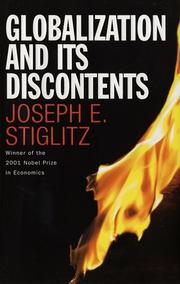
An attack on the IMF's one-size-fits-all policies in the crises of the 1990s.
Recommended by: Patrick Collison

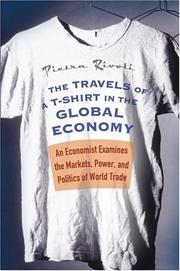
One T-shirt traced from a Texas cotton farm to a Chinese factory and beyond.
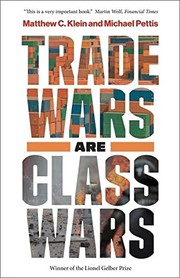
Trade imbalances come from how income is shared within countries.
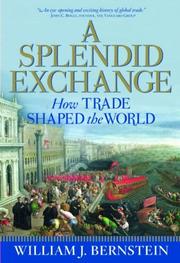
Long-distance trade from Mesopotamia and the spice routes to modern globalisation.
Recommended by: Patrick Collison, Mohnish Pabrai, Nick Szabo
How the shipping container cut freight costs and remade global trade.
Recommended by: Bill Gates, Mohnish Pabrai, Paul Graham and 1 other
Where it sits in the reference 2
Topics