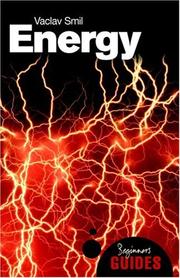
Energy: A Beginner's Guide
Smil's short primer on energy conversions and their physical limits
Summary
Smil gives a short introduction to energy as a physical concept and to its role in nature, in human history and in modern economies. It is the most accessible entry point to his work.
The first part covers energy in physical terms, defining the forms and the conversions between them, establishing the units, and explaining efficiency, power and the difference between energy and power that most public discussion confuses. The biological section covers photosynthesis, the energetics of animal metabolism, and the energy flows through ecosystems, which he uses to establish the physical limits on agricultural output.
The historical section traces human energy use from muscle through fire, domesticated animals, water and wind to fossil fuels, with the power outputs quantified at each stage. The modern section covers electricity generation, transport, industrial processes, food systems and buildings, in each case giving the quantities involved and the conversion efficiencies. The final section addresses the constraints on transition, and Smil applies the same quantitative treatment to renewables, arguing that energy density, intermittency and the scale of the existing system determine what is achievable and over what period.
The book is short and dense, and Smil states quantities without narrative. Readers wanting an argument will find few, since he presents numbers and expects readers to reason from them. The specific figures date and later editions update them. It is the shortest route into the quantitative framework that his longer books develop.
Key takeaways 8
- Energy and power are different quantities, and most public discussion of energy confuses them.
- Conversion efficiency determines how much of a primary energy source reaches useful work, and the losses at each stage are large.
- Photosynthesis converts a very small fraction of incident solar energy, which sets the physical limit on agricultural output per unit of land.
- Human energy use has moved through muscle, fire, animals, water, wind and fossil fuels, with quantified increases in power available at each stage.
- Energy density determines what applications a source can serve, which is why liquid fuels persist in transport regardless of alternatives.
- The scale of the existing energy system determines how long any transition takes, since the replacement must be produced at the same scale.
- Intermittency requires either storage or backup capacity, and the quantities involved are physical requirements rather than policy choices.
- Smil states quantities and expects readers to reason from them rather than presenting arguments.
Who should read it
Readers who want the shortest quantitative introduction to energy before engaging with any policy or investment question about it.
About Vaclav Smil
Distinguished professor emeritus at the University of Manitoba; writes quantitative histories of energy, food, materials and technical change.
Each book counts the physical inputs an economy consumes - joules, tonnes of steel, ammonia, cement - and establishes the historical rates at which past energy transitions actually moved. Those numbers let an investor size decarbonisation timelines and test claims about how fast an energy system can be rebuilt.
Who recommended it 2
Similar books 6
Chosen by shared topics, the entries that hold them, and the people who recommended both.
History told through energy, from muscle and fire to coal, oil and electricity.
Recommended by: Balaji S. Srinivasan, Bill Gates and 1 other
The physical basics of modern life: energy, food, materials and globalisation.
Recommended by: Bill Gates

Six materials the world runs on, sand, salt, iron, copper, oil and lithium, traced.
Data-driven look at emissions and what actually reduces them
Recommended by: Bill Gates
How Haber and Bosch's ammonia synthesis transformed world food production.
Recommended by: Mohnish Pabrai, Bill Gates

Seventy-one short pieces that correct common impressions with plain arithmetic.
Recommended by: Bill Gates, Mark Zuckerberg and 1 other
Where it sits in the reference 3
Topics