Updates

  1. Person pages list letters, writing, profiles and links as sortable tables with filters, and show each person's companies as links; Fund letters show each letter's description in its own column.
  2. Experts show a checked job title and a short description of each person; 30 more people have photographs.
  3. Every company, fund, university and publication the experts work for has a page listing the people there.
  4. Fund letters show each letter's thesis and filter by it; 225 person pages list the essays, columns and newsletter issues the person wrote.
  5. Person pages list every essay and newsletter issue a person wrote, and their own books as a table in List view.
  6. Recommends shows the five largest kinds of book and the rest under More; browse pictures load sooner.
  7. Podcasts and talks link the original episode, filter by Audio and video or Press, and list each publisher once.
  8. Pages are wider, Recommends has List and Grid, and a filter clicked again turns off.
  9. Book cards sit in a ruled grid with Open Library and Goodreads links and each book's one-line note.
  10. Funds is now Investors; each investor's styles are buttons that filter the table.
  11. Podcasts and talks on a person's page filter by year and publisher and show as a list or a grid of pictures.
  12. Quotes show only people's own words: 472 summaries written by list sites are gone.
  13. Country pages open from Browse again, and every link on the shelf lands on a page.
  14. Subject and person pages show their sections as tabs, and each book appears once on a person's page.
  15. Book cards show the quote, who said it and the source; grids show five cards to a row.
  16. On a phone, a menu holds the sections, search, Updates, Feedback and dark mode.
  17. Feedback takes a screenshot of the page with no browser prompt, opens a screenshot full size when you click it, and clears itself once sent.
  18. Book cards are centred, search names the topic each book sits in, and any text cut short shows whole on hover.
  19. Search groups its results by kind: people, companies, geographies, subjects, topics, books, funds, fund letters and papers.
  20. The Books table lists who recommended each book by name, and the browser tab names the section you are in.
  21. Feedback can take a screenshot of the page, or one you paste or choose, and opens in the corner beside Updates.
  22. Each rail button reopens its section where you left it, and Browse, Table and People show on every book and subject page.
  23. Filters grey out choices that hold nothing instead of hiding them, and Books › People filters by authors or recommenders.
  24. Feedback takes a subject line and up to three screenshots.
  25. Biographies are grouped by the person they are about: 41 new pages, from Abraham Lincoln to Lee Kuan Yew.
  26. Sport splits into 23 sports, and Religion into one topic per faith.
  27. Book lists show as cards: the cover, one recommendation quote and every recommender by name.
  28. Seventeen subjects that had two or three pages under different names now have one page each.
  29. Every page lists its Experts as authors and recommenders, with a link to them on the Experts tab.
  30. Economics, Financial history, Financial panics and Accounting are subjects of their own, with one page per financial crisis.
  31. Book, person and subject pages open inside the app, so the tabs stay in view.
  32. 996 more book covers, and photographs or logos for 227 more people and companies.
  33. Books › Browse shows every subject as cards, and the rail holds Fund letters, Papers, Experts, Books and Funds.
  34. Every topic over 150 books splits into narrower topics, each with a page of its own.

Send feedback

What is it?
Screenshots, up to 3 (optional)
or paste one with Ctrl+V

We use your email only to reply to you.

Material World

Material World

Ed Conway
2023
T2 Open Librarygoodreads

Six raw materials that make modern industry work.

Summary

Conway, an economics journalist, traces six materials that industrial civilisation depends on: sand, salt, iron, copper, oil and lithium. For each he follows the physical supply chain from extraction through processing to end use, visiting mines, refineries, foundries and fabrication plants.

The reporting produces specific and unexpected findings. Silicon for semiconductors comes overwhelmingly from a single quartz deposit at Spruce Pine in North Carolina, whose purity has no substitute. Salt is the input to chlorine and sodium hydroxide, which are required for most industrial chemistry including semiconductor manufacture. Copper ore grades have fallen so far that miners now move enormous volumes of rock for each tonne, which sets a floor on the energy cost of electrification. Lithium processing, as distinct from lithium mining, is concentrated in China to a degree that mining diversification does not address.

Conway's argument is that the physical economy has become invisible to the people who write about the economy, that services and software rest on material flows nobody tracks, and that supply chains have concentration points which do not appear in trade statistics because the volumes are small relative to their importance. He connects this directly to energy transition, arguing that the material requirements of electrification are large and that the processing capacity, not the reserves, is the binding constraint.

The book is journalism and does not attempt the quantitative rigour of Smil, whose work covers similar ground. It is more readable and more current, and its supply chain reporting is its distinct contribution.

Key takeaways 7

  1. Semiconductor manufacture depends on quartz from essentially one deposit at Spruce Pine in North Carolina, and no substitute of adequate purity has been identified.
  2. Copper ore grades have declined to the point where electrification's material requirement translates into a very large increase in rock moved and energy consumed.
  3. Processing capacity rather than mineral reserves is the binding constraint on critical material supply, and processing is far more geographically concentrated than mining.
  4. Salt is the input to chlorine and sodium hydroxide and is therefore required for most industrial chemistry including semiconductor production.
  5. Supply chain concentration points do not appear in trade statistics because the traded volumes are small relative to the dependency they create.
  6. The transition away from fossil fuels requires a large one-time increase in mining and processing of other materials, which is a physical constraint on its speed.
  7. Economic commentary systematically ignores the material flows that services and software rest on, which makes supply shocks appear as surprises.

Who should read it

Investors and operators exposed to supply chains, industrials or energy transition who need the physical chokepoints identified concretely.

Similar books 6

Chosen by shared topics, the entries that hold them, and the people who recommended both.

Javier Blas, Jack Farchy · 2021

Glencore, Vitol, Trafigura and Cargill; the definitive book on the trading houses.
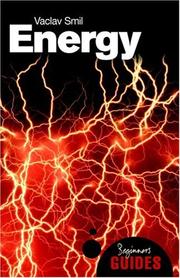
Vaclav Smil · 2006

A short primer on energy: its forms, units and role in nature and economies.

Recommended by: Bill Gates, Mark Zuckerberg
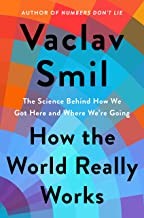
Vaclav Smil · 2022

The physical basics of modern life: energy, food, materials and globalisation.

Recommended by: Bill Gates

T4 Rare
Keith Veronese · 2015

Rare metals such as tantalum and rhodium, and why phones and weapons need them.
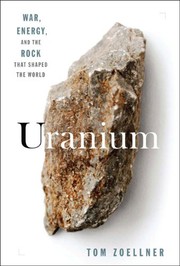
Tom Zoellner · 2009

Uranium: its mining, its boom towns and the geopolitics of its supply.

Hannah Ritchie · 2025

Data-driven look at emissions and what actually reduces them

Recommended by: Bill Gates

Where it sits in the reference 5

Assets
Assets
Secular themes
Secular themes
Secular themes

Topics

ScienceGeneral HistoryEnvironment and EnergyEconomic and Business HistoryEnergy, climate and the EarthElectricity, nuclear and renewables