Updates

  1. Person pages list letters, writing, profiles and links as sortable tables with filters, and show each person's companies as links; Fund letters show each letter's description in its own column.
  2. Experts show a checked job title and a short description of each person; 30 more people have photographs.
  3. Every company, fund, university and publication the experts work for has a page listing the people there.
  4. Fund letters show each letter's thesis and filter by it; 225 person pages list the essays, columns and newsletter issues the person wrote.
  5. Person pages list every essay and newsletter issue a person wrote, and their own books as a table in List view.
  6. Recommends shows the five largest kinds of book and the rest under More; browse pictures load sooner.
  7. Podcasts and talks link the original episode, filter by Audio and video or Press, and list each publisher once.
  8. Pages are wider, Recommends has List and Grid, and a filter clicked again turns off.
  9. Book cards sit in a ruled grid with Open Library and Goodreads links and each book's one-line note.
  10. Funds is now Investors; each investor's styles are buttons that filter the table.
  11. Podcasts and talks on a person's page filter by year and publisher and show as a list or a grid of pictures.
  12. Quotes show only people's own words: 472 summaries written by list sites are gone.
  13. Country pages open from Browse again, and every link on the shelf lands on a page.
  14. Subject and person pages show their sections as tabs, and each book appears once on a person's page.
  15. Book cards show the quote, who said it and the source; grids show five cards to a row.
  16. On a phone, a menu holds the sections, search, Updates, Feedback and dark mode.
  17. Feedback takes a screenshot of the page with no browser prompt, opens a screenshot full size when you click it, and clears itself once sent.
  18. Book cards are centred, search names the topic each book sits in, and any text cut short shows whole on hover.
  19. Search groups its results by kind: people, companies, geographies, subjects, topics, books, funds, fund letters and papers.
  20. The Books table lists who recommended each book by name, and the browser tab names the section you are in.
  21. Feedback can take a screenshot of the page, or one you paste or choose, and opens in the corner beside Updates.
  22. Each rail button reopens its section where you left it, and Browse, Table and People show on every book and subject page.
  23. Filters grey out choices that hold nothing instead of hiding them, and Books › People filters by authors or recommenders.
  24. Feedback takes a subject line and up to three screenshots.
  25. Biographies are grouped by the person they are about: 41 new pages, from Abraham Lincoln to Lee Kuan Yew.
  26. Sport splits into 23 sports, and Religion into one topic per faith.
  27. Book lists show as cards: the cover, one recommendation quote and every recommender by name.
  28. Seventeen subjects that had two or three pages under different names now have one page each.
  29. Every page lists its Experts as authors and recommenders, with a link to them on the Experts tab.
  30. Economics, Financial history, Financial panics and Accounting are subjects of their own, with one page per financial crisis.
  31. Book, person and subject pages open inside the app, so the tabs stay in view.
  32. 996 more book covers, and photographs or logos for 227 more people and companies.
  33. Books › Browse shows every subject as cards, and the rail holds Fund letters, Papers, Experts, Books and Funds.
  34. Every topic over 150 books splits into narrower topics, each with a page of its own.

Send feedback

What is it?
Screenshots, up to 3 (optional)
or paste one with Ctrl+V

We use your email only to reply to you.

The World for Sale

The World for Sale

Javier Blas, Jack Farchy
2021
T3 416 pages · about 6h 56m to read Open Librarygoodreads

Glencore, Vitol, Trafigura and Cargill; the definitive book on the trading houses.

Summary

Blas and Farchy, both commodities journalists at Bloomberg, write the history of the physical commodity trading houses, principally Vitol, Glencore, Trafigura, Cargill and their predecessors including Philipp Brothers and Marc Rich's firm.

The business model is the substance. These firms make money from arbitrage across location, time and quality: buying where a commodity is cheap and delivering where it is expensive, storing when the forward curve pays for it, and blending grades to meet specifications. The advantages are information, obtained through physical presence and relationships in producing countries; logistical capability including ships, storage and pipelines; and access to financing large enough to hold physical inventory.

The political material is what makes the book uncomfortable. Blas and Farchy document trades with sanctioned regimes, payments to officials, the funding of one side of civil conflicts through prepayment for future production, the role of traders in keeping apartheid South Africa and revolutionary Iran supplied, and the specific case of Glencore's operations in Africa. They document Glencore's guilty pleas and the settlements paid by several firms.

They also cover the transition from private partnerships to public companies, and the effect of that transition on disclosure and on behaviour. The book is journalism with extensive sourcing and the firms cooperated selectively. It is the most complete account of an industry that operates with almost no public visibility despite handling a substantial share of the world's physical commodity flows. The explanation of how physical arbitrage actually works is the part with the widest application.

Key takeaways 8

  1. Commodity traders make money from arbitrage across location, time and quality rather than from directional bets on price.
  2. Information obtained through physical presence and relationships in producing countries is the industry's actual asset.
  3. Access to financing large enough to hold physical inventory is the barrier to entry rather than any specialised knowledge.
  4. Prepayment for future production financed governments and, in several documented cases, one side of a civil conflict.
  5. Traders supplied sanctioned regimes including apartheid South Africa and revolutionary Iran, which was the source of the largest margins.
  6. Political risk and legal exposure are the industry's cost of doing business, and several firms have pleaded guilty and paid settlements.
  7. The transition from private partnerships to public companies changed disclosure requirements and constrained some previous practices.
  8. These firms handle a substantial share of world physical commodity flows while operating with almost no public visibility.

Who should read it

Investors and operators in commodities and logistics who want the mechanics of physical arbitrage and an honest account of what the business has involved.

Similar books 6

Chosen by shared topics, the entries that hold them, and the people who recommended both.

Daniel Ammann · 2009

Marc Rich, the founder of modern commodity trading.

Recommended by: Mohnish Pabrai
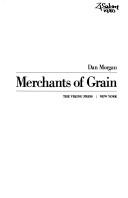
Dan Morgan · 1979

The family-owned firms, from Cargill to Bunge, that controlled the world grain trade.

Recommended by: Mohnish Pabrai

Ed Conway · 2023

Six materials the world runs on, sand, salt, iron, copper, oil and lithium, traced.

Bradley Birkenfeld · 2016

Insider: the UBS banker whose disclosure ended cross-border Swiss secrecy.

Nicholas Shaxson · 2011

How offshore finance works, with Britain and the City of London at its centre.

Jim Rogers · 2004

Why years of low prices and Chinese demand set up a long commodity bull market.

Recommended by: Mohnish Pabrai

Where it sits in the reference 6

Companies
Geographies
Assets
Industries
Secular themes
Industries

Topics

Finance and MarketsPolitics and GovernmentGeneral HistoryEconomic and Business HistoryGlobalisation, development and offshore money