Updates

  1. Person pages list letters, writing, profiles and links as sortable tables with filters, and show each person's companies as links; Fund letters show each letter's description in its own column.
  2. Experts show a checked job title and a short description of each person; 30 more people have photographs.
  3. Every company, fund, university and publication the experts work for has a page listing the people there.
  4. Fund letters show each letter's thesis and filter by it; 225 person pages list the essays, columns and newsletter issues the person wrote.
  5. Person pages list every essay and newsletter issue a person wrote, and their own books as a table in List view.
  6. Recommends shows the five largest kinds of book and the rest under More; browse pictures load sooner.
  7. Podcasts and talks link the original episode, filter by Audio and video or Press, and list each publisher once.
  8. Pages are wider, Recommends has List and Grid, and a filter clicked again turns off.
  9. Book cards sit in a ruled grid with Open Library and Goodreads links and each book's one-line note.
  10. Funds is now Investors; each investor's styles are buttons that filter the table.
  11. Podcasts and talks on a person's page filter by year and publisher and show as a list or a grid of pictures.
  12. Quotes show only people's own words: 472 summaries written by list sites are gone.
  13. Country pages open from Browse again, and every link on the shelf lands on a page.
  14. Subject and person pages show their sections as tabs, and each book appears once on a person's page.
  15. Book cards show the quote, who said it and the source; grids show five cards to a row.
  16. On a phone, a menu holds the sections, search, Updates, Feedback and dark mode.
  17. Feedback takes a screenshot of the page with no browser prompt, opens a screenshot full size when you click it, and clears itself once sent.
  18. Book cards are centred, search names the topic each book sits in, and any text cut short shows whole on hover.
  19. Search groups its results by kind: people, companies, geographies, subjects, topics, books, funds, fund letters and papers.
  20. The Books table lists who recommended each book by name, and the browser tab names the section you are in.
  21. Feedback can take a screenshot of the page, or one you paste or choose, and opens in the corner beside Updates.
  22. Each rail button reopens its section where you left it, and Browse, Table and People show on every book and subject page.
  23. Filters grey out choices that hold nothing instead of hiding them, and Books › People filters by authors or recommenders.
  24. Feedback takes a subject line and up to three screenshots.
  25. Biographies are grouped by the person they are about: 41 new pages, from Abraham Lincoln to Lee Kuan Yew.
  26. Sport splits into 23 sports, and Religion into one topic per faith.
  27. Book lists show as cards: the cover, one recommendation quote and every recommender by name.
  28. Seventeen subjects that had two or three pages under different names now have one page each.
  29. Every page lists its Experts as authors and recommenders, with a link to them on the Experts tab.
  30. Economics, Financial history, Financial panics and Accounting are subjects of their own, with one page per financial crisis.
  31. Book, person and subject pages open inside the app, so the tabs stay in view.
  32. 996 more book covers, and photographs or logos for 227 more people and companies.
  33. Books › Browse shows every subject as cards, and the rail holds Fund letters, Papers, Experts, Books and Funds.
  34. Every topic over 150 books splits into narrower topics, each with a page of its own.

Send feedback

What is it?
Screenshots, up to 3 (optional)
or paste one with Ctrl+V

We use your email only to reply to you.

The King of Oil

The King of Oil

Daniel Ammann
2009
T3 302 pages · about 5h 2m to read Open Librarygoodreads

Marc Rich, the founder of modern commodity trading.

Summary

Ammann, a Swiss journalist, wrote the biography of Marc Rich with Rich's cooperation, including extended interviews. Rich created the modern oil trading business, was indicted in 1983 on tax evasion and on trading with Iran during the hostage crisis, spent seventeen years as a fugitive in Switzerland, and was pardoned by Bill Clinton on his last day in office in 2001.

The business material is the substance. Rich created the spot market for crude oil, which had previously been controlled entirely by the major oil companies through long-term contracts, and this single change altered the industry's structure permanently. His method combined willingness to trade with counterparties others avoided, including Iran, apartheid South Africa, Cuba and the Soviet Union; superior information gathered through relationships built over years; the willingness to take physical delivery and logistical risk; and access to financing that let him hold positions others could not.

Ammann documents specific trades including the Iranian oil that continued through the hostage crisis and the South African supply during the embargo, and Rich's position that a trader's function is to move goods from where they are to where they are needed regardless of politics. The pardon receives substantial treatment including the role of Rich's ex-wife's political donations.

The book was written with Rich's cooperation and is sympathetic. Ammann accepts Rich's framing of his own conduct more readily than an independent account would. The moral question of trading with sanctioned regimes is raised and not pressed. The account of how the spot market was created and of the specific mechanics of commodity trading is what makes it worth reading.

Key takeaways 8

  1. Rich created the spot market for crude oil, which broke the major oil companies' control through long-term contracts and changed the industry permanently.
  2. Willingness to trade with counterparties others avoided was the source of the margins, since the absence of competition set the price.
  3. Superior information gathered through long-term relationships in producing countries was the trader's actual asset rather than any capital advantage.
  4. Taking physical delivery and logistical risk distinguished the business from paper trading and was what made the relationships valuable.
  5. Access to financing large enough to hold physical positions is the barrier to entry in commodity trading rather than any knowledge.
  6. Sanctions create trading opportunities for anyone willing to accept the legal and reputational exposure, which is the business Rich built.
  7. Rich's stated position was that a trader moves goods from where they are to where they are needed regardless of politics.
  8. The book was written with its subject's cooperation and accepts his framing of his own conduct more readily than an independent account would.

Who should read it

Readers interested in commodity trading mechanics and in how the oil spot market was created, aware that the account is sympathetic to its subject.

Who recommended it 1 · 1 direct

Similar books 6

Chosen by shared topics, the entries that hold them, and the people who recommended both.

Javier Blas, Jack Farchy · 2021

Glencore, Vitol, Trafigura and Cargill; the definitive book on the trading houses.
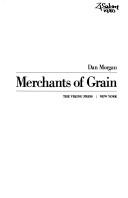
Dan Morgan · 1979

The family-owned firms, from Cargill to Bunge, that controlled the world grain trade.

Recommended by: Mohnish Pabrai
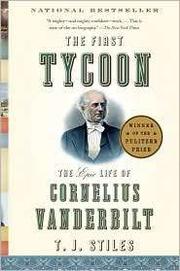
T. J. Stiles · 2009

Vanderbilt's rise through ferries, steamships and railroads.

Recommended by: Mohnish Pabrai

Ron Chernow · 1998

How Rockefeller built Standard Oil, faced its breakup and gave his fortune away.

“…books I've recommended, highlighted to death, or forced on friends.” — Andrew Wilkinson

Source: Andrew Wilkinson's Bookshelf, neverenough.com

Recommended by: Andrew Wilkinson, Charlie Munger and 12 others
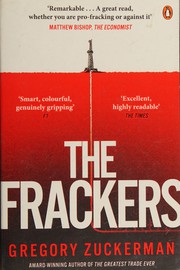
Gregory Zuckerman · 2013

The wildcatters, from George Mitchell to Harold Hamm, who started the shale boom.

Recommended by: Mohnish Pabrai
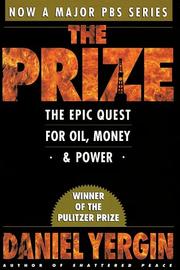
Daniel Yergin · 1991

The history of oil from the first Pennsylvania well to the Gulf War.

Where it sits in the reference 6

Companies
Geographies
Assets
Industries
Industries
Financial history

Topics

Biography and MemoirCompany HistoriesTycoons and Business DynastiesOil and commodity fortunes