Updates

  1. Person pages list letters, writing, profiles and links as sortable tables with filters, and show each person's companies as links; Fund letters show each letter's description in its own column.
  2. Experts show a checked job title and a short description of each person; 30 more people have photographs.
  3. Every company, fund, university and publication the experts work for has a page listing the people there.
  4. Fund letters show each letter's thesis and filter by it; 225 person pages list the essays, columns and newsletter issues the person wrote.
  5. Person pages list every essay and newsletter issue a person wrote, and their own books as a table in List view.
  6. Recommends shows the five largest kinds of book and the rest under More; browse pictures load sooner.
  7. Podcasts and talks link the original episode, filter by Audio and video or Press, and list each publisher once.
  8. Pages are wider, Recommends has List and Grid, and a filter clicked again turns off.
  9. Book cards sit in a ruled grid with Open Library and Goodreads links and each book's one-line note.
  10. Funds is now Investors; each investor's styles are buttons that filter the table.
  11. Podcasts and talks on a person's page filter by year and publisher and show as a list or a grid of pictures.
  12. Quotes show only people's own words: 472 summaries written by list sites are gone.
  13. Country pages open from Browse again, and every link on the shelf lands on a page.
  14. Subject and person pages show their sections as tabs, and each book appears once on a person's page.
  15. Book cards show the quote, who said it and the source; grids show five cards to a row.
  16. On a phone, a menu holds the sections, search, Updates, Feedback and dark mode.
  17. Feedback takes a screenshot of the page with no browser prompt, opens a screenshot full size when you click it, and clears itself once sent.
  18. Book cards are centred, search names the topic each book sits in, and any text cut short shows whole on hover.
  19. Search groups its results by kind: people, companies, geographies, subjects, topics, books, funds, fund letters and papers.
  20. The Books table lists who recommended each book by name, and the browser tab names the section you are in.
  21. Feedback can take a screenshot of the page, or one you paste or choose, and opens in the corner beside Updates.
  22. Each rail button reopens its section where you left it, and Browse, Table and People show on every book and subject page.
  23. Filters grey out choices that hold nothing instead of hiding them, and Books › People filters by authors or recommenders.
  24. Feedback takes a subject line and up to three screenshots.
  25. Biographies are grouped by the person they are about: 41 new pages, from Abraham Lincoln to Lee Kuan Yew.
  26. Sport splits into 23 sports, and Religion into one topic per faith.
  27. Book lists show as cards: the cover, one recommendation quote and every recommender by name.
  28. Seventeen subjects that had two or three pages under different names now have one page each.
  29. Every page lists its Experts as authors and recommenders, with a link to them on the Experts tab.
  30. Economics, Financial history, Financial panics and Accounting are subjects of their own, with one page per financial crisis.
  31. Book, person and subject pages open inside the app, so the tabs stay in view.
  32. 996 more book covers, and photographs or logos for 227 more people and companies.
  33. Books › Browse shows every subject as cards, and the rail holds Fund letters, Papers, Experts, Books and Funds.
  34. Every topic over 150 books splits into narrower topics, each with a page of its own.

Send feedback

What is it?
Screenshots, up to 3 (optional)
or paste one with Ctrl+V

We use your email only to reply to you.

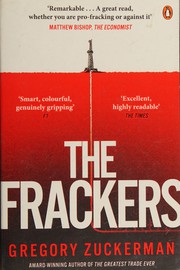
The Frackers

The Frackers

Gregory Zuckerman
2013
T2 418 pages · about 6h 58m to read Open Librarygoodreads

How wildcatters and shale debt rewrote US supply.

Summary

Zuckerman reports the shale revolution through the individuals who drove it: George Mitchell, who spent seventeen years and his own money working out how to fracture the Barnett Shale economically; Harold Hamm at Continental Resources in the Bakken; Aubrey McClendon and Tom Ward at Chesapeake; and Charif Souki, who converted a liquefied natural gas import terminal into an export facility.

The technical story is that hydraulic fracturing and horizontal drilling had both existed for decades and neither worked alone. Mitchell's contribution was finding a cheap enough fracturing fluid, essentially water with sand, and the combination with horizontal laterals made shale rock produce at commercial rates. Zuckerman is clear that the major oil companies dismissed the opportunity and that the revolution was executed by independents financed with debt and by land acquisition at scale.

The financial story is the more interesting one for investors. Zuckerman documents that most of these companies were land assemblers funded by capital markets, that Chesapeake in particular was a leasing machine whose production growth never generated free cash flow, and that McClendon's personal borrowing against his working interests destroyed him when gas prices fell. The industry produced an enormous amount of energy and very poor returns on capital for its investors, which is the central lesson. The book was published in 2013, before the 2014 to 2016 price collapse, the wave of bankruptcies, and the eventual shift to capital discipline, so it captures the boom without its resolution. The environmental debate is covered but is not the focus.

Key takeaways 7

  1. Shale production became viable when slickwater fracturing and horizontal drilling were combined, and neither technique was new on its own.
  2. The major integrated oil companies rejected shale and the revolution was executed by independents with far less capital and far more risk tolerance.
  3. George Mitchell's breakthrough came from seventeen years of persistent unsuccessful experimentation funded by an unrelated cash-generating business.
  4. Shale companies competed primarily on speed of land acquisition, which made them capital markets operations more than engineering operations.
  5. The shale boom produced enormous energy output and poor returns on invested capital, because production growth was funded by debt that production never repaid.
  6. Individual wells decline extremely fast, which means shale production requires continuous drilling capital simply to hold output flat.
  7. The United States shift from expected gas importer to exporter happened within roughly five years and was not forecast by anyone in the industry.

Who should read it

Energy investors and founders in capital-intensive industries who want a case study of a technology that transformed an industry while destroying its investors' capital.

About Gregory Zuckerman

Special writer, The Wall Street Journal; three-time Gerald Loeb Award winner

The Man Who Solved the Market is the definitive account of Renaissance Technologies, and The Greatest Trade Ever is the standard narrative of Paulson's subprime short.

The Wall Street Journal

Who recommended it 1 · 1 direct

Similar books 6

Chosen by shared topics, the entries that hold them, and the people who recommended both.
Daniel Yergin · 1991

The history of oil from the first Pennsylvania well to the Gulf War.

Daniel Yergin · 2011

Energy from 1990 to 2011: Russian and Caspian oil, Iraq, climate policy, renewables.

Recommended by: Bill Gates, Mohnish Pabrai
Matthew R. Simmons · 2005

The peak-oil case against Saudi reserve claims; wrong but influential.

Recommended by: Mohnish Pabrai

Robert McNally · 2017

Argues price stability always required a swing producer or cartel.
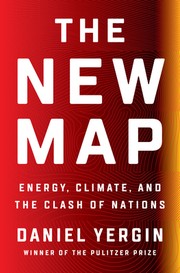
Daniel Yergin · 2020

Energy and geopolitics in 2020: US shale, Russia, China and the Middle East.

Daniel Ammann · 2009

Marc Rich, the founder of modern commodity trading.

Recommended by: Mohnish Pabrai

Where it sits in the reference 4

Journalists
Assets
Industries
Financial history

Topics

Environment and EnergyFinancial HistoryEntrepreneurship and StartupsFounder Profiles and Startup StoriesOil, gas and coal