Updates

  1. Person pages list letters, writing, profiles and links as sortable tables with filters, and show each person's companies as links; Fund letters show each letter's description in its own column.
  2. Experts show a checked job title and a short description of each person; 30 more people have photographs.
  3. Every company, fund, university and publication the experts work for has a page listing the people there.
  4. Fund letters show each letter's thesis and filter by it; 225 person pages list the essays, columns and newsletter issues the person wrote.
  5. Person pages list every essay and newsletter issue a person wrote, and their own books as a table in List view.
  6. Recommends shows the five largest kinds of book and the rest under More; browse pictures load sooner.
  7. Podcasts and talks link the original episode, filter by Audio and video or Press, and list each publisher once.
  8. Pages are wider, Recommends has List and Grid, and a filter clicked again turns off.
  9. Book cards sit in a ruled grid with Open Library and Goodreads links and each book's one-line note.
  10. Funds is now Investors; each investor's styles are buttons that filter the table.
  11. Podcasts and talks on a person's page filter by year and publisher and show as a list or a grid of pictures.
  12. Quotes show only people's own words: 472 summaries written by list sites are gone.
  13. Country pages open from Browse again, and every link on the shelf lands on a page.
  14. Subject and person pages show their sections as tabs, and each book appears once on a person's page.
  15. Book cards show the quote, who said it and the source; grids show five cards to a row.
  16. On a phone, a menu holds the sections, search, Updates, Feedback and dark mode.
  17. Feedback takes a screenshot of the page with no browser prompt, opens a screenshot full size when you click it, and clears itself once sent.
  18. Book cards are centred, search names the topic each book sits in, and any text cut short shows whole on hover.
  19. Search groups its results by kind: people, companies, geographies, subjects, topics, books, funds, fund letters and papers.
  20. The Books table lists who recommended each book by name, and the browser tab names the section you are in.
  21. Feedback can take a screenshot of the page, or one you paste or choose, and opens in the corner beside Updates.
  22. Each rail button reopens its section where you left it, and Browse, Table and People show on every book and subject page.
  23. Filters grey out choices that hold nothing instead of hiding them, and Books › People filters by authors or recommenders.
  24. Feedback takes a subject line and up to three screenshots.
  25. Biographies are grouped by the person they are about: 41 new pages, from Abraham Lincoln to Lee Kuan Yew.
  26. Sport splits into 23 sports, and Religion into one topic per faith.
  27. Book lists show as cards: the cover, one recommendation quote and every recommender by name.
  28. Seventeen subjects that had two or three pages under different names now have one page each.
  29. Every page lists its Experts as authors and recommenders, with a link to them on the Experts tab.
  30. Economics, Financial history, Financial panics and Accounting are subjects of their own, with one page per financial crisis.
  31. Book, person and subject pages open inside the app, so the tabs stay in view.
  32. 996 more book covers, and photographs or logos for 227 more people and companies.
  33. Books › Browse shows every subject as cards, and the rail holds Fund letters, Papers, Experts, Books and Funds.
  34. Every topic over 150 books splits into narrower topics, each with a page of its own.

Send feedback

What is it?
Screenshots, up to 3 (optional)
or paste one with Ctrl+V

We use your email only to reply to you.

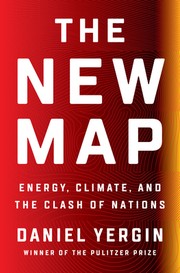
The New Map

The New Map

Daniel Yergin
2020
T1 512 pages · about 8h 32m to read Open Librarygoodreads

Energy transition and geopolitics; the demand risk facing an integrated major.

Summary

Yergin covers energy and geopolitics as of 2020, organised by region: the American shale revolution and its strategic consequences, Russia's energy relationship with Europe and its pivot to China, China's Belt and Road and its position in the South China Sea, the Middle East after the Arab uprisings and the Iran and Saudi confrontation, and the energy transition including electric vehicles, renewables and climate policy.

The central claim is that shale changed the map. American production growth removed the import dependence that had shaped United States Middle East policy for fifty years, turned the country into an exporter, weakened OPEC's pricing power, and gave Washington the ability to impose energy sanctions without harming itself. He traces the consequences through each region.

On transition, Yergin argues it will be slower and more contested than its advocates assume, because energy systems are enormous and long-lived, because oil and gas remain embedded in petrochemicals, shipping, aviation and industry, and because the developing world's demand growth is not optional. He is not a transition sceptic but he is a gradualist, and he presents the transition as a decades-long process with a large role for natural gas.

Yergin is a consultant to the energy industry as well as a historian, which readers should factor into the framing. The book is a synthesis and it does not break new ground analytically. It was published in 2020 and predates the Russian invasion of Ukraine, which tested most of its European energy conclusions directly.

Key takeaways 7

  1. The American shale revolution removed the import dependence that had shaped United States Middle East policy for half a century and made energy sanctions usable as an instrument.
  2. Shale production responds to price faster than conventional supply, which caps oil price rallies and has permanently weakened OPEC's pricing power.
  3. Russia's energy relationship with Europe was built as an economic dependency that both sides treated as stabilising, and its political leverage was consistently underestimated.
  4. China's energy import dependence through the Strait of Malacca is the strategic constraint that drives both Belt and Road and its South China Sea position.
  5. The energy transition will take decades because energy systems are enormous, long-lived and embedded in industry, shipping, aviation and petrochemicals.
  6. Natural gas has a large role in any realistic transition path because it displaces coal in power generation faster than renewables can.
  7. Energy demand growth in developing economies is not optional and will determine global emissions more than policy in wealthy countries does.

Who should read it

Energy investors and executives who want a synthesis of the geopolitical consequences of shale and a gradualist framing of transition.

About Daniel Yergin

Vice chairman of S&P Global and co-founder of Cambridge Energy Research Associates; won a Pulitzer Prize for The Prize.

The Prize narrates the oil industry from the first Pennsylvania wells to the Gulf War, establishing how companies, states and cartels have set prices and controlled reserves - the standard reference for anyone underwriting an energy asset. The Quest and The New Map carry that account into shale, renewables and the geopolitics of the energy transition.

S&P Global, Cambridge Energy Research Associates

Similar books 6

Chosen by shared topics, the entries that hold them, and the people who recommended both.
Daniel Yergin · 1991

The history of oil from the first Pennsylvania well to the Gulf War.

Daniel Yergin · 2011

Energy from 1990 to 2011: Russian and Caspian oil, Iraq, climate policy, renewables.

Recommended by: Bill Gates, Mohnish Pabrai

Steve Coll · 2012

How ExxonMobil acts like a sovereign power, from the Valdez spill to 2011.

Robert McNally · 2017

Argues price stability always required a swing producer or cartel.
Gregory Zuckerman · 2013

The wildcatters, from George Mitchell to Harold Hamm, who started the shale boom.

Recommended by: Mohnish Pabrai

Anthony Sampson · 1975

The big international oil companies and how the 1973 embargo took away their control.

Where it sits in the reference 5

Journalists
Companies
Assets
Secular themes
Industries

Topics

Environment and EnergyPolitics and GovernmentGeopolitics and international relationsOil, gas and coal