Updates

  1. Person pages list letters, writing, profiles and links as sortable tables with filters, and show each person's companies as links; Fund letters show each letter's description in its own column.
  2. Experts show a checked job title and a short description of each person; 30 more people have photographs.
  3. Every company, fund, university and publication the experts work for has a page listing the people there.
  4. Fund letters show each letter's thesis and filter by it; 225 person pages list the essays, columns and newsletter issues the person wrote.
  5. Person pages list every essay and newsletter issue a person wrote, and their own books as a table in List view.
  6. Recommends shows the five largest kinds of book and the rest under More; browse pictures load sooner.
  7. Podcasts and talks link the original episode, filter by Audio and video or Press, and list each publisher once.
  8. Pages are wider, Recommends has List and Grid, and a filter clicked again turns off.
  9. Book cards sit in a ruled grid with Open Library and Goodreads links and each book's one-line note.
  10. Funds is now Investors; each investor's styles are buttons that filter the table.
  11. Podcasts and talks on a person's page filter by year and publisher and show as a list or a grid of pictures.
  12. Quotes show only people's own words: 472 summaries written by list sites are gone.
  13. Country pages open from Browse again, and every link on the shelf lands on a page.
  14. Subject and person pages show their sections as tabs, and each book appears once on a person's page.
  15. Book cards show the quote, who said it and the source; grids show five cards to a row.
  16. On a phone, a menu holds the sections, search, Updates, Feedback and dark mode.
  17. Feedback takes a screenshot of the page with no browser prompt, opens a screenshot full size when you click it, and clears itself once sent.
  18. Book cards are centred, search names the topic each book sits in, and any text cut short shows whole on hover.
  19. Search groups its results by kind: people, companies, geographies, subjects, topics, books, funds, fund letters and papers.
  20. The Books table lists who recommended each book by name, and the browser tab names the section you are in.
  21. Feedback can take a screenshot of the page, or one you paste or choose, and opens in the corner beside Updates.
  22. Each rail button reopens its section where you left it, and Browse, Table and People show on every book and subject page.
  23. Filters grey out choices that hold nothing instead of hiding them, and Books › People filters by authors or recommenders.
  24. Feedback takes a subject line and up to three screenshots.
  25. Biographies are grouped by the person they are about: 41 new pages, from Abraham Lincoln to Lee Kuan Yew.
  26. Sport splits into 23 sports, and Religion into one topic per faith.
  27. Book lists show as cards: the cover, one recommendation quote and every recommender by name.
  28. Seventeen subjects that had two or three pages under different names now have one page each.
  29. Every page lists its Experts as authors and recommenders, with a link to them on the Experts tab.
  30. Economics, Financial history, Financial panics and Accounting are subjects of their own, with one page per financial crisis.
  31. Book, person and subject pages open inside the app, so the tabs stay in view.
  32. 996 more book covers, and photographs or logos for 227 more people and companies.
  33. Books › Browse shows every subject as cards, and the rail holds Fund letters, Papers, Experts, Books and Funds.
  34. Every topic over 150 books splits into narrower topics, each with a page of its own.

Send feedback

What is it?
Screenshots, up to 3 (optional)
or paste one with Ctrl+V

We use your email only to reply to you.

Private Empire: ExxonMobil and American Powe

Private Empire: ExxonMobil and American Power

Steve Coll
2012
T1 704 pages · about 11h 44m to read Open Librarygoodreads

The definitive account of the company as a quasi-sovereign actor.

Summary

Coll, a reporter who has covered intelligence and foreign policy, spent years on this study of ExxonMobil from the 1989 Valdez spill to around 2011, working from interviews, litigation records and diplomatic cables.

The organising argument is that ExxonMobil operates as a sovereign actor. It conducts its own foreign policy, negotiates directly with governments, maintains its own security and intelligence capabilities, and has interests that diverge from those of the United States government while remaining an American company. Coll documents this in Equatorial Guinea, Chad, Nigeria, Indonesia's Aceh province and Russia, showing the company operating in places where American policy was either absent or opposed.

The management sections describe an unusually disciplined organisation. Lee Raymond and then Rex Tillerson ran the company on the Operations Integrity Management System, a control framework built after Valdez that governs safety and operational risk in detail. Capital allocation is driven by return on capital employed measured over decades, with a stated indifference to short-term oil price forecasts. Coll shows a corporate culture that promotes exclusively from within, moves engineers globally, and treats external opinion as irrelevant.

The climate chapters document the company's funding of groups disputing climate science under Raymond and the shift in public position under Tillerson, alongside the internal recognition of the science.

Coll is a reporter rather than an analyst of energy economics, so the book covers the political and organisational dimensions far more thoroughly than the industry's fundamentals. It ends around 2011 and therefore misses the shale acquisition of XTO's consequences, the collapse in the company's returns through the following decade, the Russian venture's termination and the activist board campaign. The account of the company's operating discipline and its independent foreign relations remains accurate.

Key takeaways 7

  1. ExxonMobil conducts its own foreign relations with producing states, and its interests diverge from those of the United States government.
  2. The Operations Integrity Management System, built after the Valdez spill, governs operational risk in detail and is enforced through promotion and compensation.
  3. Capital allocation is driven by return on capital employed measured across decades rather than by oil price forecasts.
  4. Promoting exclusively from within produces a management with uniform assumptions and no external correction.
  5. The company funded groups disputing climate science while its own researchers had accepted it internally.
  6. Operating in weak states requires the company to provide its own security and to deal directly with regimes, which makes it a political actor.
  7. Indifference to public and political opinion was a deliberate corporate posture rather than an oversight.

Who should read it

Investors and operators in energy and extractive industries who want to see how a company manages political risk and operational discipline at global scale.

Similar books 6

Chosen by shared topics, the entries that hold them, and the people who recommended both.
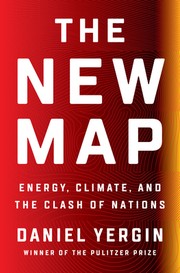
Daniel Yergin · 2020

Energy and geopolitics in 2020: US shale, Russia, China and the Middle East.
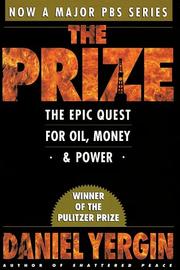
Daniel Yergin · 1991

The history of oil from the first Pennsylvania well to the Gulf War.

Daniel Yergin · 2011

Energy from 1990 to 2011: Russian and Caspian oil, Iraq, climate policy, renewables.

Recommended by: Bill Gates, Mohnish Pabrai

Anthony Sampson · 1975

The big international oil companies and how the 1973 embargo took away their control.

Robert McNally · 2017

Argues price stability always required a swing producer or cartel.
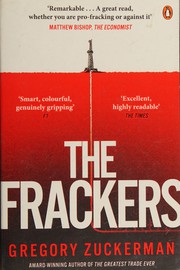
Gregory Zuckerman · 2013

The wildcatters, from George Mitchell to Harold Hamm, who started the shale boom.

Recommended by: Mohnish Pabrai

Where it sits in the reference 3

Companies
Assets
Industries

Topics

Company HistoriesPolitics and GovernmentGeopolitics and international relations