Updates

  1. Person pages list letters, writing, profiles and links as sortable tables with filters, and show each person's companies as links; Fund letters show each letter's description in its own column.
  2. Experts show a checked job title and a short description of each person; 30 more people have photographs.
  3. Every company, fund, university and publication the experts work for has a page listing the people there.
  4. Fund letters show each letter's thesis and filter by it; 225 person pages list the essays, columns and newsletter issues the person wrote.
  5. Person pages list every essay and newsletter issue a person wrote, and their own books as a table in List view.
  6. Recommends shows the five largest kinds of book and the rest under More; browse pictures load sooner.
  7. Podcasts and talks link the original episode, filter by Audio and video or Press, and list each publisher once.
  8. Pages are wider, Recommends has List and Grid, and a filter clicked again turns off.
  9. Book cards sit in a ruled grid with Open Library and Goodreads links and each book's one-line note.
  10. Funds is now Investors; each investor's styles are buttons that filter the table.
  11. Podcasts and talks on a person's page filter by year and publisher and show as a list or a grid of pictures.
  12. Quotes show only people's own words: 472 summaries written by list sites are gone.
  13. Country pages open from Browse again, and every link on the shelf lands on a page.
  14. Subject and person pages show their sections as tabs, and each book appears once on a person's page.
  15. Book cards show the quote, who said it and the source; grids show five cards to a row.
  16. On a phone, a menu holds the sections, search, Updates, Feedback and dark mode.
  17. Feedback takes a screenshot of the page with no browser prompt, opens a screenshot full size when you click it, and clears itself once sent.
  18. Book cards are centred, search names the topic each book sits in, and any text cut short shows whole on hover.
  19. Search groups its results by kind: people, companies, geographies, subjects, topics, books, funds, fund letters and papers.
  20. The Books table lists who recommended each book by name, and the browser tab names the section you are in.
  21. Feedback can take a screenshot of the page, or one you paste or choose, and opens in the corner beside Updates.
  22. Each rail button reopens its section where you left it, and Browse, Table and People show on every book and subject page.
  23. Filters grey out choices that hold nothing instead of hiding them, and Books › People filters by authors or recommenders.
  24. Feedback takes a subject line and up to three screenshots.
  25. Biographies are grouped by the person they are about: 41 new pages, from Abraham Lincoln to Lee Kuan Yew.
  26. Sport splits into 23 sports, and Religion into one topic per faith.
  27. Book lists show as cards: the cover, one recommendation quote and every recommender by name.
  28. Seventeen subjects that had two or three pages under different names now have one page each.
  29. Every page lists its Experts as authors and recommenders, with a link to them on the Experts tab.
  30. Economics, Financial history, Financial panics and Accounting are subjects of their own, with one page per financial crisis.
  31. Book, person and subject pages open inside the app, so the tabs stay in view.
  32. 996 more book covers, and photographs or logos for 227 more people and companies.
  33. Books › Browse shows every subject as cards, and the rail holds Fund letters, Papers, Experts, Books and Funds.
  34. Every topic over 150 books splits into narrower topics, each with a page of its own.

Send feedback

What is it?
Screenshots, up to 3 (optional)
or paste one with Ctrl+V

We use your email only to reply to you.

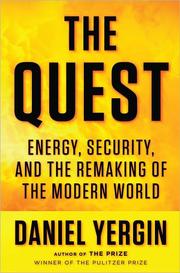
The Quest

The Quest

Daniel Yergin
2011
T1 804 pages · about 13h 24m to read Open Librarygoodreads

Yergin's sequel on energy security, shale and the majors' changed position.

Summary

Yergin's sequel to The Prize covers energy from 1990 to 2011, extending the history into the period The Prize did not reach and adding renewables, climate policy and electricity to the oil-centred earlier account. The first sections cover the post-Soviet period including the opening of Russian and Caspian resources, the Iraq wars and their effect on supply, the growth of Chinese and Indian demand which changed the demand structure permanently, and the 2008 price spike and collapse.

The unconventional resources material covers the development of shale gas and tight oil through hydraulic fracturing and horizontal drilling, which Yergin identifies as the most consequential energy development of the period and which reversed American import dependence. His account of George Mitchell's persistence over two decades is the clearest case study in the book.

The second half covers electricity as a distinct system, the physics and economics of the grid, climate science and the policy response, renewables including wind and solar with their cost trajectories at the time, biofuels, nuclear after Fukushima, and electric vehicles. Yergin's general position is that energy transitions take decades and that the existing system's scale makes rapid replacement difficult, which is a constraint rather than a preference.

The book was published in 2011 and solar and battery costs have fallen far faster than it anticipated, which is the largest single respect in which it has dated. Yergin has consulting relationships across the energy industry, which readers should weigh. The shale history and the treatment of the grid remain valuable.

Key takeaways 8

  1. Hydraulic fracturing combined with horizontal drilling reversed American import dependence and was the most consequential energy development of the period.
  2. George Mitchell pursued shale gas for roughly two decades before the technique worked, which is the case study in persistence against expert consensus.
  3. Chinese and Indian demand growth changed the structure of world energy markets permanently rather than cyclically.
  4. Electricity is a distinct system with its own physics and economics, and treating it as an extension of fuel markets misdescribes it.
  5. Energy transitions take decades because the existing system's scale makes rapid replacement physically difficult regardless of policy.
  6. Energy security means diversity of supply and the capacity to absorb disruption rather than self-sufficiency.
  7. Nuclear power's trajectory changed after Fukushima in ways that reflected political response rather than any change in the technology.
  8. Solar and battery costs have fallen far faster than the book anticipated, which is where it has dated most.

Who should read it

Investors and operators in energy who want the post-1990 history including shale and the grid, with the renewable cost projections treated as superseded.

About Daniel Yergin

Vice chairman of S&P Global and co-founder of Cambridge Energy Research Associates; won a Pulitzer Prize for The Prize.

The Prize narrates the oil industry from the first Pennsylvania wells to the Gulf War, establishing how companies, states and cartels have set prices and controlled reserves - the standard reference for anyone underwriting an energy asset. The Quest and The New Map carry that account into shale, renewables and the geopolitics of the energy transition.

S&P Global, Cambridge Energy Research Associates

Who recommended it 2 · 2 direct

Similar books 6

Chosen by shared topics, the entries that hold them, and the people who recommended both.
Daniel Yergin · 1991

The history of oil from the first Pennsylvania well to the Gulf War.

Daniel Yergin · 2020

Energy and geopolitics in 2020: US shale, Russia, China and the Middle East.
Matthew R. Simmons · 2005

The peak-oil case against Saudi reserve claims; wrong but influential.

Recommended by: Mohnish Pabrai

Robert McNally · 2017

Argues price stability always required a swing producer or cartel.
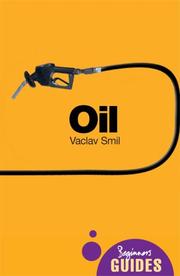
Vaclav Smil · 2008

A short technical primer on oil: geology, extraction, refining, uses and reserves.

Recommended by: Mohnish Pabrai

Where it sits in the reference 5

Journalists
Companies
Assets
Industries
Economics

Topics

Environment and EnergyEconomicsOil, gas and coal