Updates

  1. Person pages list letters, writing, profiles and links as sortable tables with filters, and show each person's companies as links; Fund letters show each letter's description in its own column.
  2. Experts show a checked job title and a short description of each person; 30 more people have photographs.
  3. Every company, fund, university and publication the experts work for has a page listing the people there.
  4. Fund letters show each letter's thesis and filter by it; 225 person pages list the essays, columns and newsletter issues the person wrote.
  5. Person pages list every essay and newsletter issue a person wrote, and their own books as a table in List view.
  6. Recommends shows the five largest kinds of book and the rest under More; browse pictures load sooner.
  7. Podcasts and talks link the original episode, filter by Audio and video or Press, and list each publisher once.
  8. Pages are wider, Recommends has List and Grid, and a filter clicked again turns off.
  9. Book cards sit in a ruled grid with Open Library and Goodreads links and each book's one-line note.
  10. Funds is now Investors; each investor's styles are buttons that filter the table.
  11. Podcasts and talks on a person's page filter by year and publisher and show as a list or a grid of pictures.
  12. Quotes show only people's own words: 472 summaries written by list sites are gone.
  13. Country pages open from Browse again, and every link on the shelf lands on a page.
  14. Subject and person pages show their sections as tabs, and each book appears once on a person's page.
  15. Book cards show the quote, who said it and the source; grids show five cards to a row.
  16. On a phone, a menu holds the sections, search, Updates, Feedback and dark mode.
  17. Feedback takes a screenshot of the page with no browser prompt, opens a screenshot full size when you click it, and clears itself once sent.
  18. Book cards are centred, search names the topic each book sits in, and any text cut short shows whole on hover.
  19. Search groups its results by kind: people, companies, geographies, subjects, topics, books, funds, fund letters and papers.
  20. The Books table lists who recommended each book by name, and the browser tab names the section you are in.
  21. Feedback can take a screenshot of the page, or one you paste or choose, and opens in the corner beside Updates.
  22. Each rail button reopens its section where you left it, and Browse, Table and People show on every book and subject page.
  23. Filters grey out choices that hold nothing instead of hiding them, and Books › People filters by authors or recommenders.
  24. Feedback takes a subject line and up to three screenshots.
  25. Biographies are grouped by the person they are about: 41 new pages, from Abraham Lincoln to Lee Kuan Yew.
  26. Sport splits into 23 sports, and Religion into one topic per faith.
  27. Book lists show as cards: the cover, one recommendation quote and every recommender by name.
  28. Seventeen subjects that had two or three pages under different names now have one page each.
  29. Every page lists its Experts as authors and recommenders, with a link to them on the Experts tab.
  30. Economics, Financial history, Financial panics and Accounting are subjects of their own, with one page per financial crisis.
  31. Book, person and subject pages open inside the app, so the tabs stay in view.
  32. 996 more book covers, and photographs or logos for 227 more people and companies.
  33. Books › Browse shows every subject as cards, and the rail holds Fund letters, Papers, Experts, Books and Funds.
  34. Every topic over 150 books splits into narrower topics, each with a page of its own.

Send feedback

What is it?
Screenshots, up to 3 (optional)
or paste one with Ctrl+V

We use your email only to reply to you.

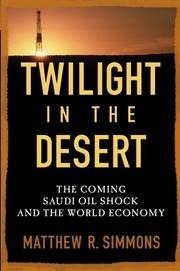
Twilight in the Desert

Twilight in the Desert

Matthew R. Simmons
2005
T3 448 pages · about 7h 28m to read Open Librarygoodreads

The peak-oil case against Saudi reserve claims; wrong but influential.

Summary

Simmons, an energy investment banker, argued that Saudi Arabian oil production was closer to its limit than the kingdom disclosed, and that a decline in Saudi output would be a global economic event. He built the argument from about two hundred technical papers published by Saudi Aramco engineers in Society of Petroleum Engineers journals.

His method was to read the technical literature for evidence about field conditions, since Saudi reserve figures are not audited and production data is not disclosed in detail. He found accounts of water injection at Ghawar, rising water cut in producing wells, the use of horizontal drilling and maximum reservoir contact wells to maintain flow rates, and engineering discussions consistent with mature fields being managed aggressively to hold production. From this he argued that Saudi Arabia's ability to increase output substantially was doubtful and that its ability to maintain existing output was uncertain.

The broader claim was that global oil production would peak in the near term and that markets, governments and investors were assuming a supply capacity that did not exist.

The forecast has not been borne out. Saudi production has been sustained and world oil production rose substantially after 2008, principally from American shale, which Simmons did not anticipate. His method, reading technical literature for evidence in the absence of disclosure, remains sound and his questions about reserve reporting were legitimate. Read it as a case in how a well-researched argument can be correct about the evidence available and wrong about the outcome because of a technology change outside its frame.

Key takeaways 7

  1. Saudi reserve figures are not independently audited and detailed production data is not disclosed, which means outside assessment must be inferred from technical publications.
  2. Aramco engineering papers described water injection, rising water cut and advanced completion techniques consistent with mature fields being managed to hold production.
  3. Maintaining flow rates in a mature field through advanced techniques can conceal depletion until the decline arrives abruptly rather than gradually.
  4. Global oil supply forecasts rest on Saudi capacity figures that no external party can verify, which is a structural information problem rather than a temporary one.
  5. Reading technical literature is a viable method for assessing an opaque producer, since engineers publish operational detail that corporate disclosure omits.
  6. The peak oil forecast failed because horizontal drilling and hydraulic fracturing added supply from sources the analysis did not contemplate.
  7. A supply forecast is only as good as its assumptions about which technologies will become economic, and those are the assumptions least examined.

Who should read it

Energy investors interested in analysing opaque producers from technical literature, and in a case study of a rigorous forecast defeated by a technology change.

Who recommended it 1 · 1 direct

Similar books 6

Chosen by shared topics, the entries that hold them, and the people who recommended both.
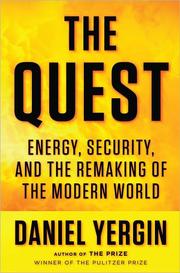
Daniel Yergin · 2011

Energy from 1990 to 2011: Russian and Caspian oil, Iraq, climate policy, renewables.

Recommended by: Bill Gates, Mohnish Pabrai

Robert McNally · 2017

Argues price stability always required a swing producer or cartel.

Vaclav Smil · 2008

A short technical primer on oil: geology, extraction, refining, uses and reserves.

Recommended by: Mohnish Pabrai

Gregory Zuckerman · 2013

The wildcatters, from George Mitchell to Harold Hamm, who started the shale boom.

Recommended by: Mohnish Pabrai

Where it sits in the reference 3

Assets
Industries
Economics

Topics

Environment and EnergyEconomicsOil, gas and coal