Updates

  1. Person pages list letters, writing, profiles and links as sortable tables with filters, and show each person's companies as links; Fund letters show each letter's description in its own column.
  2. Experts show a checked job title and a short description of each person; 30 more people have photographs.
  3. Every company, fund, university and publication the experts work for has a page listing the people there.
  4. Fund letters show each letter's thesis and filter by it; 225 person pages list the essays, columns and newsletter issues the person wrote.
  5. Person pages list every essay and newsletter issue a person wrote, and their own books as a table in List view.
  6. Recommends shows the five largest kinds of book and the rest under More; browse pictures load sooner.
  7. Podcasts and talks link the original episode, filter by Audio and video or Press, and list each publisher once.
  8. Pages are wider, Recommends has List and Grid, and a filter clicked again turns off.
  9. Book cards sit in a ruled grid with Open Library and Goodreads links and each book's one-line note.
  10. Funds is now Investors; each investor's styles are buttons that filter the table.
  11. Podcasts and talks on a person's page filter by year and publisher and show as a list or a grid of pictures.
  12. Quotes show only people's own words: 472 summaries written by list sites are gone.
  13. Country pages open from Browse again, and every link on the shelf lands on a page.
  14. Subject and person pages show their sections as tabs, and each book appears once on a person's page.
  15. Book cards show the quote, who said it and the source; grids show five cards to a row.
  16. On a phone, a menu holds the sections, search, Updates, Feedback and dark mode.
  17. Feedback takes a screenshot of the page with no browser prompt, opens a screenshot full size when you click it, and clears itself once sent.
  18. Book cards are centred, search names the topic each book sits in, and any text cut short shows whole on hover.
  19. Search groups its results by kind: people, companies, geographies, subjects, topics, books, funds, fund letters and papers.
  20. The Books table lists who recommended each book by name, and the browser tab names the section you are in.
  21. Feedback can take a screenshot of the page, or one you paste or choose, and opens in the corner beside Updates.
  22. Each rail button reopens its section where you left it, and Browse, Table and People show on every book and subject page.
  23. Filters grey out choices that hold nothing instead of hiding them, and Books › People filters by authors or recommenders.
  24. Feedback takes a subject line and up to three screenshots.
  25. Biographies are grouped by the person they are about: 41 new pages, from Abraham Lincoln to Lee Kuan Yew.
  26. Sport splits into 23 sports, and Religion into one topic per faith.
  27. Book lists show as cards: the cover, one recommendation quote and every recommender by name.
  28. Seventeen subjects that had two or three pages under different names now have one page each.
  29. Every page lists its Experts as authors and recommenders, with a link to them on the Experts tab.
  30. Economics, Financial history, Financial panics and Accounting are subjects of their own, with one page per financial crisis.
  31. Book, person and subject pages open inside the app, so the tabs stay in view.
  32. 996 more book covers, and photographs or logos for 227 more people and companies.
  33. Books › Browse shows every subject as cards, and the rail holds Fund letters, Papers, Experts, Books and Funds.
  34. Every topic over 150 books splits into narrower topics, each with a page of its own.

Send feedback

What is it?
Screenshots, up to 3 (optional)
or paste one with Ctrl+V

We use your email only to reply to you.

Lucifer's Banker

Lucifer's Banker

Bradley Birkenfeld
2016
T3 Open Librarygoodreads

Insider: the UBS banker whose disclosure ended cross-border Swiss secrecy.

Summary

Bradley Birkenfeld worked in UBS private banking in Geneva, disclosed the bank's cross-border business to United States authorities in 2007, served forty months in federal prison for his own part in it, and then received an award of $104 million from the Internal Revenue Service. This is his account, written after his release.

The substantive disclosure concerns how UBS solicited American clients for undeclared accounts. Birkenfeld describes bankers travelling to the United States on tourist visas to meet clients at art fairs and yacht shows, the use of encrypted laptops and coded records, the structuring of accounts through offshore companies and foundations to break the link to the beneficial owner, and internal training on avoiding detection. He describes the specific instruction to buy diamonds and carry them in a toothpaste tube. His disclosures led to a deferred prosecution agreement, a $780 million penalty, the surrender of client names, and the collapse of Swiss banking secrecy as it had operated.

The book is angry and self-serving, and Birkenfeld's central complaint is that he was prosecuted while senior UBS executives were not. Readers should note the obvious interest, and that the Department of Justice's position was that Birkenfeld concealed his own largest client when he first came forward. The description of the operational practices is corroborated by the subsequent legal record, and it is the most detailed first-hand account available of how offshore private banking worked before 2008.

Key takeaways 7

  1. UBS bankers solicited American clients inside the United States for undeclared accounts, which was the conduct that broke the bank's legal position.
  2. Offshore structures using companies and foundations existed to break the documentary link between the account and its beneficial owner.
  3. Swiss banking secrecy survived on the assumption that no insider would ever disclose, and one insider was sufficient to end it.
  4. United States whistleblower awards create a financial incentive large enough to overcome employment and criminal exposure.
  5. Birkenfeld argues that prosecuting the disclosing employee while sparing senior executives deters future disclosure.
  6. The bank's compliance documentation instructed employees to avoid the conduct the business model required, which made the documentation a legal shield rather than a control.
  7. Client secrecy collapsed through a legal settlement rather than through investigation, because the bank chose survival over its clients.

Who should read it

Compliance professionals and investors in banks who want a first-hand account of how offshore private banking operated and how a single insider ended it.

Similar books 6

Chosen by shared topics, the entries that hold them, and the people who recommended both.
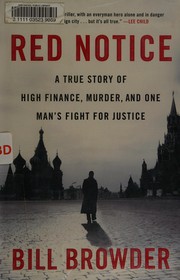
Bill Browder · 2015

An investor in Russia is expelled, his firms seized, and his lawyer Magnitsky dies.

“my favorite read of the year, Bill Browder's terrific Red Notice... I highly recommend the read” — Christopher Bloomstran

Source: Semper Augustus 2022 Letter to Clients, 'Books and Stuff', p. 73

Recommended by: Christopher Bloomstran, Mohnish Pabrai and 6 others
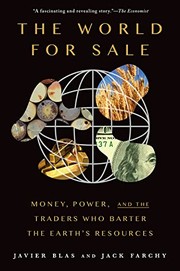
Javier Blas, Jack Farchy · 2021

Glencore, Vitol, Trafigura and Cargill; the definitive book on the trading houses.
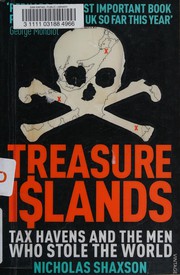
Nicholas Shaxson · 2011

How offshore finance works, with Britain and the City of London at its centre.

Isabel Vincent · 1997

Companion investigation into Swiss banks and looted wartime assets.

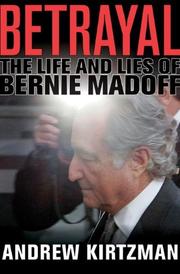
Andrew Kirtzman · 2009

Fast first draft, published months after the arrest.

Where it sits in the reference 2

Geographies
Financial history

Topics

Biography and MemoirFinance and MarketsGlobalisation, development and offshore moneyPolitics and Government