Updates

  1. Person pages list letters, writing, profiles and links as sortable tables with filters, and show each person's companies as links; Fund letters show each letter's description in its own column.
  2. Experts show a checked job title and a short description of each person; 30 more people have photographs.
  3. Every company, fund, university and publication the experts work for has a page listing the people there.
  4. Fund letters show each letter's thesis and filter by it; 225 person pages list the essays, columns and newsletter issues the person wrote.
  5. Person pages list every essay and newsletter issue a person wrote, and their own books as a table in List view.
  6. Recommends shows the five largest kinds of book and the rest under More; browse pictures load sooner.
  7. Podcasts and talks link the original episode, filter by Audio and video or Press, and list each publisher once.
  8. Pages are wider, Recommends has List and Grid, and a filter clicked again turns off.
  9. Book cards sit in a ruled grid with Open Library and Goodreads links and each book's one-line note.
  10. Funds is now Investors; each investor's styles are buttons that filter the table.
  11. Podcasts and talks on a person's page filter by year and publisher and show as a list or a grid of pictures.
  12. Quotes show only people's own words: 472 summaries written by list sites are gone.
  13. Country pages open from Browse again, and every link on the shelf lands on a page.
  14. Subject and person pages show their sections as tabs, and each book appears once on a person's page.
  15. Book cards show the quote, who said it and the source; grids show five cards to a row.
  16. On a phone, a menu holds the sections, search, Updates, Feedback and dark mode.
  17. Feedback takes a screenshot of the page with no browser prompt, opens a screenshot full size when you click it, and clears itself once sent.
  18. Book cards are centred, search names the topic each book sits in, and any text cut short shows whole on hover.
  19. Search groups its results by kind: people, companies, geographies, subjects, topics, books, funds, fund letters and papers.
  20. The Books table lists who recommended each book by name, and the browser tab names the section you are in.
  21. Feedback can take a screenshot of the page, or one you paste or choose, and opens in the corner beside Updates.
  22. Each rail button reopens its section where you left it, and Browse, Table and People show on every book and subject page.
  23. Filters grey out choices that hold nothing instead of hiding them, and Books › People filters by authors or recommenders.
  24. Feedback takes a subject line and up to three screenshots.
  25. Biographies are grouped by the person they are about: 41 new pages, from Abraham Lincoln to Lee Kuan Yew.
  26. Sport splits into 23 sports, and Religion into one topic per faith.
  27. Book lists show as cards: the cover, one recommendation quote and every recommender by name.
  28. Seventeen subjects that had two or three pages under different names now have one page each.
  29. Every page lists its Experts as authors and recommenders, with a link to them on the Experts tab.
  30. Economics, Financial history, Financial panics and Accounting are subjects of their own, with one page per financial crisis.
  31. Book, person and subject pages open inside the app, so the tabs stay in view.
  32. 996 more book covers, and photographs or logos for 227 more people and companies.
  33. Books › Browse shows every subject as cards, and the rail holds Fund letters, Papers, Experts, Books and Funds.
  34. Every topic over 150 books splits into narrower topics, each with a page of its own.

Send feedback

What is it?
Screenshots, up to 3 (optional)
or paste one with Ctrl+V

We use your email only to reply to you.

A License to Steal: The Untold Story of Mich

A License to Steal: The Untold Story of Michael Milken and the Conspiracy to Bilk the Nation

Benjamin Stein
1992
T3 219 pages · about 3h 39m to read Open Librarygoodreads

Prosecution-side polemic; the angriest book on the shelf.

Summary

Stein, a lawyer and writer who had covered the junk bond market for Barron's, wrote a hostile account of Michael Milken's operation at Drexel Burnham Lambert. He argues that the high-yield bond market Milken built was not a legitimate financing innovation but a mechanism for extracting value from savings institutions, insurance companies and shareholders.

The specific claims concern the network. Stein argues that Milken assembled a group of buyers, including savings and loan institutions such as Columbia Savings and Loan and insurers such as First Executive, who bought the bonds Drexel underwrote, and that these buyers were dependent on Milken for their own financing and for the trading marks on their portfolios. He argues that this let Milken place issues that no independent buyer would have taken, that the reported liquidity of the market depended on Drexel making the price, and that the collapse of many of these institutions at public expense was the predictable result. He also covers the parking arrangements with Ivan Boesky, the stock manipulation charges, and the use of warrants and equity participations that transferred value from issuers to Milken's own partnerships.

The book is a polemic and does not conceal it. Stein wrote much of it during the prosecution, and his account of Milken's motives is unsympathetic throughout.

Daniel Fischel's Payback and Jesse Kornbluth's Highly Confident, both also in this reference, take positions ranging from defence to ambivalence, and readers should compare them. The empirical question of whether high-yield bonds performed adequately as investments has been studied since, with results that partly support the defence: default-adjusted returns on the asset class were reasonable, though the returns to specific portfolios concentrated in Drexel underwritings were not. Stein's account of the interlocking buyer network is the part that has held up best.

Key takeaways 7

  1. Milken assembled a captive network of buyers whose own financing depended on him, which allowed issues to be placed regardless of merit.
  2. The liquidity of the high-yield market depended on Drexel making prices, so the reported marks were not independent.
  3. Savings and loan institutions bought high-yield bonds with federally insured deposits, which transferred the eventual losses to taxpayers.
  4. Equity warrants and side partnerships transferred value from issuing companies to Milken personally rather than to Drexel's shareholders.
  5. Concentration of a market in a single dealer produces prices that reflect the dealer's needs rather than credit fundamentals.
  6. The parking arrangements with Boesky were designed to conceal ownership and evade disclosure and margin rules.
  7. Financial innovation and self-dealing can occupy the same transaction, so judging the instrument does not settle the conduct.

Who should read it

Readers wanting the prosecution's case against Milken, to be read against Fischel's defence rather than on its own.

Similar books 6

Chosen by shared topics, the entries that hold them, and the people who recommended both.
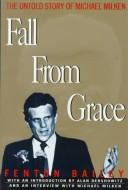
James B. Stewart · 1991

The 1980s insider-trading cases of Boesky, Levine, Siegel and Milken.

Recommended by: Mohnish Pabrai

Andrew Kirtzman · 2009

Fast first draft, published months after the arrest.
Where it sits in the reference 4

Companies
Biographies
Business themes
Financial history

Topics

Biography and MemoirFinance and Markets