Updates

  1. Person pages list letters, writing, profiles and links as sortable tables with filters, and show each person's companies as links; Fund letters show each letter's description in its own column.
  2. Experts show a checked job title and a short description of each person; 30 more people have photographs.
  3. Every company, fund, university and publication the experts work for has a page listing the people there.
  4. Fund letters show each letter's thesis and filter by it; 225 person pages list the essays, columns and newsletter issues the person wrote.
  5. Person pages list every essay and newsletter issue a person wrote, and their own books as a table in List view.
  6. Recommends shows the five largest kinds of book and the rest under More; browse pictures load sooner.
  7. Podcasts and talks link the original episode, filter by Audio and video or Press, and list each publisher once.
  8. Pages are wider, Recommends has List and Grid, and a filter clicked again turns off.
  9. Book cards sit in a ruled grid with Open Library and Goodreads links and each book's one-line note.
  10. Funds is now Investors; each investor's styles are buttons that filter the table.
  11. Podcasts and talks on a person's page filter by year and publisher and show as a list or a grid of pictures.
  12. Quotes show only people's own words: 472 summaries written by list sites are gone.
  13. Country pages open from Browse again, and every link on the shelf lands on a page.
  14. Subject and person pages show their sections as tabs, and each book appears once on a person's page.
  15. Book cards show the quote, who said it and the source; grids show five cards to a row.
  16. On a phone, a menu holds the sections, search, Updates, Feedback and dark mode.
  17. Feedback takes a screenshot of the page with no browser prompt, opens a screenshot full size when you click it, and clears itself once sent.
  18. Book cards are centred, search names the topic each book sits in, and any text cut short shows whole on hover.
  19. Search groups its results by kind: people, companies, geographies, subjects, topics, books, funds, fund letters and papers.
  20. The Books table lists who recommended each book by name, and the browser tab names the section you are in.
  21. Feedback can take a screenshot of the page, or one you paste or choose, and opens in the corner beside Updates.
  22. Each rail button reopens its section where you left it, and Browse, Table and People show on every book and subject page.
  23. Filters grey out choices that hold nothing instead of hiding them, and Books › People filters by authors or recommenders.
  24. Feedback takes a subject line and up to three screenshots.
  25. Biographies are grouped by the person they are about: 41 new pages, from Abraham Lincoln to Lee Kuan Yew.
  26. Sport splits into 23 sports, and Religion into one topic per faith.
  27. Book lists show as cards: the cover, one recommendation quote and every recommender by name.
  28. Seventeen subjects that had two or three pages under different names now have one page each.
  29. Every page lists its Experts as authors and recommenders, with a link to them on the Experts tab.
  30. Economics, Financial history, Financial panics and Accounting are subjects of their own, with one page per financial crisis.
  31. Book, person and subject pages open inside the app, so the tabs stay in view.
  32. 996 more book covers, and photographs or logos for 227 more people and companies.
  33. Books › Browse shows every subject as cards, and the rail holds Fund letters, Papers, Experts, Books and Funds.
  34. Every topic over 150 books splits into narrower topics, each with a page of its own.

Send feedback

What is it?
Screenshots, up to 3 (optional)
or paste one with Ctrl+V

We use your email only to reply to you.

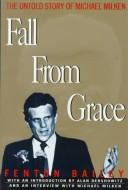
Fall from Grace: The Untold Story of Michael

Fall from Grace: The Untold Story of Michael Milken

Fenton Bailey
1992
T4 330 pages · about 5h 30m to read Open Librarygoodreads

Summary

The reference has not verified this book in detail; the summary states only what the title, author and subject establish.

Bailey wrote this account of Michael Milken during the aftermath of the prosecution. The reference has not verified the book's detailed contents.

The established facts of the case are covered in several books in this reference and can be summarised. Milken built the high-yield bond market at Drexel Burnham Lambert from the late 1970s, starting from research showing that below-investment-grade bonds had been priced to yield more than their default experience justified. He extended this from fallen angels, meaning downgraded bonds of established companies, to original issue high-yield debt used to finance growth companies and later acquisitions and leveraged buyouts. He assembled a network of buyers including savings institutions and insurers. Drexel's highly confident letter gave bidders the credibility to attack much larger companies. Milken was indicted under racketeering provisions, Drexel settled and cooperated, and Milken pleaded guilty in 1990 to six counts of securities and reporting violations, served twenty-two months and paid substantial penalties.

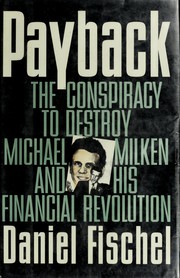
Books written in this period divide sharply between prosecution and defence positions, and this reference contains examples of each: Stein's hostile account, Fischel's defence and Kornbluth's more ambivalent treatment.

Bailey's book was published in 1992 and the reference has not established which position it takes or what original reporting it contains. Readers should verify its stance and sourcing before relying on it, and should read across the competing accounts rather than any single one.

Key takeaways 7

  1. Milken's original thesis came from research showing below-investment-grade bonds yielded more than their realised default losses justified.
  2. He extended the market from downgraded bonds of established companies to original issue high-yield debt.
  3. High-yield financing let bidders without capital attack much larger public companies, which changed corporate control.
  4. A network of buyers dependent on Milken for their own financing allowed issues to be placed regardless of merit.
  5. Milken pleaded guilty in 1990 to six counts of securities and reporting violations rather than to insider trading.
  6. Books published in this period divide sharply between prosecution and defence positions and should be read against each other.
  7. The reference has not verified this volume's stance or its original reporting, which readers should check before relying on it.

Who should read it

Readers surveying the Milken literature, who should verify this volume's position and sourcing and read across the competing accounts.

Similar books 6

Chosen by shared topics, the entries that hold them, and the people who recommended both.

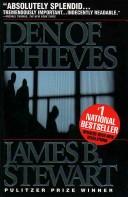
James B. Stewart · 1991

The 1980s insider-trading cases of Boesky, Levine, Siegel and Milken.

Recommended by: Mohnish Pabrai
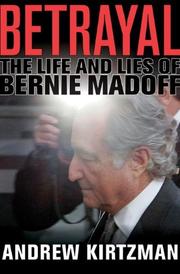
Andrew Kirtzman · 2009

Fast first draft, published months after the arrest.
Where it sits in the reference 4

Companies
Business themes
Biographies
Financial history

Topics

Biography and MemoirFinance and Markets