Updates

  1. Person pages list letters, writing, profiles and links as sortable tables with filters, and show each person's companies as links; Fund letters show each letter's description in its own column.
  2. Experts show a checked job title and a short description of each person; 30 more people have photographs.
  3. Every company, fund, university and publication the experts work for has a page listing the people there.
  4. Fund letters show each letter's thesis and filter by it; 225 person pages list the essays, columns and newsletter issues the person wrote.
  5. Person pages list every essay and newsletter issue a person wrote, and their own books as a table in List view.
  6. Recommends shows the five largest kinds of book and the rest under More; browse pictures load sooner.
  7. Podcasts and talks link the original episode, filter by Audio and video or Press, and list each publisher once.
  8. Pages are wider, Recommends has List and Grid, and a filter clicked again turns off.
  9. Book cards sit in a ruled grid with Open Library and Goodreads links and each book's one-line note.
  10. Funds is now Investors; each investor's styles are buttons that filter the table.
  11. Podcasts and talks on a person's page filter by year and publisher and show as a list or a grid of pictures.
  12. Quotes show only people's own words: 472 summaries written by list sites are gone.
  13. Country pages open from Browse again, and every link on the shelf lands on a page.
  14. Subject and person pages show their sections as tabs, and each book appears once on a person's page.
  15. Book cards show the quote, who said it and the source; grids show five cards to a row.
  16. On a phone, a menu holds the sections, search, Updates, Feedback and dark mode.
  17. Feedback takes a screenshot of the page with no browser prompt, opens a screenshot full size when you click it, and clears itself once sent.
  18. Book cards are centred, search names the topic each book sits in, and any text cut short shows whole on hover.
  19. Search groups its results by kind: people, companies, geographies, subjects, topics, books, funds, fund letters and papers.
  20. The Books table lists who recommended each book by name, and the browser tab names the section you are in.
  21. Feedback can take a screenshot of the page, or one you paste or choose, and opens in the corner beside Updates.
  22. Each rail button reopens its section where you left it, and Browse, Table and People show on every book and subject page.
  23. Filters grey out choices that hold nothing instead of hiding them, and Books › People filters by authors or recommenders.
  24. Feedback takes a subject line and up to three screenshots.
  25. Biographies are grouped by the person they are about: 41 new pages, from Abraham Lincoln to Lee Kuan Yew.
  26. Sport splits into 23 sports, and Religion into one topic per faith.
  27. Book lists show as cards: the cover, one recommendation quote and every recommender by name.
  28. Seventeen subjects that had two or three pages under different names now have one page each.
  29. Every page lists its Experts as authors and recommenders, with a link to them on the Experts tab.
  30. Economics, Financial history, Financial panics and Accounting are subjects of their own, with one page per financial crisis.
  31. Book, person and subject pages open inside the app, so the tabs stay in view.
  32. 996 more book covers, and photographs or logos for 227 more people and companies.
  33. Books › Browse shows every subject as cards, and the rail holds Fund letters, Papers, Experts, Books and Funds.
  34. Every topic over 150 books splits into narrower topics, each with a page of its own.

Send feedback

What is it?
Screenshots, up to 3 (optional)
or paste one with Ctrl+V

We use your email only to reply to you.

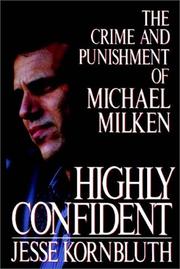
Highly Confident: The Crime and Punishment o

Highly Confident: The Crime and Punishment of Michael Milken

Jesse Kornbluth
1992
T3 384 pages · about 6h 24m to read Open Librarygoodreads

Sympathetic; written with access to Milken's circle.

Summary

Kornbluth, a magazine journalist, wrote an account of Michael Milken's career and prosecution that is more ambivalent than either the hostile or the defensive treatments. The title refers to the highly confident letter, Drexel's innovation of stating that it was highly confident it could raise financing for a bid, which functioned as commitment without being one and which changed the balance of power in hostile takeovers.

The reporting covers Milken's development of the high-yield market from his student work on Braddock Hickman's default studies, the argument that below-investment-grade bonds had been priced to yield more than their default experience justified, the building of a buyer network, and the extension from fallen angels to original-issue high-yield debt used to finance acquisitions and leveraged buyouts. Kornbluth takes the financial innovation seriously rather than dismissing it.

On the prosecution he is more critical. He documents the pressure applied to Drexel through the threat of a racketeering indictment, which would have frozen the firm's capital and destroyed it before trial, and the resulting decision to settle and to cooperate against Milken. He notes that the six counts to which Milken eventually pleaded were technical securities violations rather than the insider trading and manipulation that the public associated with the case, and that the sentence was reduced substantially after cooperation.

Kornbluth also examines what Milken personally extracted, particularly the equity warrants and partnership interests that accompanied issues, which he treats as the strongest evidence of self-dealing.

The book is journalism written during the aftermath, and readers should compare it with Stein's hostile account and Fischel's defence, both also in this reference. Its balance is its value; its weakness is that it does not resolve the question it raises about whether the innovation and the misconduct were separable.

Key takeaways 7

  1. Milken's original thesis came from default studies showing that below-investment-grade bonds yielded more than their realised loss experience justified.
  2. The highly confident letter let Drexel back hostile bids with a statement that carried the force of commitment without the legal obligation.
  3. High-yield financing gave bidders without capital the ability to attack much larger public companies, which changed corporate control everywhere.
  4. The threat of a racketeering indictment would have destroyed Drexel before trial, which is why the firm settled and cooperated.
  5. The counts Milken pleaded to were technical securities violations rather than the insider trading the case was publicly understood to concern.
  6. Equity warrants and side partnerships taken alongside underwritings transferred value to Milken personally rather than to his firm.
  7. A market dominated by one dealer produces prices and liquidity that depend on that dealer continuing to operate.

Who should read it

Readers wanting a balanced account of the Milken case that takes both the financial innovation and the prosecution's overreach seriously.

Similar books 6

Chosen by shared topics, the entries that hold them, and the people who recommended both.

James B. Stewart · 1991

The 1980s insider-trading cases of Boesky, Levine, Siegel and Milken.

Recommended by: Mohnish Pabrai
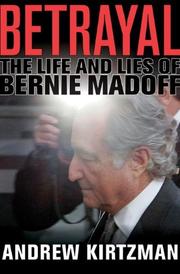
Andrew Kirtzman · 2009

Fast first draft, published months after the arrest.
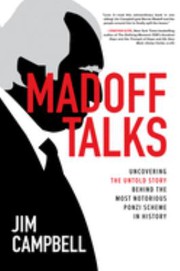
Where it sits in the reference 4

Companies
Biographies
Business themes
Financial history

Topics

Biography and MemoirFinance and Markets