Updates

  1. Person pages list letters, writing, profiles and links as sortable tables with filters, and show each person's companies as links; Fund letters show each letter's description in its own column.
  2. Experts show a checked job title and a short description of each person; 30 more people have photographs.
  3. Every company, fund, university and publication the experts work for has a page listing the people there.
  4. Fund letters show each letter's thesis and filter by it; 225 person pages list the essays, columns and newsletter issues the person wrote.
  5. Person pages list every essay and newsletter issue a person wrote, and their own books as a table in List view.
  6. Recommends shows the five largest kinds of book and the rest under More; browse pictures load sooner.
  7. Podcasts and talks link the original episode, filter by Audio and video or Press, and list each publisher once.
  8. Pages are wider, Recommends has List and Grid, and a filter clicked again turns off.
  9. Book cards sit in a ruled grid with Open Library and Goodreads links and each book's one-line note.
  10. Funds is now Investors; each investor's styles are buttons that filter the table.
  11. Podcasts and talks on a person's page filter by year and publisher and show as a list or a grid of pictures.
  12. Quotes show only people's own words: 472 summaries written by list sites are gone.
  13. Country pages open from Browse again, and every link on the shelf lands on a page.
  14. Subject and person pages show their sections as tabs, and each book appears once on a person's page.
  15. Book cards show the quote, who said it and the source; grids show five cards to a row.
  16. On a phone, a menu holds the sections, search, Updates, Feedback and dark mode.
  17. Feedback takes a screenshot of the page with no browser prompt, opens a screenshot full size when you click it, and clears itself once sent.
  18. Book cards are centred, search names the topic each book sits in, and any text cut short shows whole on hover.
  19. Search groups its results by kind: people, companies, geographies, subjects, topics, books, funds, fund letters and papers.
  20. The Books table lists who recommended each book by name, and the browser tab names the section you are in.
  21. Feedback can take a screenshot of the page, or one you paste or choose, and opens in the corner beside Updates.
  22. Each rail button reopens its section where you left it, and Browse, Table and People show on every book and subject page.
  23. Filters grey out choices that hold nothing instead of hiding them, and Books › People filters by authors or recommenders.
  24. Feedback takes a subject line and up to three screenshots.
  25. Biographies are grouped by the person they are about: 41 new pages, from Abraham Lincoln to Lee Kuan Yew.
  26. Sport splits into 23 sports, and Religion into one topic per faith.
  27. Book lists show as cards: the cover, one recommendation quote and every recommender by name.
  28. Seventeen subjects that had two or three pages under different names now have one page each.
  29. Every page lists its Experts as authors and recommenders, with a link to them on the Experts tab.
  30. Economics, Financial history, Financial panics and Accounting are subjects of their own, with one page per financial crisis.
  31. Book, person and subject pages open inside the app, so the tabs stay in view.
  32. 996 more book covers, and photographs or logos for 227 more people and companies.
  33. Books › Browse shows every subject as cards, and the rail holds Fund letters, Papers, Experts, Books and Funds.
  34. Every topic over 150 books splits into narrower topics, each with a page of its own.

Send feedback

What is it?
Screenshots, up to 3 (optional)
or paste one with Ctrl+V

We use your email only to reply to you.

EN

Electricity, nuclear and renewables

Books on energy systems and transitions, the electric grid, nuclear power, renewables, batteries and the minerals they need.

Start here

  1. Networks of PowerThomas P. Hughes, 1983
  2. Energy: A Beginner's GuideVaclav Smil, 2006
  3. Energy TransitionsVaclav Smil, 2010
  4. Energy and CivilizationVaclav Smil, 2017
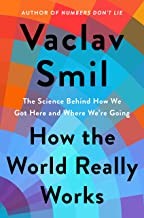
  5. How the World Really WorksVaclav Smil, 2022
Thomas P. Hughes · 1983

Electrification in the US, Britain and Germany, 1880 to 1930, as a technical system.
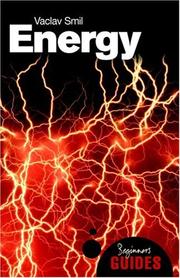
Vaclav Smil · 2006

A short primer on energy: its forms, units and role in nature and economies.

Recommended by: Bill Gates, Mark Zuckerberg
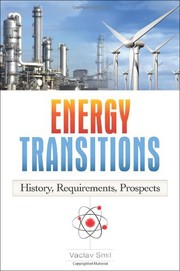
Vaclav Smil · 2010

Each shift from wood to coal to oil took 50 to 70 years; new ones will be slow too.

Recommended by: Bill Gates
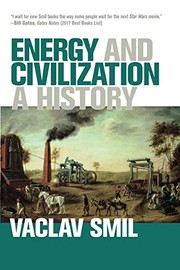
Vaclav Smil · 2017

History told through energy, from muscle and fire to coal, oil and electricity.

Vaclav Smil · 2022

The physical basics of modern life: energy, food, materials and globalisation.

Recommended by: Bill Gates

James C. Bonbright · 1961

The economic criteria for setting regulated utility rates.

Siddharth Kara · 2022

Artisanal cobalt mining in Congo and its place in the battery supply chain.

Ed Conway · 2023

Six materials the world runs on, sand, salt, iron, copper, oil and lithium, traced.
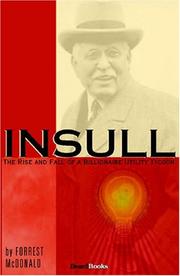
Forrest McDonald · 1962

The man who invented the regulated-return utility bargain, and the holding company that killed him.
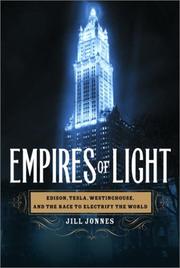
Jill Jonnes · 2003

The current war: Edison against Westinghouse and Tesla.

Recommended by: Chris Dixon
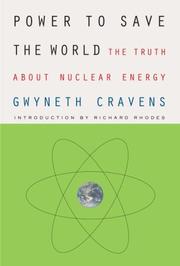
Gwyneth Cravens · 2007

A sceptic's conversion to nuclear power, and how public fear of it formed.
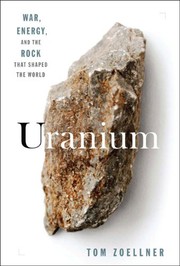
Tom Zoellner · 2009

Uranium: its mining, its boom towns and the geopolitics of its supply.

Peter Fox-Penner · 2010

How utility business models must change once regulated growth ends.
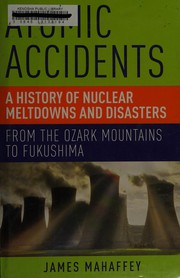
James Mahaffey · 2014

Nuclear accidents, what went wrong in each, and what each taught about the atom.

David S. Abraham · 2015

How minor metals are mined, traded and hoarded.

Steve LeVine · 2015

The global race to build a better lithium-ion battery for electric cars.
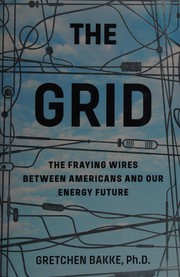
Gretchen Bakke · 2016

Why the regulated grid's economics are breaking.

Joshua S. Goldstein, Staffan A. Qvist · 2019

The Sweden-and-France case that nuclear is the fastest decarbonisation path.

Russell Gold · 2019

Michael Skelly's bid to build a power line across America for wind power.

Guillaume Pitron · 2020

The rare metals behind green tech and devices, and China's hold on their supply.

Saul Griffith · 2021

The demand side: what full electrification of homes and vehicles requires.

Henry Sanderson · 2022

Lithium, cobalt and nickel supply chains behind the EV build-out.

Vaclav Smil · 1998

Recommended by: Bill Gates

Peter W. Huber, Mark P. Mills · 2005

Why energy demand never falls, why 'waste' helps, and why quality power is scarce.

Recommended by: Mohnish Pabrai
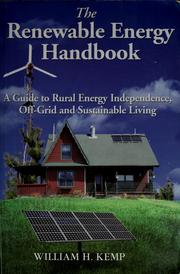
Phillip F. Schewe · 2007

Recommended by: Bill Gates

Robert B. Laughlin · 2011

How people will get energy two centuries from now, once fossil carbon is gone.

Recommended by: Sam Altman

T4 Rare
Keith Veronese · 2015

Rare metals such as tantalum and rhodium, and why phones and weapons need them.

Levi Tillemann · 2015

The century-long race among automakers to build the car of the future.

Recommended by: Mohnish Pabrai

Julie A. Cohn · 2017

Institutional history of interconnection and who controls it.

Meredith Angwin · 2020

Deregulated wholesale markets and reliability risk.

Yoon Il Chang

The history and technology of the Integral Fast Reactor built at Argonne, 1984-94.

Recommended by: Sam Altman

More environment and energy