Updates

  1. Person pages list letters, writing, profiles and links as sortable tables with filters, and show each person's companies as links; Fund letters show each letter's description in its own column.
  2. Experts show a checked job title and a short description of each person; 30 more people have photographs.
  3. Every company, fund, university and publication the experts work for has a page listing the people there.
  4. Fund letters show each letter's thesis and filter by it; 225 person pages list the essays, columns and newsletter issues the person wrote.
  5. Person pages list every essay and newsletter issue a person wrote, and their own books as a table in List view.
  6. Recommends shows the five largest kinds of book and the rest under More; browse pictures load sooner.
  7. Podcasts and talks link the original episode, filter by Audio and video or Press, and list each publisher once.
  8. Pages are wider, Recommends has List and Grid, and a filter clicked again turns off.
  9. Book cards sit in a ruled grid with Open Library and Goodreads links and each book's one-line note.
  10. Funds is now Investors; each investor's styles are buttons that filter the table.
  11. Podcasts and talks on a person's page filter by year and publisher and show as a list or a grid of pictures.
  12. Quotes show only people's own words: 472 summaries written by list sites are gone.
  13. Country pages open from Browse again, and every link on the shelf lands on a page.
  14. Subject and person pages show their sections as tabs, and each book appears once on a person's page.
  15. Book cards show the quote, who said it and the source; grids show five cards to a row.
  16. On a phone, a menu holds the sections, search, Updates, Feedback and dark mode.
  17. Feedback takes a screenshot of the page with no browser prompt, opens a screenshot full size when you click it, and clears itself once sent.
  18. Book cards are centred, search names the topic each book sits in, and any text cut short shows whole on hover.
  19. Search groups its results by kind: people, companies, geographies, subjects, topics, books, funds, fund letters and papers.
  20. The Books table lists who recommended each book by name, and the browser tab names the section you are in.
  21. Feedback can take a screenshot of the page, or one you paste or choose, and opens in the corner beside Updates.
  22. Each rail button reopens its section where you left it, and Browse, Table and People show on every book and subject page.
  23. Filters grey out choices that hold nothing instead of hiding them, and Books › People filters by authors or recommenders.
  24. Feedback takes a subject line and up to three screenshots.
  25. Biographies are grouped by the person they are about: 41 new pages, from Abraham Lincoln to Lee Kuan Yew.
  26. Sport splits into 23 sports, and Religion into one topic per faith.
  27. Book lists show as cards: the cover, one recommendation quote and every recommender by name.
  28. Seventeen subjects that had two or three pages under different names now have one page each.
  29. Every page lists its Experts as authors and recommenders, with a link to them on the Experts tab.
  30. Economics, Financial history, Financial panics and Accounting are subjects of their own, with one page per financial crisis.
  31. Book, person and subject pages open inside the app, so the tabs stay in view.
  32. 996 more book covers, and photographs or logos for 227 more people and companies.
  33. Books › Browse shows every subject as cards, and the rail holds Fund letters, Papers, Experts, Books and Funds.
  34. Every topic over 150 books splits into narrower topics, each with a page of its own.

Send feedback

What is it?
Screenshots, up to 3 (optional)
or paste one with Ctrl+V

We use your email only to reply to you.

Electrify

Electrify

Saul Griffith
2021
T3 288 pages · about 4h 48m to read Open Librarygoodreads

The demand side: what full electrification of homes and vehicles requires.

Summary

Griffith, an engineer and inventor, wrote this as a technical argument that decarbonising the American economy requires electrifying nearly everything and that the analysis should start from where energy is actually used.

His method is energy flow accounting. He mapped every use of energy in the United States, from power stations through to end uses in vehicles, buildings, industry and appliances, and showed where the energy goes and how much is lost. The key finding is that roughly two thirds of primary energy is wasted, largely as heat in combustion: internal combustion engines convert around a fifth of fuel energy into motion, thermal power stations lose most of the fuel energy up the stack, and gas furnaces lose energy in flues. Electric equivalents are far more efficient at the point of use, so electrifying reduces total primary energy demand substantially even before the generation is decarbonised.

His prescriptions follow from this. Electrify vehicles, space heating through heat pumps, water heating, cooking and industrial process heat where possible. Build generation and storage to match. Do not wait for future technologies, since the required equipment already exists and is manufacturable. Replace equipment at the end of its life rather than prematurely, which sets the timetable: every furnace, car and water heater replaced with a fossil version locks in emissions for its lifetime, so the decision points are the replacement moments.

His financing argument is that the transition is a capital cost problem rather than an operating cost problem, since electrified equipment is cheaper to run and more expensive to buy, and he proposes government-backed low-cost lending as the intervention.

He is dismissive of demand reduction through behaviour change and of some technologies including hydrogen for most uses, which readers may find too confident. The energy flow analysis is the durable contribution.

Key takeaways 7

  1. Roughly two thirds of American primary energy is wasted, largely as heat in combustion processes.
  2. Electrifying end uses reduces total primary energy demand substantially before any change in how electricity is generated.
  3. The equipment required for electrification already exists and is manufacturable, so the transition does not depend on future technology.
  4. Every fossil appliance or vehicle installed locks in emissions for its operating life, which makes replacement moments the decision points.
  5. The transition is a capital cost problem rather than an operating cost problem, because electrified equipment costs more to buy and less to run.
  6. Low-cost financing rather than subsidy is the intervention that matches the actual constraint.
  7. Starting the analysis from where energy is used rather than from where it is generated changes which interventions matter most.

Who should read it

Investors and operators in energy, buildings and transport who want a quantified engineering argument about where the transition's decisions actually sit.

Similar books 6

Chosen by shared topics, the entries that hold them, and the people who recommended both.

Thomas P. Hughes · 1983

Electrification in the US, Britain and Germany, 1880 to 1930, as a technical system.

Julie A. Cohn · 2017

Institutional history of interconnection and who controls it.
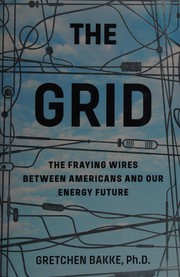
Gretchen Bakke · 2016

Why the regulated grid's economics are breaking.

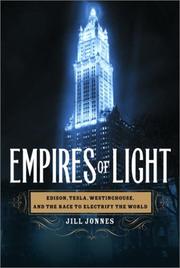
Jill Jonnes · 2003

The current war: Edison against Westinghouse and Tesla.

Recommended by: Chris Dixon
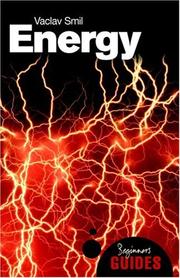
Vaclav Smil · 2006

A short primer on energy: its forms, units and role in nature and economies.

Recommended by: Bill Gates, Mark Zuckerberg
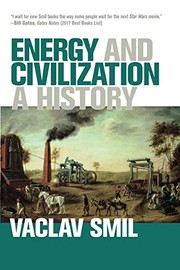
Vaclav Smil · 2017

History told through energy, from muscle and fire to coal, oil and electricity.

Where it sits in the reference 2

Secular themes
Secular themes

Topics

Environment and EnergyTechnology and ComputingInvention, engineering and energyElectricity, nuclear and renewables