Updates

  1. Person pages list letters, writing, profiles and links as sortable tables with filters, and show each person's companies as links; Fund letters show each letter's description in its own column.
  2. Experts show a checked job title and a short description of each person; 30 more people have photographs.
  3. Every company, fund, university and publication the experts work for has a page listing the people there.
  4. Fund letters show each letter's thesis and filter by it; 225 person pages list the essays, columns and newsletter issues the person wrote.
  5. Person pages list every essay and newsletter issue a person wrote, and their own books as a table in List view.
  6. Recommends shows the five largest kinds of book and the rest under More; browse pictures load sooner.
  7. Podcasts and talks link the original episode, filter by Audio and video or Press, and list each publisher once.
  8. Pages are wider, Recommends has List and Grid, and a filter clicked again turns off.
  9. Book cards sit in a ruled grid with Open Library and Goodreads links and each book's one-line note.
  10. Funds is now Investors; each investor's styles are buttons that filter the table.
  11. Podcasts and talks on a person's page filter by year and publisher and show as a list or a grid of pictures.
  12. Quotes show only people's own words: 472 summaries written by list sites are gone.
  13. Country pages open from Browse again, and every link on the shelf lands on a page.
  14. Subject and person pages show their sections as tabs, and each book appears once on a person's page.
  15. Book cards show the quote, who said it and the source; grids show five cards to a row.
  16. On a phone, a menu holds the sections, search, Updates, Feedback and dark mode.
  17. Feedback takes a screenshot of the page with no browser prompt, opens a screenshot full size when you click it, and clears itself once sent.
  18. Book cards are centred, search names the topic each book sits in, and any text cut short shows whole on hover.
  19. Search groups its results by kind: people, companies, geographies, subjects, topics, books, funds, fund letters and papers.
  20. The Books table lists who recommended each book by name, and the browser tab names the section you are in.
  21. Feedback can take a screenshot of the page, or one you paste or choose, and opens in the corner beside Updates.
  22. Each rail button reopens its section where you left it, and Browse, Table and People show on every book and subject page.
  23. Filters grey out choices that hold nothing instead of hiding them, and Books › People filters by authors or recommenders.
  24. Feedback takes a subject line and up to three screenshots.
  25. Biographies are grouped by the person they are about: 41 new pages, from Abraham Lincoln to Lee Kuan Yew.
  26. Sport splits into 23 sports, and Religion into one topic per faith.
  27. Book lists show as cards: the cover, one recommendation quote and every recommender by name.
  28. Seventeen subjects that had two or three pages under different names now have one page each.
  29. Every page lists its Experts as authors and recommenders, with a link to them on the Experts tab.
  30. Economics, Financial history, Financial panics and Accounting are subjects of their own, with one page per financial crisis.
  31. Book, person and subject pages open inside the app, so the tabs stay in view.
  32. 996 more book covers, and photographs or logos for 227 more people and companies.
  33. Books › Browse shows every subject as cards, and the rail holds Fund letters, Papers, Experts, Books and Funds.
  34. Every topic over 150 books splits into narrower topics, each with a page of its own.

Send feedback

What is it?
Screenshots, up to 3 (optional)
or paste one with Ctrl+V

We use your email only to reply to you.

Networks of Power

Networks of Power

Thomas P. Hughes
1983
T1 474 pages · about 7h 54m to read Open Librarygoodreads

The classic history of electrification as a system business.

Summary

Hughes wrote a comparative history of electrification in the United States, Britain and Germany between 1880 and 1930, and in doing so established a framework for understanding large technological systems that has shaped the history of technology since.

The framework's central concepts are specific. A technological system consists of physical artefacts, organisations, scientific components, legislation and natural resources, and it is built by system builders who work across all of these rather than only on the technology. Edison is his primary case, presented not as an inventor of a lamp but as the designer of a complete generation, distribution, metering and pricing system in which the lamp was one component whose specification followed from the economics of copper conductors. A reverse salient is a component that has fallen behind and holds back the whole system, and Hughes argues that inventive activity concentrates on reverse salients rather than being distributed randomly. Technological momentum describes how a system that has accumulated capital, trained personnel, institutions and users becomes resistant to change and shapes its environment rather than merely adapting to it.

The comparative material is the evidence. The same technology produced very different systems in the three countries. Britain's local authority control and parliamentary politics produced fragmented small systems that resisted interconnection. Germany's technical education and industrial banking produced integrated regional systems. Chicago under Samuel Insull produced the most economically advanced system through load management: Insull recognised that the cost of electricity depends on load factor, meaning capacity utilisation over time, and deliberately sought customers whose demand peaked at different hours, then priced to encourage the mix.

The book is long, detailed and academic. Its concepts have been widely adopted and also criticised, particularly for the emphasis on individual system builders, which later scholarship in the social construction of technology tradition treated as insufficiently attentive to users and to contingency.

Key takeaways 7

  1. Edison invented a complete electrical system rather than a lamp, and the lamp's specification was derived from the economics of distribution.
  2. A technological system includes organisations, legislation and financing alongside physical equipment, and none of these can be designed separately.
  3. Inventive effort concentrates on the component holding back the whole system rather than being spread evenly across it.
  4. Load factor, meaning capacity utilisation over time, determines the cost of electricity, so mixing customers with different demand patterns lowers cost for all of them.
  5. Samuel Insull built the most advanced early system by managing demand diversity rather than by improving generation technology.
  6. The same technology produced very different systems in different countries because political and financial institutions differed.
  7. Systems accumulate momentum through capital, trained people and institutions, after which they shape their environment rather than adapting to it.

Who should read it

Operators and investors in infrastructure, energy and platform businesses who need a framework for how technical systems, institutions and economics develop together.

Similar books 6

Chosen by shared topics, the entries that hold them, and the people who recommended both.
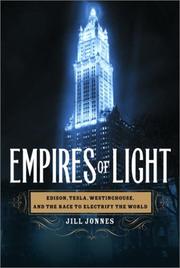
Jill Jonnes · 2003

The current war: Edison against Westinghouse and Tesla.

Recommended by: Chris Dixon
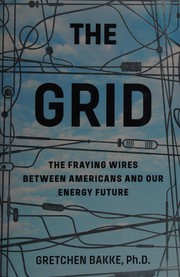
Gretchen Bakke · 2016

Why the regulated grid's economics are breaking.

Julie A. Cohn · 2017

Institutional history of interconnection and who controls it.

Saul Griffith · 2021

The demand side: what full electrification of homes and vehicles requires.

Peter Fox-Penner · 2010

How utility business models must change once regulated growth ends.
Tim Wu · 2010

Every US information industry moved from an open era to control by one firm.

Recommended by: Patrick Collison, Andrew Chen

Where it sits in the reference 3

Business models
Business models
Secular themes

Topics

General HistoryEnvironment and EnergyTechnology and ComputingScience, Technology and MedicineInvention, engineering and energyElectricity, nuclear and renewables