Updates

  1. Person pages list letters, writing, profiles and links as sortable tables with filters, and show each person's companies as links; Fund letters show each letter's description in its own column.
  2. Experts show a checked job title and a short description of each person; 30 more people have photographs.
  3. Every company, fund, university and publication the experts work for has a page listing the people there.
  4. Fund letters show each letter's thesis and filter by it; 225 person pages list the essays, columns and newsletter issues the person wrote.
  5. Person pages list every essay and newsletter issue a person wrote, and their own books as a table in List view.
  6. Recommends shows the five largest kinds of book and the rest under More; browse pictures load sooner.
  7. Podcasts and talks link the original episode, filter by Audio and video or Press, and list each publisher once.
  8. Pages are wider, Recommends has List and Grid, and a filter clicked again turns off.
  9. Book cards sit in a ruled grid with Open Library and Goodreads links and each book's one-line note.
  10. Funds is now Investors; each investor's styles are buttons that filter the table.
  11. Podcasts and talks on a person's page filter by year and publisher and show as a list or a grid of pictures.
  12. Quotes show only people's own words: 472 summaries written by list sites are gone.
  13. Country pages open from Browse again, and every link on the shelf lands on a page.
  14. Subject and person pages show their sections as tabs, and each book appears once on a person's page.
  15. Book cards show the quote, who said it and the source; grids show five cards to a row.
  16. On a phone, a menu holds the sections, search, Updates, Feedback and dark mode.
  17. Feedback takes a screenshot of the page with no browser prompt, opens a screenshot full size when you click it, and clears itself once sent.
  18. Book cards are centred, search names the topic each book sits in, and any text cut short shows whole on hover.
  19. Search groups its results by kind: people, companies, geographies, subjects, topics, books, funds, fund letters and papers.
  20. The Books table lists who recommended each book by name, and the browser tab names the section you are in.
  21. Feedback can take a screenshot of the page, or one you paste or choose, and opens in the corner beside Updates.
  22. Each rail button reopens its section where you left it, and Browse, Table and People show on every book and subject page.
  23. Filters grey out choices that hold nothing instead of hiding them, and Books › People filters by authors or recommenders.
  24. Feedback takes a subject line and up to three screenshots.
  25. Biographies are grouped by the person they are about: 41 new pages, from Abraham Lincoln to Lee Kuan Yew.
  26. Sport splits into 23 sports, and Religion into one topic per faith.
  27. Book lists show as cards: the cover, one recommendation quote and every recommender by name.
  28. Seventeen subjects that had two or three pages under different names now have one page each.
  29. Every page lists its Experts as authors and recommenders, with a link to them on the Experts tab.
  30. Economics, Financial history, Financial panics and Accounting are subjects of their own, with one page per financial crisis.
  31. Book, person and subject pages open inside the app, so the tabs stay in view.
  32. 996 more book covers, and photographs or logos for 227 more people and companies.
  33. Books › Browse shows every subject as cards, and the rail holds Fund letters, Papers, Experts, Books and Funds.
  34. Every topic over 150 books splits into narrower topics, each with a page of its own.

Send feedback

What is it?
Screenshots, up to 3 (optional)
or paste one with Ctrl+V

We use your email only to reply to you.

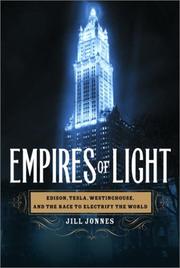
Empires of Light

Empires of Light

Jill Jonnes
2003
T3 448 pages · about 7h 28m to read Open Librarygoodreads

The current war: Edison against Westinghouse and Tesla.

Summary

Jonnes tells the history of electrification in the United States through three figures: Thomas Edison, who built the first commercial direct current system in lower Manhattan; George Westinghouse, who backed alternating current and had the industrial capacity to deploy it; and Nikola Tesla, whose polyphase alternating current motor made the system practical. The narrative runs from the 1870s through the Niagara Falls power project of the mid-1890s.

The substance is the current war. Edison's direct current worked only over short distances and required generating stations every mile, which made it viable in dense city centres and nowhere else. Alternating current could be transformed to high voltage for transmission and back down for use, which meant one large plant could serve a region. Edison's response was a public campaign about the dangers of high voltage, including his involvement in the use of alternating current for the first electric chair execution. He lost the technical argument, and lost control of his own company when it was merged into General Electric by financiers who wanted the alternating current patents.

Jonnes works from company records, patent litigation and contemporary press. For investors the case is about standards competition: the winning technology was chosen by the physics of transmission economics, not by the strength of the incumbent or the quality of its marketing, and the incumbent's founder was removed by his own financial backers when he refused to switch. The book is popular history and its treatment of Tesla is more sympathetic than more recent scholarship supports, particularly on the later years and the Wardenclyffe project.

Key takeaways 7

  1. Alternating current won because transformers allowed long-distance transmission at high voltage, which changed the economics of generation scale.
  2. Edison lost control of his company because his financial backers valued the alternating current patents more than his commitment to direct current.
  3. Tesla's polyphase induction motor supplied the missing component that made alternating current usable for industrial power rather than only lighting.
  4. Edison ran a deliberate safety campaign against alternating current, including promoting its use in executions, after he had already lost the technical case.
  5. Westinghouse's manufacturing capacity and willingness to underbid at Niagara mattered as much as the technology in deciding the standard.
  6. Patent litigation, not product competition, consumed the majority of both companies' resources during the standards fight.
  7. The Niagara Falls installation settled the question publicly, and the standard then locked in for more than a century.

Who should read it

Investors and founders in infrastructure or standards-driven markets who want a documented case of how transmission economics, not incumbency, decided a technology contest.

Who recommended it 1

Chris Dixonreported

Similar books 6

Chosen by shared topics, the entries that hold them, and the people who recommended both.
Gretchen Bakke · 2016

Why the regulated grid's economics are breaking.

Thomas P. Hughes · 1983

Electrification in the US, Britain and Germany, 1880 to 1930, as a technical system.
Forrest McDonald · 1962

The man who invented the regulated-return utility bargain, and the holding company that killed him.

Julie A. Cohn · 2017

Institutional history of interconnection and who controls it.

Robert Conot · 1979

Edison's life drawn from his papers, unsparing about his finances.
Leonard DeGraaf · 2013

Edison's laboratory as a business, with pictures from his archive.

Where it sits in the reference 4

Biographies
Business models
Industries
Secular themes

Topics

General HistoryEnvironment and EnergyBiography of ScientistsScience, Technology and MedicineElectricity, nuclear and renewables