Updates

  1. Person pages list letters, writing, profiles and links as sortable tables with filters, and show each person's companies as links; Fund letters show each letter's description in its own column.
  2. Experts show a checked job title and a short description of each person; 30 more people have photographs.
  3. Every company, fund, university and publication the experts work for has a page listing the people there.
  4. Fund letters show each letter's thesis and filter by it; 225 person pages list the essays, columns and newsletter issues the person wrote.
  5. Person pages list every essay and newsletter issue a person wrote, and their own books as a table in List view.
  6. Recommends shows the five largest kinds of book and the rest under More; browse pictures load sooner.
  7. Podcasts and talks link the original episode, filter by Audio and video or Press, and list each publisher once.
  8. Pages are wider, Recommends has List and Grid, and a filter clicked again turns off.
  9. Book cards sit in a ruled grid with Open Library and Goodreads links and each book's one-line note.
  10. Funds is now Investors; each investor's styles are buttons that filter the table.
  11. Podcasts and talks on a person's page filter by year and publisher and show as a list or a grid of pictures.
  12. Quotes show only people's own words: 472 summaries written by list sites are gone.
  13. Country pages open from Browse again, and every link on the shelf lands on a page.
  14. Subject and person pages show their sections as tabs, and each book appears once on a person's page.
  15. Book cards show the quote, who said it and the source; grids show five cards to a row.
  16. On a phone, a menu holds the sections, search, Updates, Feedback and dark mode.
  17. Feedback takes a screenshot of the page with no browser prompt, opens a screenshot full size when you click it, and clears itself once sent.
  18. Book cards are centred, search names the topic each book sits in, and any text cut short shows whole on hover.
  19. Search groups its results by kind: people, companies, geographies, subjects, topics, books, funds, fund letters and papers.
  20. The Books table lists who recommended each book by name, and the browser tab names the section you are in.
  21. Feedback can take a screenshot of the page, or one you paste or choose, and opens in the corner beside Updates.
  22. Each rail button reopens its section where you left it, and Browse, Table and People show on every book and subject page.
  23. Filters grey out choices that hold nothing instead of hiding them, and Books › People filters by authors or recommenders.
  24. Feedback takes a subject line and up to three screenshots.
  25. Biographies are grouped by the person they are about: 41 new pages, from Abraham Lincoln to Lee Kuan Yew.
  26. Sport splits into 23 sports, and Religion into one topic per faith.
  27. Book lists show as cards: the cover, one recommendation quote and every recommender by name.
  28. Seventeen subjects that had two or three pages under different names now have one page each.
  29. Every page lists its Experts as authors and recommenders, with a link to them on the Experts tab.
  30. Economics, Financial history, Financial panics and Accounting are subjects of their own, with one page per financial crisis.
  31. Book, person and subject pages open inside the app, so the tabs stay in view.
  32. 996 more book covers, and photographs or logos for 227 more people and companies.
  33. Books › Browse shows every subject as cards, and the rail holds Fund letters, Papers, Experts, Books and Funds.
  34. Every topic over 150 books splits into narrower topics, each with a page of its own.

Send feedback

What is it?
Screenshots, up to 3 (optional)
or paste one with Ctrl+V

We use your email only to reply to you.

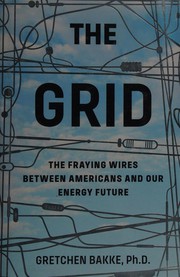
The Grid

The Grid

Gretchen Bakke
2016
T3 352 pages · about 5h 52m to read Open Librarygoodreads

Why the regulated grid's economics are breaking.

Summary

Bakke, a cultural anthropologist, wrote about the American electrical grid as a physical and social system, combining technical explanation with reporting and history.

The technical foundation is the constraint that makes electricity unlike other commodities: supply must match demand continuously and instantaneously, because the grid stores almost nothing. Everything else follows. Generation must be dispatched in real time. Frequency and voltage must be held within narrow bands. A local failure propagates, which is why blackouts cascade. Capacity must be built for the annual peak, which means most of it sits idle most of the time.

The historical sections cover the system's construction, the regulated monopoly utility model and its bargain of guaranteed return for obligation to serve, the deregulation of generation in the 1990s and the resulting separation of generation from transmission, and the underinvestment in transmission that followed because no party had a clear incentive to build it. She uses the 2003 Northeast blackout, which began with untrimmed trees in Ohio, to show how the physical, institutional and informational failures combined.

The forward-looking sections cover the problems renewables create for a system designed around dispatchable generation: intermittency, the fact that solar and wind produce when the weather permits rather than when demand exists, distributed generation reversing power flows on distribution networks designed for one direction, and the effect of customer-owned generation on utility revenue models that recover fixed costs through per-unit charges.

Bakke is a cultural anthropologist rather than an engineer or economist, and the book is stronger on description and history than on technical or economic analysis. It predates the substantial growth in battery storage and the recent load growth from datacentres, both of which change the picture materially.

Key takeaways 7

  1. Electricity supply must match demand instantaneously because the grid stores almost nothing, and every other feature of the system follows from this.
  2. Capacity must be built for the annual peak, so most generating and transmission assets are idle most of the time.
  3. Deregulation separated generation from transmission and left no party with a clear incentive to invest in transmission.
  4. The 2003 Northeast blackout began with untrimmed vegetation and propagated because control room information systems failed simultaneously.
  5. Renewable generation produces when weather permits rather than when demand exists, which is a scheduling problem before it is a cost problem.
  6. Distributed generation reverses power flows on distribution networks that were engineered for one direction only.
  7. Utilities recover fixed network costs through per-unit charges, so customers generating their own power shift those costs onto everyone else.

Who should read it

Investors and operators in energy and infrastructure who want the physical and institutional constraints on the grid explained without engineering training.

Similar books 6

Chosen by shared topics, the entries that hold them, and the people who recommended both.
Jill Jonnes · 2003

The current war: Edison against Westinghouse and Tesla.

Recommended by: Chris Dixon
Thomas P. Hughes · 1983

Electrification in the US, Britain and Germany, 1880 to 1930, as a technical system.
Forrest McDonald · 1962

The man who invented the regulated-return utility bargain, and the holding company that killed him.
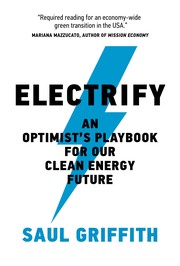
Saul Griffith · 2021

The demand side: what full electrification of homes and vehicles requires.
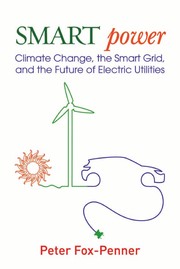
Peter Fox-Penner · 2010

How utility business models must change once regulated growth ends.
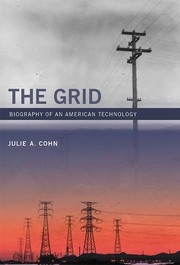
Julie A. Cohn · 2017

Institutional history of interconnection and who controls it.

Where it sits in the reference 3

Business models
Industries
Secular themes

Topics

Environment and EnergyTechnology and ComputingInvention, engineering and energyElectricity, nuclear and renewables