Updates

  1. Person pages list letters, writing, profiles and links as sortable tables with filters, and show each person's companies as links; Fund letters show each letter's description in its own column.
  2. Experts show a checked job title and a short description of each person; 30 more people have photographs.
  3. Every company, fund, university and publication the experts work for has a page listing the people there.
  4. Fund letters show each letter's thesis and filter by it; 225 person pages list the essays, columns and newsletter issues the person wrote.
  5. Person pages list every essay and newsletter issue a person wrote, and their own books as a table in List view.
  6. Recommends shows the five largest kinds of book and the rest under More; browse pictures load sooner.
  7. Podcasts and talks link the original episode, filter by Audio and video or Press, and list each publisher once.
  8. Pages are wider, Recommends has List and Grid, and a filter clicked again turns off.
  9. Book cards sit in a ruled grid with Open Library and Goodreads links and each book's one-line note.
  10. Funds is now Investors; each investor's styles are buttons that filter the table.
  11. Podcasts and talks on a person's page filter by year and publisher and show as a list or a grid of pictures.
  12. Quotes show only people's own words: 472 summaries written by list sites are gone.
  13. Country pages open from Browse again, and every link on the shelf lands on a page.
  14. Subject and person pages show their sections as tabs, and each book appears once on a person's page.
  15. Book cards show the quote, who said it and the source; grids show five cards to a row.
  16. On a phone, a menu holds the sections, search, Updates, Feedback and dark mode.
  17. Feedback takes a screenshot of the page with no browser prompt, opens a screenshot full size when you click it, and clears itself once sent.
  18. Book cards are centred, search names the topic each book sits in, and any text cut short shows whole on hover.
  19. Search groups its results by kind: people, companies, geographies, subjects, topics, books, funds, fund letters and papers.
  20. The Books table lists who recommended each book by name, and the browser tab names the section you are in.
  21. Feedback can take a screenshot of the page, or one you paste or choose, and opens in the corner beside Updates.
  22. Each rail button reopens its section where you left it, and Browse, Table and People show on every book and subject page.
  23. Filters grey out choices that hold nothing instead of hiding them, and Books › People filters by authors or recommenders.
  24. Feedback takes a subject line and up to three screenshots.
  25. Biographies are grouped by the person they are about: 41 new pages, from Abraham Lincoln to Lee Kuan Yew.
  26. Sport splits into 23 sports, and Religion into one topic per faith.
  27. Book lists show as cards: the cover, one recommendation quote and every recommender by name.
  28. Seventeen subjects that had two or three pages under different names now have one page each.
  29. Every page lists its Experts as authors and recommenders, with a link to them on the Experts tab.
  30. Economics, Financial history, Financial panics and Accounting are subjects of their own, with one page per financial crisis.
  31. Book, person and subject pages open inside the app, so the tabs stay in view.
  32. 996 more book covers, and photographs or logos for 227 more people and companies.
  33. Books › Browse shows every subject as cards, and the rail holds Fund letters, Papers, Experts, Books and Funds.
  34. Every topic over 150 books splits into narrower topics, each with a page of its own.

Send feedback

What is it?
Screenshots, up to 3 (optional)
or paste one with Ctrl+V

We use your email only to reply to you.

Volt Rush

Volt Rush

Henry Sanderson
2022
T3 Open Librarygoodreads

Lithium, cobalt and nickel supply chains behind the EV build-out.

Summary

Henry Sanderson covered commodities for the Financial Times and wrote this on the materials that electric vehicles and batteries require, and on where they come from.

The reporting is field-based. He covers cobalt mining in the Democratic Republic of Congo, including the artisanal sector and the child labour question, and the Chinese companies that acquired the industrial mines; lithium extraction in Chile's Atacama brines and in Australian hard rock, and the water and community conflicts around it; nickel in Indonesia, where high-pressure acid leach processing has produced enormous capacity alongside serious environmental damage; rare earths and the processing concentration in China; and the recycling industry that does not yet exist at the scale required.

His analytical argument is that the energy transition depends on materials whose supply chains are concentrated, environmentally damaging and geopolitically exposed, and that Chinese firms and policy secured control of the processing stage while Western companies and governments were not paying attention. He is careful not to argue against the transition, and he is direct that fossil fuel extraction has been worse on every dimension he examines. The book is journalism rather than analysis and does not model supply and demand. Its documentation of who controls each processing stage is the material most useful to an investor.

Key takeaways 7

  1. Battery material supply chains are concentrated at the processing stage, and Chinese firms control most of that capacity.
  2. Cobalt from the Democratic Republic of Congo includes artisanal production with documented child labour that industrial supply chains cannot fully exclude.
  3. Lithium extraction in Chile's Atacama brines consumes water in a region where it is contested by local communities.
  4. Indonesian nickel processing built enormous capacity quickly at substantial environmental cost.
  5. Sanderson argues that Western companies and governments failed to notice that processing rather than mining was the strategic stage.
  6. Recycling does not yet exist at the scale the transition will require, which leaves primary extraction as the only source.
  7. Fossil fuel extraction has been worse on every dimension examined, which Sanderson states directly rather than leaving implied.

Who should read it

Investors in energy transition and battery supply chains who want field reporting on where the materials come from and who controls each stage.

Similar books 6

Chosen by shared topics, the entries that hold them, and the people who recommended both.
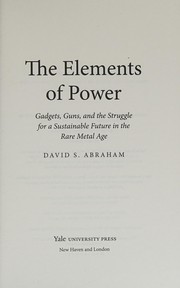
David S. Abraham · 2015

How minor metals are mined, traded and hoarded.
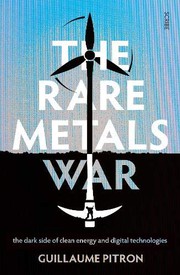
Guillaume Pitron · 2020

The rare metals behind green tech and devices, and China's hold on their supply.
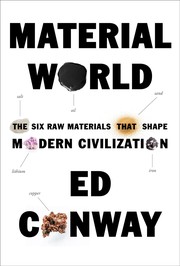
Ed Conway · 2023

Six materials the world runs on, sand, salt, iron, copper, oil and lithium, traced.
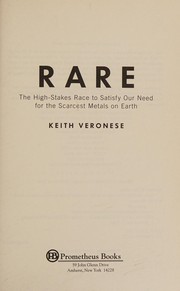
T4 Rare
Keith Veronese · 2015

Rare metals such as tantalum and rhodium, and why phones and weapons need them.

Steve LeVine · 2015

The global race to build a better lithium-ion battery for electric cars.
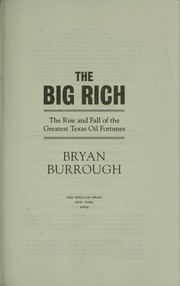
Bryan Burrough · 2009

The rise and fall of the Texas oil fortunes, the Hunts among them.

Where it sits in the reference 2

Companies
Assets

Topics

Environment and EnergyPolitics and GovernmentGeopolitics and international relationsElectricity, nuclear and renewables