Updates

  1. Person pages list letters, writing, profiles and links as sortable tables with filters, and show each person's companies as links; Fund letters show each letter's description in its own column.
  2. Experts show a checked job title and a short description of each person; 30 more people have photographs.
  3. Every company, fund, university and publication the experts work for has a page listing the people there.
  4. Fund letters show each letter's thesis and filter by it; 225 person pages list the essays, columns and newsletter issues the person wrote.
  5. Person pages list every essay and newsletter issue a person wrote, and their own books as a table in List view.
  6. Recommends shows the five largest kinds of book and the rest under More; browse pictures load sooner.
  7. Podcasts and talks link the original episode, filter by Audio and video or Press, and list each publisher once.
  8. Pages are wider, Recommends has List and Grid, and a filter clicked again turns off.
  9. Book cards sit in a ruled grid with Open Library and Goodreads links and each book's one-line note.
  10. Funds is now Investors; each investor's styles are buttons that filter the table.
  11. Podcasts and talks on a person's page filter by year and publisher and show as a list or a grid of pictures.
  12. Quotes show only people's own words: 472 summaries written by list sites are gone.
  13. Country pages open from Browse again, and every link on the shelf lands on a page.
  14. Subject and person pages show their sections as tabs, and each book appears once on a person's page.
  15. Book cards show the quote, who said it and the source; grids show five cards to a row.
  16. On a phone, a menu holds the sections, search, Updates, Feedback and dark mode.
  17. Feedback takes a screenshot of the page with no browser prompt, opens a screenshot full size when you click it, and clears itself once sent.
  18. Book cards are centred, search names the topic each book sits in, and any text cut short shows whole on hover.
  19. Search groups its results by kind: people, companies, geographies, subjects, topics, books, funds, fund letters and papers.
  20. The Books table lists who recommended each book by name, and the browser tab names the section you are in.
  21. Feedback can take a screenshot of the page, or one you paste or choose, and opens in the corner beside Updates.
  22. Each rail button reopens its section where you left it, and Browse, Table and People show on every book and subject page.
  23. Filters grey out choices that hold nothing instead of hiding them, and Books › People filters by authors or recommenders.
  24. Feedback takes a subject line and up to three screenshots.
  25. Biographies are grouped by the person they are about: 41 new pages, from Abraham Lincoln to Lee Kuan Yew.
  26. Sport splits into 23 sports, and Religion into one topic per faith.
  27. Book lists show as cards: the cover, one recommendation quote and every recommender by name.
  28. Seventeen subjects that had two or three pages under different names now have one page each.
  29. Every page lists its Experts as authors and recommenders, with a link to them on the Experts tab.
  30. Economics, Financial history, Financial panics and Accounting are subjects of their own, with one page per financial crisis.
  31. Book, person and subject pages open inside the app, so the tabs stay in view.
  32. 996 more book covers, and photographs or logos for 227 more people and companies.
  33. Books › Browse shows every subject as cards, and the rail holds Fund letters, Papers, Experts, Books and Funds.
  34. Every topic over 150 books splits into narrower topics, each with a page of its own.

Send feedback

What is it?
Screenshots, up to 3 (optional)
or paste one with Ctrl+V

We use your email only to reply to you.

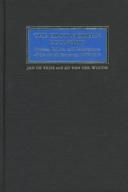
The First Modern Economy

The First Modern Economy

Jan de Vries, Ad van der Woude
1997
T1 767 pages · about 12h 47m to read Open Librarygoodreads

The definitive economic history of the Dutch Republic, 1500-1815.

Summary

Jan de Vries and Ad van der Woude argue that the Dutch Republic between roughly 1500 and 1815 was the first modern economy, meaning the first to combine market-oriented agriculture, a highly urbanised population, sophisticated financial markets, and sustained per capita income growth over centuries.

Their evidence is an enormous reconstruction of Dutch economic data: population, urbanisation rates, agricultural output and productivity, wages and prices, shipping tonnage, trade volumes, public finance and interest rates. From this they argue that the Netherlands achieved a level of market integration, occupational specialisation and capital market development that no earlier economy reached, and that this constitutes modern economic growth rather than a commercial boom of the kind that had occurred before.

The substantive claims include: that Dutch agriculture was market-oriented and specialised rather than subsistence-based, which supported an urban population share unmatched anywhere; that the financial system supported both public debt at low interest rates and private commercial credit; that the economy's later relative decline was slower and less complete than the standard account holds; and that the Dutch case establishes that modern economic growth predates the industrial revolution and is not defined by mechanised manufacturing. The book is long, technical and demanding. Its argument has been influential in the literature on the origins of modern growth and remains contested, particularly on whether the Dutch growth was self-sustaining or dependent on a specific trading position.

Key takeaways 7

  1. The Dutch Republic achieved sustained per capita income growth over centuries before any mechanised manufacturing existed.
  2. Dutch agriculture was market-oriented and specialised, which supported an urban population share unmatched in the period.
  3. Modern economic growth is defined by market integration and productivity rather than by industrial technology.
  4. The Dutch financial system supported public debt at low interest rates and extensive private commercial credit simultaneously.
  5. The Republic's later decline was slower and less complete than the standard account of Dutch collapse suggests.
  6. The authors reconstruct Dutch economic data across three centuries, which is the book's principal contribution.
  7. Whether Dutch growth was self-sustaining or dependent on a specific trading position remains the central objection to the argument.

Who should read it

Economic historians and investors interested in the origins of sustained growth who want the case that it preceded industrialisation.

Similar books 6

Chosen by shared topics, the entries that hold them, and the people who recommended both.

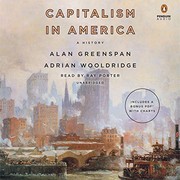
Alan Greenspan, Adrian Wooldridge · 2018

American economic growth from colonial times to now, driven by creative destruction.
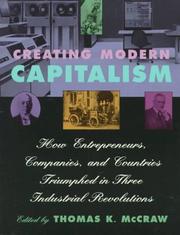
Thomas K. McCraw · 1997

How Britain, Germany, Japan and the US each built their own form of capitalism.

Recommended by: Mohnish Pabrai
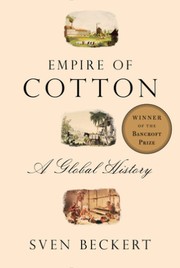
Sven Beckert · 2014

A global history of cotton used to trace how capitalism developed.

Where it sits in the reference 2

Geographies
Economics

Topics

EconomicsGeneral HistoryModern Europe and Russia