Updates

  1. Person pages list letters, writing, profiles and links as sortable tables with filters, and show each person's companies as links; Fund letters show each letter's description in its own column.
  2. Experts show a checked job title and a short description of each person; 30 more people have photographs.
  3. Every company, fund, university and publication the experts work for has a page listing the people there.
  4. Fund letters show each letter's thesis and filter by it; 225 person pages list the essays, columns and newsletter issues the person wrote.
  5. Person pages list every essay and newsletter issue a person wrote, and their own books as a table in List view.
  6. Recommends shows the five largest kinds of book and the rest under More; browse pictures load sooner.
  7. Podcasts and talks link the original episode, filter by Audio and video or Press, and list each publisher once.
  8. Pages are wider, Recommends has List and Grid, and a filter clicked again turns off.
  9. Book cards sit in a ruled grid with Open Library and Goodreads links and each book's one-line note.
  10. Funds is now Investors; each investor's styles are buttons that filter the table.
  11. Podcasts and talks on a person's page filter by year and publisher and show as a list or a grid of pictures.
  12. Quotes show only people's own words: 472 summaries written by list sites are gone.
  13. Country pages open from Browse again, and every link on the shelf lands on a page.
  14. Subject and person pages show their sections as tabs, and each book appears once on a person's page.
  15. Book cards show the quote, who said it and the source; grids show five cards to a row.
  16. On a phone, a menu holds the sections, search, Updates, Feedback and dark mode.
  17. Feedback takes a screenshot of the page with no browser prompt, opens a screenshot full size when you click it, and clears itself once sent.
  18. Book cards are centred, search names the topic each book sits in, and any text cut short shows whole on hover.
  19. Search groups its results by kind: people, companies, geographies, subjects, topics, books, funds, fund letters and papers.
  20. The Books table lists who recommended each book by name, and the browser tab names the section you are in.
  21. Feedback can take a screenshot of the page, or one you paste or choose, and opens in the corner beside Updates.
  22. Each rail button reopens its section where you left it, and Browse, Table and People show on every book and subject page.
  23. Filters grey out choices that hold nothing instead of hiding them, and Books › People filters by authors or recommenders.
  24. Feedback takes a subject line and up to three screenshots.
  25. Biographies are grouped by the person they are about: 41 new pages, from Abraham Lincoln to Lee Kuan Yew.
  26. Sport splits into 23 sports, and Religion into one topic per faith.
  27. Book lists show as cards: the cover, one recommendation quote and every recommender by name.
  28. Seventeen subjects that had two or three pages under different names now have one page each.
  29. Every page lists its Experts as authors and recommenders, with a link to them on the Experts tab.
  30. Economics, Financial history, Financial panics and Accounting are subjects of their own, with one page per financial crisis.
  31. Book, person and subject pages open inside the app, so the tabs stay in view.
  32. 996 more book covers, and photographs or logos for 227 more people and companies.
  33. Books › Browse shows every subject as cards, and the rail holds Fund letters, Papers, Experts, Books and Funds.
  34. Every topic over 150 books splits into narrower topics, each with a page of its own.

Send feedback

What is it?
Screenshots, up to 3 (optional)
or paste one with Ctrl+V

We use your email only to reply to you.

Capitalism in America

Capitalism in America

Alan Greenspan, Adrian Wooldridge
2018
T2 504 pages · about 8h 24m to read Open Librarygoodreads

A former Fed chairman's economic history of creative destruction.

Summary

Greenspan and Wooldridge, an editor at The Economist, wrote a history of American economic growth from the colonial period to the present, organised around the argument that creative destruction is the source of American prosperity.

The historical narrative covers the standard sequence: colonial agriculture, the transport revolutions of canals and railroads, the industrial expansion after the Civil War, the corporate consolidation of the late nineteenth century, mass production and the consumer economy, the Depression and the New Deal, the postwar expansion, the productivity slowdown of the 1970s, the deregulation and computing-driven revival, and the crisis.

The interpretive frame is Schumpeterian. The authors argue that America grew faster than Europe because it permitted and even encouraged the destruction of existing firms, industries and jobs, and because its legal, financial and cultural arrangements made entry easy and failure survivable. They treat bankruptcy law, the absence of aristocratic restrictions, immigration, and the willingness to move for work as the enabling conditions.

The contemporary argument follows: the authors hold that American growth has slowed because entitlement spending crowds out investment, because regulation has accumulated to the point of blocking entry, and because political resistance to disruption has increased. Their prescriptions are entitlement reform and deregulation.

Greenspan's role complicates the book. He chaired the Federal Reserve during the period preceding the crisis, opposed derivatives regulation, and acknowledged after 2008 that his assumption about financial firms' self-interested risk management had been mistaken. The book's treatment of the crisis assigns primary responsibility to housing policy and to global savings flows rather than to monetary policy or to regulatory choices, which readers should weigh against the author's position. The historical narrative is competent and conventional; the interpretive argument is a position rather than a finding.

Key takeaways 7

  1. American growth exceeded Europe's because its arrangements permitted the destruction of existing firms and industries rather than protecting them.
  2. Bankruptcy law that allows failure without permanent penalty is a precondition for the risk-taking that produces growth.
  3. Willingness to move for work and openness to immigration supplied the labour mobility that reallocation requires.
  4. Political resistance to disruption has increased, which slows the reallocation that produces productivity growth.
  5. Entitlement spending crowds out investment, which the authors treat as the principal constraint on future growth.
  6. Regulatory accumulation raises entry costs and protects incumbents, which reduces the entry that drives improvement.
  7. The book was co-authored by the central banker whose tenure preceded the crisis, and its account of the crisis reflects that.

Who should read it

Readers wanting a narrative economic history of the United States organised around creative destruction, with the authorship's implications in mind.

Similar books 6

Chosen by shared topics, the entries that hold them, and the people who recommended both.
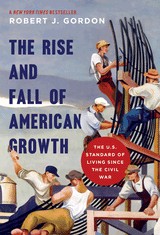
Robert J. Gordon · 2016

Why the inventions of 1870 to 1970 raised living standards as nothing since has.

“This is a heavyweight (literally) masterpiece... It's a data-rich textbook as well as a phenomenal read.” — Christopher Bloomstran

Source: Semper Augustus 2020 Letter to Clients, 'To Read or Not to Read', p. 57

Recommended by: Bill Gates, Christopher Bloomstran and 2 others

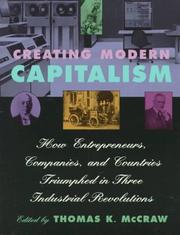
Thomas K. McCraw · 1997

How Britain, Germany, Japan and the US each built their own form of capitalism.

Recommended by: Mohnish Pabrai
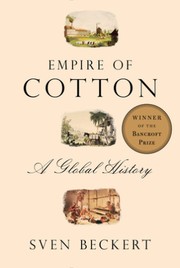
Sven Beckert · 2014

A global history of cotton used to trace how capitalism developed.

Where it sits in the reference 2

Geographies
Economics

Topics

EconomicsGeneral HistoryEconomic and Business History