Updates

  1. Person pages list letters, writing, profiles and links as sortable tables with filters, and show each person's companies as links; Fund letters show each letter's description in its own column.
  2. Experts show a checked job title and a short description of each person; 30 more people have photographs.
  3. Every company, fund, university and publication the experts work for has a page listing the people there.
  4. Fund letters show each letter's thesis and filter by it; 225 person pages list the essays, columns and newsletter issues the person wrote.
  5. Person pages list every essay and newsletter issue a person wrote, and their own books as a table in List view.
  6. Recommends shows the five largest kinds of book and the rest under More; browse pictures load sooner.
  7. Podcasts and talks link the original episode, filter by Audio and video or Press, and list each publisher once.
  8. Pages are wider, Recommends has List and Grid, and a filter clicked again turns off.
  9. Book cards sit in a ruled grid with Open Library and Goodreads links and each book's one-line note.
  10. Funds is now Investors; each investor's styles are buttons that filter the table.
  11. Podcasts and talks on a person's page filter by year and publisher and show as a list or a grid of pictures.
  12. Quotes show only people's own words: 472 summaries written by list sites are gone.
  13. Country pages open from Browse again, and every link on the shelf lands on a page.
  14. Subject and person pages show their sections as tabs, and each book appears once on a person's page.
  15. Book cards show the quote, who said it and the source; grids show five cards to a row.
  16. On a phone, a menu holds the sections, search, Updates, Feedback and dark mode.
  17. Feedback takes a screenshot of the page with no browser prompt, opens a screenshot full size when you click it, and clears itself once sent.
  18. Book cards are centred, search names the topic each book sits in, and any text cut short shows whole on hover.
  19. Search groups its results by kind: people, companies, geographies, subjects, topics, books, funds, fund letters and papers.
  20. The Books table lists who recommended each book by name, and the browser tab names the section you are in.
  21. Feedback can take a screenshot of the page, or one you paste or choose, and opens in the corner beside Updates.
  22. Each rail button reopens its section where you left it, and Browse, Table and People show on every book and subject page.
  23. Filters grey out choices that hold nothing instead of hiding them, and Books › People filters by authors or recommenders.
  24. Feedback takes a subject line and up to three screenshots.
  25. Biographies are grouped by the person they are about: 41 new pages, from Abraham Lincoln to Lee Kuan Yew.
  26. Sport splits into 23 sports, and Religion into one topic per faith.
  27. Book lists show as cards: the cover, one recommendation quote and every recommender by name.
  28. Seventeen subjects that had two or three pages under different names now have one page each.
  29. Every page lists its Experts as authors and recommenders, with a link to them on the Experts tab.
  30. Economics, Financial history, Financial panics and Accounting are subjects of their own, with one page per financial crisis.
  31. Book, person and subject pages open inside the app, so the tabs stay in view.
  32. 996 more book covers, and photographs or logos for 227 more people and companies.
  33. Books › Browse shows every subject as cards, and the rail holds Fund letters, Papers, Experts, Books and Funds.
  34. Every topic over 150 books splits into narrower topics, each with a page of its own.

Send feedback

What is it?
Screenshots, up to 3 (optional)
or paste one with Ctrl+V

We use your email only to reply to you.

The World Is Flat

The World Is Flat

Thomas L. Friedman
2005
T2 512 pages · about 8h 32m to read Open Librarygoodreads

The popular account of offshoring and supply-chaining as business models.

Summary

Friedman argues that a set of developments converging around 2000 levelled the global economic playing field, allowing individuals and small companies anywhere to compete and collaborate globally. He identifies ten flatteners including the fall of the Berlin Wall, the Netscape public offering and the resulting internet build-out, workflow software that allowed systems to interoperate, open source, outsourcing, offshoring, supply chaining as practised by Walmart, insourcing as practised by UPS, search, and mobile and wireless technologies.

His reporting from India and China is the book's evidence base, and it was genuinely new to most Western readers in 2005. He describes call centres, radiology work sent to India overnight, tax returns prepared offshore, and the specific capabilities that made this possible.

He argues that the response for developed economies is education and adaptability rather than protection, and that individuals should become what he calls untouchables, meaning workers whose jobs cannot be outsourced, automated or commoditised.

The book has been heavily criticised. The flat metaphor is contradicted by the persistent concentration of high-value activity in a small number of places, which Richard Florida and Pankaj Ghemawat both documented. Ghemawat's data shows that most economic activity remains national or regional rather than global. Friedman writes through anecdotes from senior executives who had interests in the narrative. The book is long and repetitive, and the technological determinism gives little weight to policy, institutions or labour. The reporting from 2005 is a useful record of what that moment looked like and the analysis has aged poorly.

Key takeaways 8

  1. A set of technological and political developments converging around 2000 allowed work to be divided and distributed globally in ways not previously possible.
  2. Workflow software that let different systems interoperate was the enabling development, since digitisation alone did not permit work to be split across locations.
  3. Supply chain integration, as practised by Walmart, produced a form of global coordination that treated suppliers as extensions of the firm.
  4. Services previously assumed to be location-bound, including radiology, accounting and customer support, could be performed remotely once bandwidth and process standards allowed.
  5. Individuals should develop capabilities that cannot be outsourced, automated or commoditised, which Friedman frames as the response to the shift.
  6. Protection is not available as a response because the changes are structural rather than the result of any policy that could be reversed.
  7. The flat metaphor is contradicted by the continued concentration of high-value work in a small number of locations.
  8. Subsequent data shows that most economic activity remains national or regional rather than global, which undermines the book's central claim.

Who should read it

Readers who want a record of what the early offshoring wave looked like to observers in 2005, with the analytical claims treated as substantially contested.

Who recommended it 5 · 1 direct

Bill Gatesreported
John Doerrreported
Meg Whitmanreported

Similar books 6

Chosen by shared topics, the entries that hold them, and the people who recommended both.
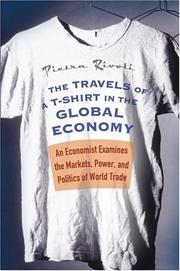
Pietra Rivoli · 2005

One T-shirt traced from a Texas cotton farm to a Chinese factory and beyond.
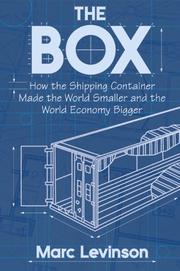
Marc Levinson · 2006

How the shipping container cut freight costs and remade global trade.

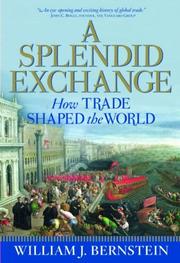
William J. Bernstein · 2008

Long-distance trade from Mesopotamia and the spice routes to modern globalisation.

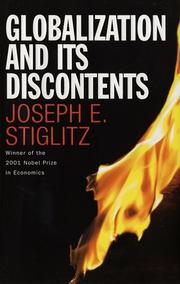
Joseph E. Stiglitz · 2002

An attack on the IMF's one-size-fits-all policies in the crises of the 1990s.

Recommended by: Patrick Collison

Rana Foroohar · 2022

The case for localisation after the pandemic supply shocks.

Richard Baldwin · 2016

Globalisation's two phases: cheap shipping of goods, then cheap movement of ideas.

Recommended by: Satya Nadella

Where it sits in the reference 3

Business models
Business themes
Economics

Topics

EconomicsSociology and CultureGlobalisation and national societies