Updates

  1. Person pages list letters, writing, profiles and links as sortable tables with filters, and show each person's companies as links; Fund letters show each letter's description in its own column.
  2. Experts show a checked job title and a short description of each person; 30 more people have photographs.
  3. Every company, fund, university and publication the experts work for has a page listing the people there.
  4. Fund letters show each letter's thesis and filter by it; 225 person pages list the essays, columns and newsletter issues the person wrote.
  5. Person pages list every essay and newsletter issue a person wrote, and their own books as a table in List view.
  6. Recommends shows the five largest kinds of book and the rest under More; browse pictures load sooner.
  7. Podcasts and talks link the original episode, filter by Audio and video or Press, and list each publisher once.
  8. Pages are wider, Recommends has List and Grid, and a filter clicked again turns off.
  9. Book cards sit in a ruled grid with Open Library and Goodreads links and each book's one-line note.
  10. Funds is now Investors; each investor's styles are buttons that filter the table.
  11. Podcasts and talks on a person's page filter by year and publisher and show as a list or a grid of pictures.
  12. Quotes show only people's own words: 472 summaries written by list sites are gone.
  13. Country pages open from Browse again, and every link on the shelf lands on a page.
  14. Subject and person pages show their sections as tabs, and each book appears once on a person's page.
  15. Book cards show the quote, who said it and the source; grids show five cards to a row.
  16. On a phone, a menu holds the sections, search, Updates, Feedback and dark mode.
  17. Feedback takes a screenshot of the page with no browser prompt, opens a screenshot full size when you click it, and clears itself once sent.
  18. Book cards are centred, search names the topic each book sits in, and any text cut short shows whole on hover.
  19. Search groups its results by kind: people, companies, geographies, subjects, topics, books, funds, fund letters and papers.
  20. The Books table lists who recommended each book by name, and the browser tab names the section you are in.
  21. Feedback can take a screenshot of the page, or one you paste or choose, and opens in the corner beside Updates.
  22. Each rail button reopens its section where you left it, and Browse, Table and People show on every book and subject page.
  23. Filters grey out choices that hold nothing instead of hiding them, and Books › People filters by authors or recommenders.
  24. Feedback takes a subject line and up to three screenshots.
  25. Biographies are grouped by the person they are about: 41 new pages, from Abraham Lincoln to Lee Kuan Yew.
  26. Sport splits into 23 sports, and Religion into one topic per faith.
  27. Book lists show as cards: the cover, one recommendation quote and every recommender by name.
  28. Seventeen subjects that had two or three pages under different names now have one page each.
  29. Every page lists its Experts as authors and recommenders, with a link to them on the Experts tab.
  30. Economics, Financial history, Financial panics and Accounting are subjects of their own, with one page per financial crisis.
  31. Book, person and subject pages open inside the app, so the tabs stay in view.
  32. 996 more book covers, and photographs or logos for 227 more people and companies.
  33. Books › Browse shows every subject as cards, and the rail holds Fund letters, Papers, Experts, Books and Funds.
  34. Every topic over 150 books splits into narrower topics, each with a page of its own.

Send feedback

What is it?
Screenshots, up to 3 (optional)
or paste one with Ctrl+V

We use your email only to reply to you.

Asset-light and outsourced manufacturing

Own the brand and the design, rent the factory. Strong on cases and on consequences; thin on general theory beyond Christensen's modularity argument.

Start here

  1. Shoe DogPhil Knight, 2016
  2. The Travels of a T-Shirt in the Global EconomyPietra Rivoli, 2005
  3. Apple in ChinaPatrick McGee, 2025
  4. The Innovator's SolutionClayton M. Christensen, Michael E. Raynor, 2003
Clayton M. Christensen, Michael E. Raynor · 2003

How a company can build new businesses through low-end and new-market disruption.

Recommended by: Jeff Bezos, Keith Rabois
Phil Knight · 2016

How a running-shoe importer became Nike, surviving one cash crisis after another.

“…books I've recommended, highlighted to death, or forced on friends.” — Andrew Wilkinson

Source: Andrew Wilkinson's Bookshelf, neverenough.com

Recommended by: Andrew Wilkinson, Bill Gates, Mohnish Pabrai and 25 others

Charles H. Fine · 1998

Fast-moving industries reveal supply-chain dynamics slow ones take decades to show.
Carliss Y. Baldwin, Kim B. Clark · 1999

A theory of modularity in design, applied to the history of the computer industry.
Pietra Rivoli · 2005

One T-shirt traced from a Texas cotton farm to a Chinese factory and beyond.

Thomas L. Friedman · 2005

Ten forces around 2000 that let anyone, anywhere compete in the global economy.

Patrick McGee · 2025

How Apple built its manufacturing base in China, and what it gave China in return.

“This is a phenomenal read... A brilliantly researched book. This book was hard to put down.” — Christopher Bloomstran

Source: Semper Augustus 2025 Letter to Clients, 'Books and Music', p. 87

Recommended by: Christopher Bloomstran
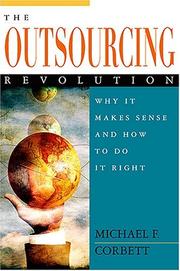
Michael F. Corbett · 2004

Practitioner survey of outsourcing decisions and their economics.

More business models