
Updates

  1. Person pages list letters, writing, profiles and links as sortable tables with filters, and show each person's companies as links; Fund letters show each letter's description in its own column.
  2. Experts show a checked job title and a short description of each person; 30 more people have photographs.
  3. Every company, fund, university and publication the experts work for has a page listing the people there.
  4. Fund letters show each letter's thesis and filter by it; 225 person pages list the essays, columns and newsletter issues the person wrote.
  5. Person pages list every essay and newsletter issue a person wrote, and their own books as a table in List view.
  6. Recommends shows the five largest kinds of book and the rest under More; browse pictures load sooner.
  7. Podcasts and talks link the original episode, filter by Audio and video or Press, and list each publisher once.
  8. Pages are wider, Recommends has List and Grid, and a filter clicked again turns off.
  9. Book cards sit in a ruled grid with Open Library and Goodreads links and each book's one-line note.
  10. Funds is now Investors; each investor's styles are buttons that filter the table.
  11. Podcasts and talks on a person's page filter by year and publisher and show as a list or a grid of pictures.
  12. Quotes show only people's own words: 472 summaries written by list sites are gone.
  13. Country pages open from Browse again, and every link on the shelf lands on a page.
  14. Subject and person pages show their sections as tabs, and each book appears once on a person's page.
  15. Book cards show the quote, who said it and the source; grids show five cards to a row.
  16. On a phone, a menu holds the sections, search, Updates, Feedback and dark mode.
  17. Feedback takes a screenshot of the page with no browser prompt, opens a screenshot full size when you click it, and clears itself once sent.
  18. Book cards are centred, search names the topic each book sits in, and any text cut short shows whole on hover.
  19. Search groups its results by kind: people, companies, geographies, subjects, topics, books, funds, fund letters and papers.
  20. The Books table lists who recommended each book by name, and the browser tab names the section you are in.
  21. Feedback can take a screenshot of the page, or one you paste or choose, and opens in the corner beside Updates.
  22. Each rail button reopens its section where you left it, and Browse, Table and People show on every book and subject page.
  23. Filters grey out choices that hold nothing instead of hiding them, and Books › People filters by authors or recommenders.
  24. Feedback takes a subject line and up to three screenshots.
  25. Biographies are grouped by the person they are about: 41 new pages, from Abraham Lincoln to Lee Kuan Yew.
  26. Sport splits into 23 sports, and Religion into one topic per faith.
  27. Book lists show as cards: the cover, one recommendation quote and every recommender by name.
  28. Seventeen subjects that had two or three pages under different names now have one page each.
  29. Every page lists its Experts as authors and recommenders, with a link to them on the Experts tab.
  30. Economics, Financial history, Financial panics and Accounting are subjects of their own, with one page per financial crisis.
  31. Book, person and subject pages open inside the app, so the tabs stay in view.
  32. 996 more book covers, and photographs or logos for 227 more people and companies.
  33. Books › Browse shows every subject as cards, and the rail holds Fund letters, Papers, Experts, Books and Funds.
  34. Every topic over 150 books splits into narrower topics, each with a page of its own.

Send feedback

What is it?
Screenshots, up to 3 (optional)
or paste one with Ctrl+V

We use your email only to reply to you.

Bitter Chocolate

Bitter Chocolate

Carol Off
2006
T3 336 pages · about 5h 36m to read Open Librarygoodreads

Cocoa supply chain and child labour behind confectionery majors.

Summary

Off, a Canadian journalist, investigated the cocoa supply chain, focusing on Cote d'Ivoire, which produces a large share of the world's cocoa, and on the conditions under which it is grown.

The reporting covers the labour question directly. Off documents child labour on cocoa farms, including trafficked children from Mali and Burkina Faso working without pay, and the conditions on the farms she visited. She traces the industry's response to the exposure of this in 2001, including the Harkin-Engel Protocol under which manufacturers committed voluntarily to eliminate the worst forms of child labour by a set date, and documents the repeated postponement of that deadline.

The economic analysis explains why the labour conditions persist. The farm gate price a grower receives is a small fraction of the retail price of chocolate. Growers have no market power, sell into a chain of intermediaries, and cannot afford paid labour at the prices they receive. Off traces where the value sits: in the grinding and processing companies, in the manufacturers, and in the retailers, all concentrated among few firms while production is fragmented among a very large number of smallholders. She covers the abolition of the Ivorian marketing board, which had stabilised prices, and the effect of liberalisation on growers' incomes.

The political sections cover the role of cocoa revenue in Ivorian politics and in financing the conflict that divided the country after 2002.

The book is advocacy journalism with a clear position. The economic analysis of value distribution along the chain is accurate and is the part that transfers. Certification schemes have expanded since publication with contested evidence about their effect on grower incomes and on labour practices.

Key takeaways 7

  1. The farm gate price a cocoa grower receives is a small fraction of the retail price of chocolate.
  2. Value in the cocoa chain concentrates in processing, manufacturing and retail, all of which are concentrated among few firms.
  3. Production is fragmented among very large numbers of smallholders with no market power against concentrated buyers.
  4. Growers cannot afford paid labour at the prices they receive, which is the economic condition that sustains child labour.
  5. The Harkin-Engel Protocol committed manufacturers voluntarily to eliminate the worst child labour and its deadline was repeatedly postponed.
  6. Abolishing the Ivorian marketing board removed the price stabilisation that had protected grower incomes.
  7. Cocoa revenue financed the political conflict that divided Cote d'Ivoire after 2002.

Who should read it

Operators and investors in agricultural commodity chains who need to see how value distribution along a chain determines conditions at its origin.

Similar books 6

Chosen by shared topics, the entries that hold them, and the people who recommended both.
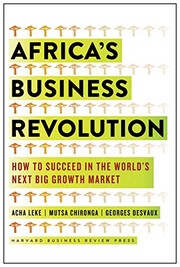
Acha Leke, Mutsa Chironga, Georges Desvaux · 2018

McKinsey survey of operating companies; Ghana appears among the consumer-market cases.
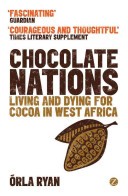
Orla Ryan · 2011

West African cocoa economics for a buyer of the crop.
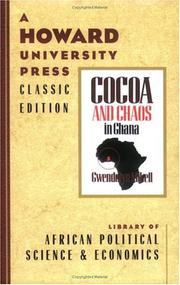
Gwendolyn Mikell · 1989

How marketing-board pricing destroyed the country's main export industry.
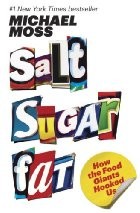
Michael Moss · 2013

How processed-food makers engineer salt, sugar and fat to make people eat more.
Steven Radelet · 2010

Ghana as lead exhibit in the case for African growth turnarounds.
Donald Rothchild · 1991

The Rawlings structural adjustment, the reference case for African reform.

Where it sits in the reference 4

Companies
Geographies
Industries
Geographies

Topics

Sociology and CulturePolitics and GovernmentGlobalisation and national societies