Updates

  1. Person pages list letters, writing, profiles and links as sortable tables with filters, and show each person's companies as links; Fund letters show each letter's description in its own column.
  2. Experts show a checked job title and a short description of each person; 30 more people have photographs.
  3. Every company, fund, university and publication the experts work for has a page listing the people there.
  4. Fund letters show each letter's thesis and filter by it; 225 person pages list the essays, columns and newsletter issues the person wrote.
  5. Person pages list every essay and newsletter issue a person wrote, and their own books as a table in List view.
  6. Recommends shows the five largest kinds of book and the rest under More; browse pictures load sooner.
  7. Podcasts and talks link the original episode, filter by Audio and video or Press, and list each publisher once.
  8. Pages are wider, Recommends has List and Grid, and a filter clicked again turns off.
  9. Book cards sit in a ruled grid with Open Library and Goodreads links and each book's one-line note.
  10. Funds is now Investors; each investor's styles are buttons that filter the table.
  11. Podcasts and talks on a person's page filter by year and publisher and show as a list or a grid of pictures.
  12. Quotes show only people's own words: 472 summaries written by list sites are gone.
  13. Country pages open from Browse again, and every link on the shelf lands on a page.
  14. Subject and person pages show their sections as tabs, and each book appears once on a person's page.
  15. Book cards show the quote, who said it and the source; grids show five cards to a row.
  16. On a phone, a menu holds the sections, search, Updates, Feedback and dark mode.
  17. Feedback takes a screenshot of the page with no browser prompt, opens a screenshot full size when you click it, and clears itself once sent.
  18. Book cards are centred, search names the topic each book sits in, and any text cut short shows whole on hover.
  19. Search groups its results by kind: people, companies, geographies, subjects, topics, books, funds, fund letters and papers.
  20. The Books table lists who recommended each book by name, and the browser tab names the section you are in.
  21. Feedback can take a screenshot of the page, or one you paste or choose, and opens in the corner beside Updates.
  22. Each rail button reopens its section where you left it, and Browse, Table and People show on every book and subject page.
  23. Filters grey out choices that hold nothing instead of hiding them, and Books › People filters by authors or recommenders.
  24. Feedback takes a subject line and up to three screenshots.
  25. Biographies are grouped by the person they are about: 41 new pages, from Abraham Lincoln to Lee Kuan Yew.
  26. Sport splits into 23 sports, and Religion into one topic per faith.
  27. Book lists show as cards: the cover, one recommendation quote and every recommender by name.
  28. Seventeen subjects that had two or three pages under different names now have one page each.
  29. Every page lists its Experts as authors and recommenders, with a link to them on the Experts tab.
  30. Economics, Financial history, Financial panics and Accounting are subjects of their own, with one page per financial crisis.
  31. Book, person and subject pages open inside the app, so the tabs stay in view.
  32. 996 more book covers, and photographs or logos for 227 more people and companies.
  33. Books › Browse shows every subject as cards, and the rail holds Fund letters, Papers, Experts, Books and Funds.
  34. Every topic over 150 books splits into narrower topics, each with a page of its own.

Send feedback

What is it?
Screenshots, up to 3 (optional)
or paste one with Ctrl+V

We use your email only to reply to you.

Ghana: The Political Economy of Recovery

Ghana: The Political Economy of Recovery

Donald Rothchild
1991
T3 285 pages · about 4h 45m to read Open Librarygoodreads

The Rawlings structural adjustment, the reference case for African reform.

Summary

The reference has not verified this book in detail; the summary states only what the title, author and subject establish.

Rothchild edited this volume of studies on Ghana's economic recovery programme, published in 1991. The reference has not verified the individual contributions.

The context is specific. Ghana at independence in 1957 was among the wealthiest countries in sub-Saharan Africa, with substantial cocoa export earnings and reserves. Over the following twenty-five years its economy contracted severely: cocoa production collapsed as producer prices were held far below world levels by the marketing board, which taxed farmers heavily; the currency became massively overvalued; smuggling and parallel markets replaced formal trade; infrastructure decayed; and by the early 1980s output per head had fallen substantially with severe shortages.

The Economic Recovery Programme launched in 1983 under Jerry Rawlings, with World Bank and International Monetary Fund support, is the volume's subject. Its components included large devaluation, which restored producer prices for cocoa; removal of price controls; reduction of the fiscal deficit; divestiture of state enterprises; and infrastructure investment funded by aid. Growth resumed and the programme was presented internationally as a success.

The questions the contributions examine include whether the recovery was sustainable or dependent on aid inflows, whether the gains were distributed or concentrated, the political conditions that allowed an authoritarian government to impose adjustment that elected governments could not, the effect on urban populations who lost subsidies, and whether the reforms addressed the underlying institutional problems.

The volume is from 1991 and Ghana's subsequent record has included both continued growth and repeated fiscal and currency crises. Readers should treat it as an assessment of the programme's early years.

Key takeaways 7

  1. Ghana was among sub-Saharan Africa's wealthiest countries at independence and its economy contracted severely over the following twenty-five years.
  2. Holding cocoa producer prices far below world levels through the marketing board destroyed the country's main export industry.
  3. An overvalued currency combined with price controls pushed trade into smuggling and parallel markets.
  4. The 1983 recovery programme's central measure was a large devaluation that restored producer prices for cocoa.
  5. An authoritarian government imposed adjustment that elected governments had been unable to sustain.
  6. Urban populations who lost subsidies bore the immediate costs while rural producers gained.
  7. Whether the recovery was sustainable or dependent on continued aid inflows was the open question at the time of writing.

Who should read it

Analysts of African structural adjustment who want the Ghanaian case studied in its early years, supplemented with later assessments.

Similar books 6

Chosen by shared topics, the entries that hold them, and the people who recommended both.

Steven Radelet · 2010

Ghana as lead exhibit in the case for African growth turnarounds.

Greg Mills, Olusegun Obasanjo, Jeffrey Herbst, Dickie Davis · 2017

Operator-facing handbook on governance and growth constraints across the continent.

Christopher Cramer, John Sender, Arkebe Oqubay · 2020

A challenge to donor orthodoxy on how African economies should develop.

Arkebe Oqubay · 2015

Insider account of the cement, floriculture and leather sectors by the official who ran the policy.
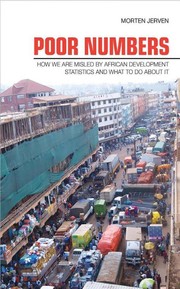
Morten Jerven · 2013

Ghana's 2010 GDP rebasing is the central case; read before trusting any African macro series.

Recommended by: Bill Gates
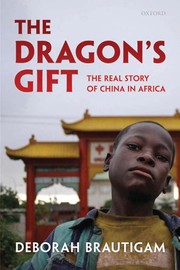
Deborah Brautigam · 2009

What China actually does in Africa, from field research, against Western myths.

Where it sits in the reference 3

Geographies
Economics
Geographies

Topics

EconomicsPolitics and Government