Updates

  1. Person pages list letters, writing, profiles and links as sortable tables with filters, and show each person's companies as links; Fund letters show each letter's description in its own column.
  2. Experts show a checked job title and a short description of each person; 30 more people have photographs.
  3. Every company, fund, university and publication the experts work for has a page listing the people there.
  4. Fund letters show each letter's thesis and filter by it; 225 person pages list the essays, columns and newsletter issues the person wrote.
  5. Person pages list every essay and newsletter issue a person wrote, and their own books as a table in List view.
  6. Recommends shows the five largest kinds of book and the rest under More; browse pictures load sooner.
  7. Podcasts and talks link the original episode, filter by Audio and video or Press, and list each publisher once.
  8. Pages are wider, Recommends has List and Grid, and a filter clicked again turns off.
  9. Book cards sit in a ruled grid with Open Library and Goodreads links and each book's one-line note.
  10. Funds is now Investors; each investor's styles are buttons that filter the table.
  11. Podcasts and talks on a person's page filter by year and publisher and show as a list or a grid of pictures.
  12. Quotes show only people's own words: 472 summaries written by list sites are gone.
  13. Country pages open from Browse again, and every link on the shelf lands on a page.
  14. Subject and person pages show their sections as tabs, and each book appears once on a person's page.
  15. Book cards show the quote, who said it and the source; grids show five cards to a row.
  16. On a phone, a menu holds the sections, search, Updates, Feedback and dark mode.
  17. Feedback takes a screenshot of the page with no browser prompt, opens a screenshot full size when you click it, and clears itself once sent.
  18. Book cards are centred, search names the topic each book sits in, and any text cut short shows whole on hover.
  19. Search groups its results by kind: people, companies, geographies, subjects, topics, books, funds, fund letters and papers.
  20. The Books table lists who recommended each book by name, and the browser tab names the section you are in.
  21. Feedback can take a screenshot of the page, or one you paste or choose, and opens in the corner beside Updates.
  22. Each rail button reopens its section where you left it, and Browse, Table and People show on every book and subject page.
  23. Filters grey out choices that hold nothing instead of hiding them, and Books › People filters by authors or recommenders.
  24. Feedback takes a subject line and up to three screenshots.
  25. Biographies are grouped by the person they are about: 41 new pages, from Abraham Lincoln to Lee Kuan Yew.
  26. Sport splits into 23 sports, and Religion into one topic per faith.
  27. Book lists show as cards: the cover, one recommendation quote and every recommender by name.
  28. Seventeen subjects that had two or three pages under different names now have one page each.
  29. Every page lists its Experts as authors and recommenders, with a link to them on the Experts tab.
  30. Economics, Financial history, Financial panics and Accounting are subjects of their own, with one page per financial crisis.
  31. Book, person and subject pages open inside the app, so the tabs stay in view.
  32. 996 more book covers, and photographs or logos for 227 more people and companies.
  33. Books › Browse shows every subject as cards, and the rail holds Fund letters, Papers, Experts, Books and Funds.
  34. Every topic over 150 books splits into narrower topics, each with a page of its own.

Send feedback

What is it?
Screenshots, up to 3 (optional)
or paste one with Ctrl+V

We use your email only to reply to you.

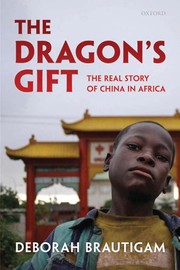
The Dragon's Gift

The Dragon's Gift

Deborah Brautigam
2009
T2 406 pages · about 6h 46m to read Open Librarygoodreads

What Chinese finance and contractors actually do in Africa; Ethiopia recurring.

Summary

Deborah Brautigam has researched Chinese engagement in Africa for decades, and this book corrects the account that circulated in Western media around 2009. Her method is field research, Chinese-language sources and the actual terms of the agreements.

Her corrections are specific. Chinese aid to Africa is much smaller than commonly reported, because the figures cited generally conflate concessional aid with export credits and commercial loans. Chinese firms in Africa employ substantial local workforces, contrary to claims that they import all labour. Resource-backed loans, in which infrastructure is financed against future commodity output, are not a Chinese invention; Japan used the same structure with China in the 1970s, which is where China learned it. Chinese engagement is driven by its own commercial interests and by the export promotion mandate of its policy banks rather than by a coordinated strategic plan.

Brautigam is not uncritical. She documents the environmental and labour problems, the debt sustainability questions, the limited technology transfer, and the governance consequences of dealing with regimes that Western donors avoid. Her broader argument is that China's approach reflects its own development experience, in which infrastructure and export processing zones preceded institutional reform, and that this is a coherent theory rather than an absence of one. The book was published in 2009, before the Belt and Road expansion and the subsequent debt distress in several African borrowers, which Brautigam has addressed in later work.

Key takeaways 7

  1. Chinese aid figures reported in Western media conflate concessional aid with export credits and commercial lending.
  2. Resource-backed infrastructure loans were used by Japan with China in the 1970s, which is where China learned the structure.
  3. Chinese firms in Africa employ substantial local workforces, contrary to the claim that they import all labour.
  4. Chinese engagement is driven by policy bank export promotion mandates and commercial interest rather than by a coordinated strategic plan.
  5. China's approach reflects its own development sequence, in which infrastructure and export zones preceded institutional reform.
  6. Brautigam documents environmental, labour and governance problems while rejecting the specific claims she finds unsupported.
  7. African governments negotiate these agreements and their terms reflect the negotiating capacity each brings.

Who should read it

Investors and analysts working on African markets or on Chinese overseas lending who want field research rather than the circulating claims.

Similar books 6

Chosen by shared topics, the entries that hold them, and the people who recommended both.

Christopher Cramer, John Sender, Arkebe Oqubay · 2020

A challenge to donor orthodoxy on how African economies should develop.

Arkebe Oqubay · 2015

Insider account of the cement, floriculture and leather sectors by the official who ran the policy.

Steven Radelet · 2010

Ghana as lead exhibit in the case for African growth turnarounds.

Donald Rothchild · 1991

The Rawlings structural adjustment, the reference case for African reform.

Arkebe Oqubay, Kenichi Ohno · 2019

Technological learning and catch-up; the theory behind Ethiopia's industrial parks.

Greg Mills, Olusegun Obasanjo, Jeffrey Herbst, Dickie Davis · 2017

Operator-facing handbook on governance and growth constraints across the continent.

Where it sits in the reference 3

Geographies
Economics
Geographies

Topics

Politics and GovernmentEconomics