Updates

  1. Person pages list letters, writing, profiles and links as sortable tables with filters, and show each person's companies as links; Fund letters show each letter's description in its own column.
  2. Experts show a checked job title and a short description of each person; 30 more people have photographs.
  3. Every company, fund, university and publication the experts work for has a page listing the people there.
  4. Fund letters show each letter's thesis and filter by it; 225 person pages list the essays, columns and newsletter issues the person wrote.
  5. Person pages list every essay and newsletter issue a person wrote, and their own books as a table in List view.
  6. Recommends shows the five largest kinds of book and the rest under More; browse pictures load sooner.
  7. Podcasts and talks link the original episode, filter by Audio and video or Press, and list each publisher once.
  8. Pages are wider, Recommends has List and Grid, and a filter clicked again turns off.
  9. Book cards sit in a ruled grid with Open Library and Goodreads links and each book's one-line note.
  10. Funds is now Investors; each investor's styles are buttons that filter the table.
  11. Podcasts and talks on a person's page filter by year and publisher and show as a list or a grid of pictures.
  12. Quotes show only people's own words: 472 summaries written by list sites are gone.
  13. Country pages open from Browse again, and every link on the shelf lands on a page.
  14. Subject and person pages show their sections as tabs, and each book appears once on a person's page.
  15. Book cards show the quote, who said it and the source; grids show five cards to a row.
  16. On a phone, a menu holds the sections, search, Updates, Feedback and dark mode.
  17. Feedback takes a screenshot of the page with no browser prompt, opens a screenshot full size when you click it, and clears itself once sent.
  18. Book cards are centred, search names the topic each book sits in, and any text cut short shows whole on hover.
  19. Search groups its results by kind: people, companies, geographies, subjects, topics, books, funds, fund letters and papers.
  20. The Books table lists who recommended each book by name, and the browser tab names the section you are in.
  21. Feedback can take a screenshot of the page, or one you paste or choose, and opens in the corner beside Updates.
  22. Each rail button reopens its section where you left it, and Browse, Table and People show on every book and subject page.
  23. Filters grey out choices that hold nothing instead of hiding them, and Books › People filters by authors or recommenders.
  24. Feedback takes a subject line and up to three screenshots.
  25. Biographies are grouped by the person they are about: 41 new pages, from Abraham Lincoln to Lee Kuan Yew.
  26. Sport splits into 23 sports, and Religion into one topic per faith.
  27. Book lists show as cards: the cover, one recommendation quote and every recommender by name.
  28. Seventeen subjects that had two or three pages under different names now have one page each.
  29. Every page lists its Experts as authors and recommenders, with a link to them on the Experts tab.
  30. Economics, Financial history, Financial panics and Accounting are subjects of their own, with one page per financial crisis.
  31. Book, person and subject pages open inside the app, so the tabs stay in view.
  32. 996 more book covers, and photographs or logos for 227 more people and companies.
  33. Books › Browse shows every subject as cards, and the rail holds Fund letters, Papers, Experts, Books and Funds.
  34. Every topic over 150 books splits into narrower topics, each with a page of its own.

Send feedback

What is it?
Screenshots, up to 3 (optional)
or paste one with Ctrl+V

We use your email only to reply to you.

How Nations Learn

How Nations Learn

Arkebe Oqubay, Kenichi Ohno
2019
T3 368 pages · about 6h 8m to read Open Librarygoodreads

Technological learning and catch-up; the theory behind Ethiopia's industrial parks.

Summary

Arkebe Oqubay and Kenichi Ohno edited this collection on technological learning and economic catch-up. The organising claim is that catch-up happens through deliberate, policy-driven learning rather than through the automatic diffusion of technology that standard trade theory predicts. Contributors distinguish between acquiring technology, which can be bought, and building the capability to use and improve it, which cannot.

The case chapters cover Japan's Meiji-era and postwar absorption of foreign technique, Korea's engineering-led industrialisation, Taiwan's public research institutes, Singapore's targeting of multinational investment, China's insistence on technology transfer terms, and more recent efforts in Ethiopia, Vietnam and India. Ohno contributes the framework distinguishing countries that learn from those that merely host production. Oqubay writes on Ethiopia from his position inside its government. The chapters are consistent in emphasising state capacity, long time horizons and discipline in withdrawing support from failing firms.

The book comes from the heterodox development economics tradition and argues against the view that openness and stable macroeconomic policy are sufficient. Its weaknesses are selection bias, since the successful learners get most of the attention, and a tendency to treat state capacity as an input rather than as something that itself needs explaining. The Ethiopia chapters have aged badly given the conflict and macroeconomic difficulties that followed publication in 2019. Read it for the comparative material on how specific countries built engineering capability.

Key takeaways 7

  1. Buying technology and learning to use it are different problems, and only the second produces catch-up.
  2. Successful late developers imposed conditions on foreign investors that forced knowledge transfer rather than accepting assembly work.
  3. Industrial policy works only where the state can withdraw support from firms that fail to meet export or productivity targets.
  4. Learning requires a time horizon longer than any electoral cycle, which is why authoritarian developmental states appear disproportionately in the successful sample.
  5. Education spending produces catch-up only when domestic firms exist that can employ the graduates in technical roles.
  6. Latecomers cannot repeat the exact sequence used by Japan or Korea because trade rules and global production networks have changed.
  7. Policy learning within government, including the ability to copy institutions from other countries, matters as much as technological learning within firms.

Who should read it

Investors and executives assessing industrial policy in developing economies who want comparative evidence on which state interventions produced capability and which produced rents.

Similar books 6

Chosen by shared topics, the entries that hold them, and the people who recommended both.

Christopher Cramer, John Sender, Arkebe Oqubay · 2020

A challenge to donor orthodoxy on how African economies should develop.

Arkebe Oqubay · 2015

Insider account of the cement, floriculture and leather sectors by the official who ran the policy.
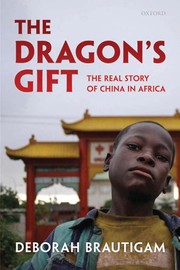
Deborah Brautigam · 2009

What China actually does in Africa, from field research, against Western myths.

Fantu Cheru, Christopher Cramer, Arkebe Oqubay · 2019

Ethiopia's economy sector by sector: history, foreign exchange, agriculture and land.
Alan Richards, John Waterbury · 1990

Egypt is the anchor case throughout; the standard textbook on regional state-business relations.

Arang Keshavarzian · 2003

How informal credit, trust networks and trade finance work when the banking system does not.

Where it sits in the reference 2

Geographies
Economics

Topics

EconomicsPolitics and GovernmentEducation and LearningGlobalisation, development and offshore money