Updates

  1. Person pages list letters, writing, profiles and links as sortable tables with filters, and show each person's companies as links; Fund letters show each letter's description in its own column.
  2. Experts show a checked job title and a short description of each person; 30 more people have photographs.
  3. Every company, fund, university and publication the experts work for has a page listing the people there.
  4. Fund letters show each letter's thesis and filter by it; 225 person pages list the essays, columns and newsletter issues the person wrote.
  5. Person pages list every essay and newsletter issue a person wrote, and their own books as a table in List view.
  6. Recommends shows the five largest kinds of book and the rest under More; browse pictures load sooner.
  7. Podcasts and talks link the original episode, filter by Audio and video or Press, and list each publisher once.
  8. Pages are wider, Recommends has List and Grid, and a filter clicked again turns off.
  9. Book cards sit in a ruled grid with Open Library and Goodreads links and each book's one-line note.
  10. Funds is now Investors; each investor's styles are buttons that filter the table.
  11. Podcasts and talks on a person's page filter by year and publisher and show as a list or a grid of pictures.
  12. Quotes show only people's own words: 472 summaries written by list sites are gone.
  13. Country pages open from Browse again, and every link on the shelf lands on a page.
  14. Subject and person pages show their sections as tabs, and each book appears once on a person's page.
  15. Book cards show the quote, who said it and the source; grids show five cards to a row.
  16. On a phone, a menu holds the sections, search, Updates, Feedback and dark mode.
  17. Feedback takes a screenshot of the page with no browser prompt, opens a screenshot full size when you click it, and clears itself once sent.
  18. Book cards are centred, search names the topic each book sits in, and any text cut short shows whole on hover.
  19. Search groups its results by kind: people, companies, geographies, subjects, topics, books, funds, fund letters and papers.
  20. The Books table lists who recommended each book by name, and the browser tab names the section you are in.
  21. Feedback can take a screenshot of the page, or one you paste or choose, and opens in the corner beside Updates.
  22. Each rail button reopens its section where you left it, and Browse, Table and People show on every book and subject page.
  23. Filters grey out choices that hold nothing instead of hiding them, and Books › People filters by authors or recommenders.
  24. Feedback takes a subject line and up to three screenshots.
  25. Biographies are grouped by the person they are about: 41 new pages, from Abraham Lincoln to Lee Kuan Yew.
  26. Sport splits into 23 sports, and Religion into one topic per faith.
  27. Book lists show as cards: the cover, one recommendation quote and every recommender by name.
  28. Seventeen subjects that had two or three pages under different names now have one page each.
  29. Every page lists its Experts as authors and recommenders, with a link to them on the Experts tab.
  30. Economics, Financial history, Financial panics and Accounting are subjects of their own, with one page per financial crisis.
  31. Book, person and subject pages open inside the app, so the tabs stay in view.
  32. 996 more book covers, and photographs or logos for 227 more people and companies.
  33. Books › Browse shows every subject as cards, and the rail holds Fund letters, Papers, Experts, Books and Funds.
  34. Every topic over 150 books splits into narrower topics, each with a page of its own.

Send feedback

What is it?
Screenshots, up to 3 (optional)
or paste one with Ctrl+V

We use your email only to reply to you.

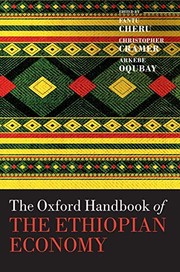
The Oxford Handbook of the Ethiopian Economy

The Oxford Handbook of the Ethiopian Economy

Fantu Cheru, Christopher Cramer, Arkebe Oqubay
2019
T4 1008 pages · about 16h 48m to read Open Librarygoodreads

Reference volume rather than a read; the only place much of this data exists in English.

Summary

Fantu Cheru, Christopher Cramer and Arkebe Oqubay edited this comprehensive reference on the Ethiopian economy, with contributions from economists and specialists covering every major sector and policy area.

The volume covers the historical background including the imperial and Derg periods; macroeconomic management, exchange rate policy and the foreign exchange constraint that has shaped everything else; agriculture, which employs the large majority of Ethiopians, and the land tenure system in which the state owns all land; industrial policy and the specific sectors targeted including textiles, leather and floriculture; infrastructure, including the enormous public investment in roads, rail, power generation and the Grand Ethiopian Renaissance Dam; the financial sector, which is closed to foreign banks; education and health; and the political economy of the developmental state model the government pursued.

The volume was published in 2019, at the point when Ethiopia's growth record over the preceding decade had been among the fastest in the world and the model was attracting attention. The subsequent conflict from 2020, the macroeconomic crisis, the debt restructuring and the currency reform all fall outside it. Readers should treat it as a comprehensive reference on the model as it stood rather than as an assessment of its outcome. Oqubay's participation as a senior government figure should be weighed.

Key takeaways 7

  1. Ethiopian growth over the decade to 2019 was driven by public investment in infrastructure funded substantially by external borrowing.
  2. State ownership of all land constrains agricultural investment and prevents land from serving as collateral.
  3. The foreign exchange constraint has been the binding limit on Ethiopian growth, since imports required for investment exceed export earnings.
  4. Industrial policy targeted specific sectors including textiles, leather and floriculture with very different results in each.
  5. The financial sector remained closed to foreign banks, which limited capital inflow and protected domestic institutions.
  6. Agriculture employs the large majority of Ethiopians, so agricultural productivity determines both incomes and the labour available for industry.
  7. The volume documents the model as it stood in 2019 and predates the conflict, macroeconomic crisis and debt restructuring that followed.

Who should read it

Investors and analysts working on Ethiopia who need a comprehensive sectoral reference on the economy as the developmental model stood.

Similar books 6

Chosen by shared topics, the entries that hold them, and the people who recommended both.

Christopher Cramer, John Sender, Arkebe Oqubay · 2020

A challenge to donor orthodoxy on how African economies should develop.

Arkebe Oqubay, Kenichi Ohno · 2019

Technological learning and catch-up; the theory behind Ethiopia's industrial parks.
Arkebe Oqubay · 2015

Insider account of the cement, floriculture and leather sectors by the official who ran the policy.
Deborah Brautigam · 2009

What China actually does in Africa, from field research, against Western myths.
Alan Richards, John Waterbury · 1990

Egypt is the anchor case throughout; the standard textbook on regional state-business relations.
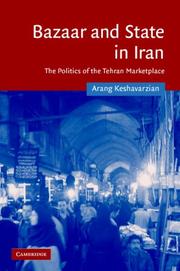
Arang Keshavarzian · 2003

How informal credit, trust networks and trade finance work when the banking system does not.

Where it sits in the reference 2

Geographies
Economics

Topics

EconomicsReference WorksFinance, accounting and economics references