Updates

  1. Person pages list letters, writing, profiles and links as sortable tables with filters, and show each person's companies as links; Fund letters show each letter's description in its own column.
  2. Experts show a checked job title and a short description of each person; 30 more people have photographs.
  3. Every company, fund, university and publication the experts work for has a page listing the people there.
  4. Fund letters show each letter's thesis and filter by it; 225 person pages list the essays, columns and newsletter issues the person wrote.
  5. Person pages list every essay and newsletter issue a person wrote, and their own books as a table in List view.
  6. Recommends shows the five largest kinds of book and the rest under More; browse pictures load sooner.
  7. Podcasts and talks link the original episode, filter by Audio and video or Press, and list each publisher once.
  8. Pages are wider, Recommends has List and Grid, and a filter clicked again turns off.
  9. Book cards sit in a ruled grid with Open Library and Goodreads links and each book's one-line note.
  10. Funds is now Investors; each investor's styles are buttons that filter the table.
  11. Podcasts and talks on a person's page filter by year and publisher and show as a list or a grid of pictures.
  12. Quotes show only people's own words: 472 summaries written by list sites are gone.
  13. Country pages open from Browse again, and every link on the shelf lands on a page.
  14. Subject and person pages show their sections as tabs, and each book appears once on a person's page.
  15. Book cards show the quote, who said it and the source; grids show five cards to a row.
  16. On a phone, a menu holds the sections, search, Updates, Feedback and dark mode.
  17. Feedback takes a screenshot of the page with no browser prompt, opens a screenshot full size when you click it, and clears itself once sent.
  18. Book cards are centred, search names the topic each book sits in, and any text cut short shows whole on hover.
  19. Search groups its results by kind: people, companies, geographies, subjects, topics, books, funds, fund letters and papers.
  20. The Books table lists who recommended each book by name, and the browser tab names the section you are in.
  21. Feedback can take a screenshot of the page, or one you paste or choose, and opens in the corner beside Updates.
  22. Each rail button reopens its section where you left it, and Browse, Table and People show on every book and subject page.
  23. Filters grey out choices that hold nothing instead of hiding them, and Books › People filters by authors or recommenders.
  24. Feedback takes a subject line and up to three screenshots.
  25. Biographies are grouped by the person they are about: 41 new pages, from Abraham Lincoln to Lee Kuan Yew.
  26. Sport splits into 23 sports, and Religion into one topic per faith.
  27. Book lists show as cards: the cover, one recommendation quote and every recommender by name.
  28. Seventeen subjects that had two or three pages under different names now have one page each.
  29. Every page lists its Experts as authors and recommenders, with a link to them on the Experts tab.
  30. Economics, Financial history, Financial panics and Accounting are subjects of their own, with one page per financial crisis.
  31. Book, person and subject pages open inside the app, so the tabs stay in view.
  32. 996 more book covers, and photographs or logos for 227 more people and companies.
  33. Books › Browse shows every subject as cards, and the rail holds Fund letters, Papers, Experts, Books and Funds.
  34. Every topic over 150 books splits into narrower topics, each with a page of its own.

Send feedback

What is it?
Screenshots, up to 3 (optional)
or paste one with Ctrl+V

We use your email only to reply to you.

A Political Economy of the Middle East

A Political Economy of the Middle East

Alan Richards, John Waterbury
1990
T3 470 pages · about 7h 50m to read Open Librarygoodreads

Egypt is the anchor case throughout; the standard textbook on regional state-business relations.

Summary

Richards and Waterbury wrote the standard textbook on Middle Eastern political economy, covering the region from the mid-twentieth century through the period of each edition. It treats economics and politics together, on the argument that neither can be understood separately in states where the government controls the principal revenue source.

The organising themes include: the rentier state, in which a government funded by oil revenue or by strategic aid does not need to tax its population and therefore does not need to bargain with it, which shapes both fiscal policy and political representation; the demographic transition and the resulting youth cohorts entering labour markets that cannot absorb them; the failure of import-substituting industrialisation and the difficult politics of liberalisation; agrarian reform and its consequences; the role of the military in economic life; and labour migration and remittance flows within the region.

The authors work through country cases including Egypt, Turkey, Iran, Iraq, Saudi Arabia, Algeria, Tunisia, Morocco and Israel, comparing the different paths taken from broadly similar starting positions.

The book is a textbook and reads like one, with substantial statistical material. Later editions extended coverage. The reference has not verified which edition's specific data a reader will encounter, and the material inevitably lags events, particularly the period after 2011 which changed several of the country cases fundamentally. The analytical framework, particularly the rentier state argument and the demographic material, remains the standard starting point.

Key takeaways 7

  1. A government funded by oil revenue or strategic aid does not need to tax its population and therefore faces no pressure to bargain with it politically.
  2. Rentier revenue allows states to purchase acquiescence through employment and subsidy, which builds a fiscal structure that becomes impossible to reverse when revenue falls.
  3. Demographic growth produced youth cohorts far larger than the labour markets could absorb, which is a structural condition rather than a policy failure.
  4. Import-substituting industrialisation built inefficient state enterprises whose employment made liberalisation politically impossible.
  5. Militaries in several countries in the region hold substantial commercial assets, which makes them economic actors with an interest in the existing structure.
  6. Labour migration and remittances redistribute oil revenue across the region and connect the economies of producers and non-producers.
  7. Similar starting conditions produced different outcomes across the region, which shows the paths were determined by political choices rather than by resources alone.

Who should read it

Investors and analysts with Middle Eastern exposure who want the standard framework on rentier states, demography and the politics of economic reform.

Similar books 6

Chosen by shared topics, the entries that hold them, and the people who recommended both.
Steffen Hertog, Giacomo Luciani, Marc Valeri · 2015

How business associations and state elites actually bargain across the region.

Ishac Diwan, Adeel Malik, Izak Atiyas · 2019

Firm-level evidence on politically connected business; Egypt is the core case.

Aaron Jakes · 2020

Colonial economism and the debt-and-cotton origins of the modern Egyptian economy.
Melani Claire Cammett · 2007

Morocco against Tunisia: why business lobbies formed differently and what it did to reform.
Kristian Coates Ulrichsen · 2016

Sovereign funds, diversification plans and the limits of the rentier bargain.
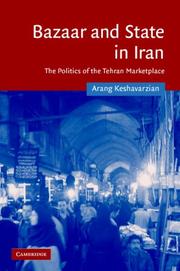
Arang Keshavarzian · 2003

How informal credit, trust networks and trade finance work when the banking system does not.

Where it sits in the reference 4

Geographies
Geographies
Geographies
Economics

Topics

EconomicsPolitics and GovernmentMiddle East and North Africa