Updates

  1. Person pages list letters, writing, profiles and links as sortable tables with filters, and show each person's companies as links; Fund letters show each letter's description in its own column.
  2. Experts show a checked job title and a short description of each person; 30 more people have photographs.
  3. Every company, fund, university and publication the experts work for has a page listing the people there.
  4. Fund letters show each letter's thesis and filter by it; 225 person pages list the essays, columns and newsletter issues the person wrote.
  5. Person pages list every essay and newsletter issue a person wrote, and their own books as a table in List view.
  6. Recommends shows the five largest kinds of book and the rest under More; browse pictures load sooner.
  7. Podcasts and talks link the original episode, filter by Audio and video or Press, and list each publisher once.
  8. Pages are wider, Recommends has List and Grid, and a filter clicked again turns off.
  9. Book cards sit in a ruled grid with Open Library and Goodreads links and each book's one-line note.
  10. Funds is now Investors; each investor's styles are buttons that filter the table.
  11. Podcasts and talks on a person's page filter by year and publisher and show as a list or a grid of pictures.
  12. Quotes show only people's own words: 472 summaries written by list sites are gone.
  13. Country pages open from Browse again, and every link on the shelf lands on a page.
  14. Subject and person pages show their sections as tabs, and each book appears once on a person's page.
  15. Book cards show the quote, who said it and the source; grids show five cards to a row.
  16. On a phone, a menu holds the sections, search, Updates, Feedback and dark mode.
  17. Feedback takes a screenshot of the page with no browser prompt, opens a screenshot full size when you click it, and clears itself once sent.
  18. Book cards are centred, search names the topic each book sits in, and any text cut short shows whole on hover.
  19. Search groups its results by kind: people, companies, geographies, subjects, topics, books, funds, fund letters and papers.
  20. The Books table lists who recommended each book by name, and the browser tab names the section you are in.
  21. Feedback can take a screenshot of the page, or one you paste or choose, and opens in the corner beside Updates.
  22. Each rail button reopens its section where you left it, and Browse, Table and People show on every book and subject page.
  23. Filters grey out choices that hold nothing instead of hiding them, and Books › People filters by authors or recommenders.
  24. Feedback takes a subject line and up to three screenshots.
  25. Biographies are grouped by the person they are about: 41 new pages, from Abraham Lincoln to Lee Kuan Yew.
  26. Sport splits into 23 sports, and Religion into one topic per faith.
  27. Book lists show as cards: the cover, one recommendation quote and every recommender by name.
  28. Seventeen subjects that had two or three pages under different names now have one page each.
  29. Every page lists its Experts as authors and recommenders, with a link to them on the Experts tab.
  30. Economics, Financial history, Financial panics and Accounting are subjects of their own, with one page per financial crisis.
  31. Book, person and subject pages open inside the app, so the tabs stay in view.
  32. 996 more book covers, and photographs or logos for 227 more people and companies.
  33. Books › Browse shows every subject as cards, and the rail holds Fund letters, Papers, Experts, Books and Funds.
  34. Every topic over 150 books splits into narrower topics, each with a page of its own.

Send feedback

What is it?
Screenshots, up to 3 (optional)
or paste one with Ctrl+V

We use your email only to reply to you.

Crony Capitalism in the Middle East

Crony Capitalism in the Middle East

Ishac Diwan, Adeel Malik, Izak Atiyas
2019
T3 464 pages · about 7h 44m to read Open Librarygoodreads

Firm-level evidence on politically connected business; Egypt is the core case.

Summary

Diwan, Malik and Atiyas edited this volume applying quantitative methods to the relationship between political connection and business performance in Middle Eastern and North African economies.

The methodological contribution is what distinguishes it from earlier work on the subject. The contributors used firm-level data matched against records of political connection, including in Egypt where post-2011 disclosures identified firms connected to the Mubarak government, in Tunisia where the assets confiscated after Ben Ali's departure identified his family's holdings precisely, and in Lebanon and Morocco through other means. This permitted measurement rather than assertion.

The findings are consistent across countries. Politically connected firms are concentrated in sectors protected by regulatory barriers rather than in sectors exposed to competition. They are larger and more profitable than unconnected firms but not more productive. They benefit from trade protection, from energy subsidies, from access to credit and from regulatory decisions restricting entry. Their presence in a sector is associated with lower employment growth and lower entry by new firms across the sector as a whole. In Tunisia, the Ben Ali family's firms accounted for a small share of employment but a large share of net private sector profits, and the sectors they occupied were those where entry restrictions had been introduced.

The general argument is that the region's low growth and low private sector employment are consequences of this structure rather than of factors commonly cited including education, geography or culture. Policy that increases investment without changing the entry rules will produce more rent capture rather than more growth.

The volume is academic and the country coverage is uneven, since it depends on where the data existed. The measurement of political connection is inherently imperfect. The finding that connected firms are more profitable without being more productive is the central result and is well supported.

Key takeaways 7

  1. Politically connected firms in the region are concentrated in sectors protected by regulatory entry barriers rather than in competitive sectors.
  2. Connected firms are larger and more profitable than unconnected ones but are not more productive.
  3. The presence of connected firms in a sector is associated with lower employment growth and lower entry across that sector.
  4. In Tunisia the ruling family's firms captured a large share of net private sector profits from a small share of employment.
  5. Entry restrictions were introduced in the specific sectors where connected firms operated, which is the mechanism of capture.
  6. Low private sector employment growth in the region follows from this structure rather than from education, geography or culture.
  7. Increasing investment without changing entry rules produces more rent capture rather than more growth.

Who should read it

Investors and analysts in Middle Eastern markets who want measured evidence on how political connection affects firm performance and sector dynamics.

Similar books 6

Chosen by shared topics, the entries that hold them, and the people who recommended both.
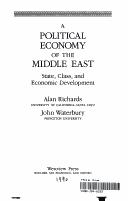
Alan Richards, John Waterbury · 1990

Egypt is the anchor case throughout; the standard textbook on regional state-business relations.

Steffen Hertog, Giacomo Luciani, Marc Valeri · 2015

How business associations and state elites actually bargain across the region.

Aaron Jakes · 2020

Colonial economism and the debt-and-cotton origins of the modern Egyptian economy.
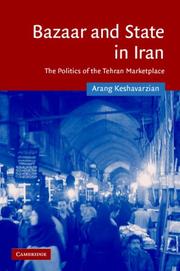
Arang Keshavarzian · 2003

How informal credit, trust networks and trade finance work when the banking system does not.

Adam Hanieh · 2011

A class analysis of the Gulf states that rejects the standard rentier-state view.

Melani Claire Cammett · 2007

Morocco against Tunisia: why business lobbies formed differently and what it did to reform.

Where it sits in the reference 2

Geographies
Economics

Topics

Politics and GovernmentEconomicsMiddle East and North Africa