
Updates

  1. Person pages list letters, writing, profiles and links as sortable tables with filters, and show each person's companies as links; Fund letters show each letter's description in its own column.
  2. Experts show a checked job title and a short description of each person; 30 more people have photographs.
  3. Every company, fund, university and publication the experts work for has a page listing the people there.
  4. Fund letters show each letter's thesis and filter by it; 225 person pages list the essays, columns and newsletter issues the person wrote.
  5. Person pages list every essay and newsletter issue a person wrote, and their own books as a table in List view.
  6. Recommends shows the five largest kinds of book and the rest under More; browse pictures load sooner.
  7. Podcasts and talks link the original episode, filter by Audio and video or Press, and list each publisher once.
  8. Pages are wider, Recommends has List and Grid, and a filter clicked again turns off.
  9. Book cards sit in a ruled grid with Open Library and Goodreads links and each book's one-line note.
  10. Funds is now Investors; each investor's styles are buttons that filter the table.
  11. Podcasts and talks on a person's page filter by year and publisher and show as a list or a grid of pictures.
  12. Quotes show only people's own words: 472 summaries written by list sites are gone.
  13. Country pages open from Browse again, and every link on the shelf lands on a page.
  14. Subject and person pages show their sections as tabs, and each book appears once on a person's page.
  15. Book cards show the quote, who said it and the source; grids show five cards to a row.
  16. On a phone, a menu holds the sections, search, Updates, Feedback and dark mode.
  17. Feedback takes a screenshot of the page with no browser prompt, opens a screenshot full size when you click it, and clears itself once sent.
  18. Book cards are centred, search names the topic each book sits in, and any text cut short shows whole on hover.
  19. Search groups its results by kind: people, companies, geographies, subjects, topics, books, funds, fund letters and papers.
  20. The Books table lists who recommended each book by name, and the browser tab names the section you are in.
  21. Feedback can take a screenshot of the page, or one you paste or choose, and opens in the corner beside Updates.
  22. Each rail button reopens its section where you left it, and Browse, Table and People show on every book and subject page.
  23. Filters grey out choices that hold nothing instead of hiding them, and Books › People filters by authors or recommenders.
  24. Feedback takes a subject line and up to three screenshots.
  25. Biographies are grouped by the person they are about: 41 new pages, from Abraham Lincoln to Lee Kuan Yew.
  26. Sport splits into 23 sports, and Religion into one topic per faith.
  27. Book lists show as cards: the cover, one recommendation quote and every recommender by name.
  28. Seventeen subjects that had two or three pages under different names now have one page each.
  29. Every page lists its Experts as authors and recommenders, with a link to them on the Experts tab.
  30. Economics, Financial history, Financial panics and Accounting are subjects of their own, with one page per financial crisis.
  31. Book, person and subject pages open inside the app, so the tabs stay in view.
  32. 996 more book covers, and photographs or logos for 227 more people and companies.
  33. Books › Browse shows every subject as cards, and the rail holds Fund letters, Papers, Experts, Books and Funds.
  34. Every topic over 150 books splits into narrower topics, each with a page of its own.

Send feedback

What is it?
Screenshots, up to 3 (optional)
or paste one with Ctrl+V

We use your email only to reply to you.

Salt Sugar Fat: How the Food Giants Hooked U

Salt Sugar Fat: How the Food Giants Hooked Us

Michael Moss
2013
T2 463 pages · about 7h 43m to read Open Librarygoodreads

Industry-wide, with Nestlé among the main companies examined.

Summary

Moss, an investigative reporter, examined how processed food companies formulate products to maximise consumption, working from internal documents, from interviews with former executives and food scientists, and from the industry's own research.

The technical content concerns product formulation. Moss documents the bliss point, a concept developed by the market researcher Howard Moskowitz, meaning the concentration of sugar at which liking is maximised, and the systematic testing companies run to find it for each product. He covers the industry's work on mouthfeel and on what food scientists call vanishing caloric density, where a product dissolves quickly enough that the brain does not register the calories consumed, which permits continued eating. He explains the role of fat in carrying flavour and in producing the sensory experience that drives repeat consumption, and the role of salt in making otherwise unpalatable processed products acceptable and in creating an acquired preference that rises with exposure.

The corporate history covers specific episodes. A 1999 meeting of chief executives at which one presented evidence of the industry's contribution to obesity and was effectively dismissed. Philip Morris's ownership of Kraft and General Foods, which brought tobacco marketing methods and eventually tobacco-derived caution into food. The competitive dynamic in which any company reducing salt, sugar or fat loses share to those that do not, which Moss presents as the reason unilateral reform fails.

The book is reporting rather than nutrition science, and its causal claims about processed food and obesity are stated more firmly than the nutritional literature supports, particularly the addiction framing, which remains contested among researchers. The documentation of what the companies knew and how they formulated is the strongest part and rests on primary sources.

Key takeaways 7

  1. Food companies systematically test formulations to find the sugar concentration at which consumer liking peaks.
  2. Products engineered to dissolve quickly prevent the brain from registering the calories consumed, which permits continued eating.
  3. Salt is used to make processed products palatable and creates an acquired preference that increases with exposure.
  4. Fat carries flavour and produces the sensory experience that drives repeat purchase, which is why reducing it damages sales.
  5. Any company unilaterally reducing salt, sugar or fat loses share to competitors that do not, which prevents voluntary industry reform.
  6. Industry executives were presented with internal evidence of their products' health effects and chose not to act on it.
  7. Tobacco company ownership of major food brands transferred consumer marketing methods directly into the food industry.

Who should read it

Operators in consumer packaged goods and investors in the sector who want a documented account of how product formulation drives consumption.

Similar books 6

Chosen by shared topics, the entries that hold them, and the people who recommended both.

Carol Off · 2006

Cocoa supply chain and child labour behind confectionery majors.

Orla Ryan · 2011

West African cocoa economics for a buyer of the crop.
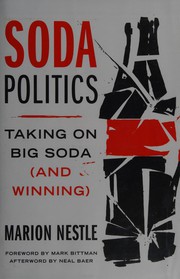
Marion Nestle · 2015

How soda makers built global brands, the health costs, and the push to tax soda.

Elizabeth Royte · 2008

Local water-extraction fights, several of them with Nestle Waters.

Peter H. Gleick · 2010

How free tap water became bottled water, one of the most profitable products sold.

Eric Schlosser · 2001

How fast food reshaped farming, meatpacking, food science and low-wage work.

Where it sits in the reference 3

Companies
Companies
Industries

Topics

Health and FitnessSociology and CultureConsumer culture and cultural criticismRegulation, central banks and public policyPolitics and Government