Updates

  1. Person pages list letters, writing, profiles and links as sortable tables with filters, and show each person's companies as links; Fund letters show each letter's description in its own column.
  2. Experts show a checked job title and a short description of each person; 30 more people have photographs.
  3. Every company, fund, university and publication the experts work for has a page listing the people there.
  4. Fund letters show each letter's thesis and filter by it; 225 person pages list the essays, columns and newsletter issues the person wrote.
  5. Person pages list every essay and newsletter issue a person wrote, and their own books as a table in List view.
  6. Recommends shows the five largest kinds of book and the rest under More; browse pictures load sooner.
  7. Podcasts and talks link the original episode, filter by Audio and video or Press, and list each publisher once.
  8. Pages are wider, Recommends has List and Grid, and a filter clicked again turns off.
  9. Book cards sit in a ruled grid with Open Library and Goodreads links and each book's one-line note.
  10. Funds is now Investors; each investor's styles are buttons that filter the table.
  11. Podcasts and talks on a person's page filter by year and publisher and show as a list or a grid of pictures.
  12. Quotes show only people's own words: 472 summaries written by list sites are gone.
  13. Country pages open from Browse again, and every link on the shelf lands on a page.
  14. Subject and person pages show their sections as tabs, and each book appears once on a person's page.
  15. Book cards show the quote, who said it and the source; grids show five cards to a row.
  16. On a phone, a menu holds the sections, search, Updates, Feedback and dark mode.
  17. Feedback takes a screenshot of the page with no browser prompt, opens a screenshot full size when you click it, and clears itself once sent.
  18. Book cards are centred, search names the topic each book sits in, and any text cut short shows whole on hover.
  19. Search groups its results by kind: people, companies, geographies, subjects, topics, books, funds, fund letters and papers.
  20. The Books table lists who recommended each book by name, and the browser tab names the section you are in.
  21. Feedback can take a screenshot of the page, or one you paste or choose, and opens in the corner beside Updates.
  22. Each rail button reopens its section where you left it, and Browse, Table and People show on every book and subject page.
  23. Filters grey out choices that hold nothing instead of hiding them, and Books › People filters by authors or recommenders.
  24. Feedback takes a subject line and up to three screenshots.
  25. Biographies are grouped by the person they are about: 41 new pages, from Abraham Lincoln to Lee Kuan Yew.
  26. Sport splits into 23 sports, and Religion into one topic per faith.
  27. Book lists show as cards: the cover, one recommendation quote and every recommender by name.
  28. Seventeen subjects that had two or three pages under different names now have one page each.
  29. Every page lists its Experts as authors and recommenders, with a link to them on the Experts tab.
  30. Economics, Financial history, Financial panics and Accounting are subjects of their own, with one page per financial crisis.
  31. Book, person and subject pages open inside the app, so the tabs stay in view.
  32. 996 more book covers, and photographs or logos for 227 more people and companies.
  33. Books › Browse shows every subject as cards, and the rail holds Fund letters, Papers, Experts, Books and Funds.
  34. Every topic over 150 books splits into narrower topics, each with a page of its own.

Send feedback

What is it?
Screenshots, up to 3 (optional)
or paste one with Ctrl+V

We use your email only to reply to you.

Viking Economics

Viking Economics

George Lakey
2016
T4 304 pages · about 5h 4m to read Open Librarygoodreads

Popular and partisan, but the clearest short account of the Nordic bargain.

Summary

Lakey, an American activist and academic, describes the Nordic economic model in Norway, Denmark, Sweden and Iceland and argues that the United States could adopt it. He covers the historical development, the current arrangements and the political process that produced them.

The substantive description covers: the flexicurity arrangement in Denmark, in which employers can dismiss workers easily while the state supplies generous unemployment support and active retraining, which produces labour mobility without individual catastrophe; universal rather than means-tested provision of health, education and childcare, which he argues sustains political support because everyone receives it; strong unions negotiating at sector level rather than firm level, which takes wages out of competition between firms; free higher education and the resulting absence of student debt; Norway's sovereign wealth fund and the rule limiting withdrawals to the expected real return; and Iceland's response to its banking collapse, in which it let the banks fail and prosecuted bankers.

His historical argument is that these arrangements were won through decades of organised labour and popular movements rather than granted, and that Nordic countries were poor and unequal before that.

The book is advocacy and the analysis is thin. Lakey does not seriously address the small homogeneous populations, the high tax burden including regressive value added taxes, the resource wealth in Norway's case, the labour market participation requirements, or the constraints on adopting these arrangements in a much larger and more diverse economy. Read it as an accessible description of the arrangements with the transferability argument treated sceptically.

Key takeaways 7

  1. Danish flexicurity combines easy dismissal with generous unemployment support and retraining, which produces labour mobility without individual catastrophe.
  2. Universal rather than means-tested provision sustains political support because everyone receives the benefit and therefore has an interest in its quality.
  3. Sector-level rather than firm-level wage bargaining removes wages from competition between firms, which changes what firms compete on.
  4. Nordic countries were poor and unequal before these arrangements, which were won through organised labour and popular movements rather than inherited.
  5. Norway's fund rule limits annual withdrawals to the expected real return, which converts a depleting resource into a permanent income.
  6. Iceland allowed its banks to fail and prosecuted bankers, and recovered faster than countries that socialised bank losses.
  7. Free higher education removes the debt that constrains career and family choices for graduates in systems that charge for it.

Who should read it

Readers who want an accessible description of Nordic economic arrangements, with the argument for transferability treated as advocacy.

Similar books 6

Chosen by shared topics, the entries that hold them, and the people who recommended both.

Peer Hull Kristensen, Kari Lilja · 2011

Firm-level study of how Nordic companies reorganised for global production.

Richard B. Freeman, Birgitta Swedenborg, Robert H. Topel · 2010

NBER volume on the post-crisis reforms that restored Swedish growth.

Nima Sanandaji · 2015

The sceptical case: prosperity preceded the welfare state, not the reverse.

Marquis W. Childs · 1936

The book that made the Swedish model an international reference point.

Torben M. Andersen, Bengt Holmstrom, Seppo Honkapohja, Sixten Korkman, Hans Tson Soderstrom, Juhana Vartiainen · 2007

Economists' report on how small open economies combine flexibility with heavy taxation.
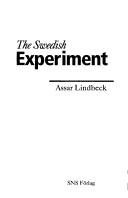
Assar Lindbeck · 1997

What went wrong with Sweden's welfare-state model, leading to the 1990s crisis.

Where it sits in the reference 4

Geographies
Geographies
Geographies
Economics

Topics

EconomicsPolitics and GovernmentSociology and CultureEurope, Britain and RussiaGlobalisation and national societies