Updates

  1. Person pages list letters, writing, profiles and links as sortable tables with filters, and show each person's companies as links; Fund letters show each letter's description in its own column.
  2. Experts show a checked job title and a short description of each person; 30 more people have photographs.
  3. Every company, fund, university and publication the experts work for has a page listing the people there.
  4. Fund letters show each letter's thesis and filter by it; 225 person pages list the essays, columns and newsletter issues the person wrote.
  5. Person pages list every essay and newsletter issue a person wrote, and their own books as a table in List view.
  6. Recommends shows the five largest kinds of book and the rest under More; browse pictures load sooner.
  7. Podcasts and talks link the original episode, filter by Audio and video or Press, and list each publisher once.
  8. Pages are wider, Recommends has List and Grid, and a filter clicked again turns off.
  9. Book cards sit in a ruled grid with Open Library and Goodreads links and each book's one-line note.
  10. Funds is now Investors; each investor's styles are buttons that filter the table.
  11. Podcasts and talks on a person's page filter by year and publisher and show as a list or a grid of pictures.
  12. Quotes show only people's own words: 472 summaries written by list sites are gone.
  13. Country pages open from Browse again, and every link on the shelf lands on a page.
  14. Subject and person pages show their sections as tabs, and each book appears once on a person's page.
  15. Book cards show the quote, who said it and the source; grids show five cards to a row.
  16. On a phone, a menu holds the sections, search, Updates, Feedback and dark mode.
  17. Feedback takes a screenshot of the page with no browser prompt, opens a screenshot full size when you click it, and clears itself once sent.
  18. Book cards are centred, search names the topic each book sits in, and any text cut short shows whole on hover.
  19. Search groups its results by kind: people, companies, geographies, subjects, topics, books, funds, fund letters and papers.
  20. The Books table lists who recommended each book by name, and the browser tab names the section you are in.
  21. Feedback can take a screenshot of the page, or one you paste or choose, and opens in the corner beside Updates.
  22. Each rail button reopens its section where you left it, and Browse, Table and People show on every book and subject page.
  23. Filters grey out choices that hold nothing instead of hiding them, and Books › People filters by authors or recommenders.
  24. Feedback takes a subject line and up to three screenshots.
  25. Biographies are grouped by the person they are about: 41 new pages, from Abraham Lincoln to Lee Kuan Yew.
  26. Sport splits into 23 sports, and Religion into one topic per faith.
  27. Book lists show as cards: the cover, one recommendation quote and every recommender by name.
  28. Seventeen subjects that had two or three pages under different names now have one page each.
  29. Every page lists its Experts as authors and recommenders, with a link to them on the Experts tab.
  30. Economics, Financial history, Financial panics and Accounting are subjects of their own, with one page per financial crisis.
  31. Book, person and subject pages open inside the app, so the tabs stay in view.
  32. 996 more book covers, and photographs or logos for 227 more people and companies.
  33. Books › Browse shows every subject as cards, and the rail holds Fund letters, Papers, Experts, Books and Funds.
  34. Every topic over 150 books splits into narrower topics, each with a page of its own.

Send feedback

What is it?
Screenshots, up to 3 (optional)
or paste one with Ctrl+V

We use your email only to reply to you.

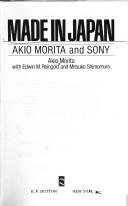
Made in Japan

Made in Japan

Akio Morita, Edwin M. Reingold, Mitsuko Shimomura
1986
T1 309 pages · about 5h 9m to read Open Librarygoodreads

Insider memoir by Sony's co-founder; a landmark of business writing.

Summary

Akio Morita co-founded Sony with Masaru Ibuka in 1946 and wrote this memoir with Edwin Reingold and Mitsuko Shimomura at the height of the company's success. It covers the company's founding in the ruins of Tokyo, its product decisions, and Morita's account of the differences between Japanese and American business practice.

The product history is the strongest material. Morita describes licensing the transistor from Western Electric over the objections of the Japanese trade ministry, the pocket radio, the Trinitron colour television tube, the Betamax videocassette format and its defeat by VHS, and the Walkman, which he insisted on against internal opposition and market research showing no demand for a tape player without recording capability. He explains his decision to build Sony's own American sales organisation rather than sell through distributors, and to list Sony shares in New York.

The second half sets out Morita's views on management and on the trade conflict of the 1980s. He argues that Japanese firms plan on longer horizons because their shareholders and lenders permit it, that lifetime employment makes labour a fixed cost and therefore makes training worthwhile, and that American executives are financially rather than operationally trained. His criticisms of American short-termism were widely quoted at the time and read differently after Japan's subsequent decades. The book is a chief executive's account and does not examine Sony's failures with any rigour.

Key takeaways 7

  1. Morita launched the Walkman over internal opposition and against market research, on the argument that customers cannot want a product category that does not exist.
  2. Sony built its own American sales organisation rather than using distributors, which cost more initially and gave the company direct customer knowledge.
  3. Licensing the transistor required overcoming Japanese government objection, which Morita presents as evidence that the ministry did not direct Japanese success.
  4. Betamax lost to VHS because Sony refused to license widely enough, and Morita treats this as his own error.
  5. Japanese firms treat labour as a fixed cost, which makes investment in training rational in a way it is not where workers leave.
  6. Morita argues that American managers trained in finance rather than in operations cannot judge what their factories are capable of.
  7. Selling a product in a foreign market requires understanding the customer directly, which is why Morita moved his family to New York.

Who should read it

Founders and operators in consumer hardware who want a first-hand account of product decisions made against market research and of building direct distribution abroad.

Similar books 6

Chosen by shared topics, the entries that hold them, and the people who recommended both.
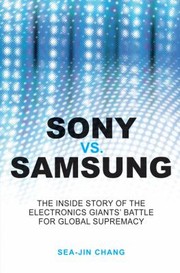
Sea-Jin Chang · 2008

Strategy comparison explaining how Samsung overtook Sony.

Nick Lyons · 1976

Contemporary account of Sony at its engineering peak
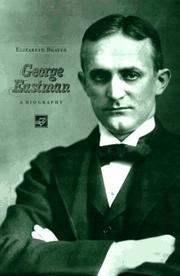
Elizabeth Brayer · 1996

How a bank clerk simplified photography and built Eastman Kodak.
Where it sits in the reference 2

Companies
Industries

Topics

Company HistoriesBiography and MemoirFounders and EntrepreneursIndustrial and manufacturing founders