
Updates

  1. Person pages list letters, writing, profiles and links as sortable tables with filters, and show each person's companies as links; Fund letters show each letter's description in its own column.
  2. Experts show a checked job title and a short description of each person; 30 more people have photographs.
  3. Every company, fund, university and publication the experts work for has a page listing the people there.
  4. Fund letters show each letter's thesis and filter by it; 225 person pages list the essays, columns and newsletter issues the person wrote.
  5. Person pages list every essay and newsletter issue a person wrote, and their own books as a table in List view.
  6. Recommends shows the five largest kinds of book and the rest under More; browse pictures load sooner.
  7. Podcasts and talks link the original episode, filter by Audio and video or Press, and list each publisher once.
  8. Pages are wider, Recommends has List and Grid, and a filter clicked again turns off.
  9. Book cards sit in a ruled grid with Open Library and Goodreads links and each book's one-line note.
  10. Funds is now Investors; each investor's styles are buttons that filter the table.
  11. Podcasts and talks on a person's page filter by year and publisher and show as a list or a grid of pictures.
  12. Quotes show only people's own words: 472 summaries written by list sites are gone.
  13. Country pages open from Browse again, and every link on the shelf lands on a page.
  14. Subject and person pages show their sections as tabs, and each book appears once on a person's page.
  15. Book cards show the quote, who said it and the source; grids show five cards to a row.
  16. On a phone, a menu holds the sections, search, Updates, Feedback and dark mode.
  17. Feedback takes a screenshot of the page with no browser prompt, opens a screenshot full size when you click it, and clears itself once sent.
  18. Book cards are centred, search names the topic each book sits in, and any text cut short shows whole on hover.
  19. Search groups its results by kind: people, companies, geographies, subjects, topics, books, funds, fund letters and papers.
  20. The Books table lists who recommended each book by name, and the browser tab names the section you are in.
  21. Feedback can take a screenshot of the page, or one you paste or choose, and opens in the corner beside Updates.
  22. Each rail button reopens its section where you left it, and Browse, Table and People show on every book and subject page.
  23. Filters grey out choices that hold nothing instead of hiding them, and Books › People filters by authors or recommenders.
  24. Feedback takes a subject line and up to three screenshots.
  25. Biographies are grouped by the person they are about: 41 new pages, from Abraham Lincoln to Lee Kuan Yew.
  26. Sport splits into 23 sports, and Religion into one topic per faith.
  27. Book lists show as cards: the cover, one recommendation quote and every recommender by name.
  28. Seventeen subjects that had two or three pages under different names now have one page each.
  29. Every page lists its Experts as authors and recommenders, with a link to them on the Experts tab.
  30. Economics, Financial history, Financial panics and Accounting are subjects of their own, with one page per financial crisis.
  31. Book, person and subject pages open inside the app, so the tabs stay in view.
  32. 996 more book covers, and photographs or logos for 227 more people and companies.
  33. Books › Browse shows every subject as cards, and the rail holds Fund letters, Papers, Experts, Books and Funds.
  34. Every topic over 150 books splits into narrower topics, each with a page of its own.

Send feedback

What is it?
Screenshots, up to 3 (optional)
or paste one with Ctrl+V

We use your email only to reply to you.

The Sony Vision

The Sony Vision

Nick Lyons
1976
T4 235 pages · about 3h 55m to read Open Librarygoodreads

Contemporary account of Sony at its engineering peak

Summary

The reference has not verified this book in detail; the summary states only what the title, author and subject establish.

Nick Lyons wrote this history of Sony in 1976, covering the company from its founding by Masaru Ibuka and Akio Morita in postwar Tokyo through its establishment as a major consumer electronics producer.

The material covers the early products including the tape recorder and the transistor radio, the licensing of transistor technology from Western Electric, the development of the Trinitron colour television tube, the decision to build a direct American sales organisation rather than to sell through distributors, and the listing of shares in New York. It also covers the founders' partnership, with Ibuka as the engineer and Morita as the commercial and international figure.

The reference has not verified this book in detail. It was published in 1976 and predates the Walkman, the Betamax defeat, the Columbia Pictures acquisition and everything that defined the company subsequently. Readers wanting a first-hand account should go to Morita's own Made in Japan, which covers overlapping ground.

Key takeaways 6

  1. Sony was founded on engineering ambition rather than on an identified market, with Ibuka setting technical direction and Morita finding commercial application.
  2. Licensing transistor technology from Western Electric gave Sony a manufacturing capability Japanese policy had not intended it to acquire.
  3. The Trinitron tube was a proprietary technology that differentiated Sony televisions for two decades.
  4. Building a direct American sales organisation cost more initially and gave the company direct knowledge of its largest market.
  5. Listing shares in New York was unusual for a Japanese company and reflected Morita's international orientation.
  6. The book predates the Walkman, the Betamax defeat and the media acquisitions that defined the company later.

Who should read it

Readers interested in Sony's early history, with the caveat that this entry is not verified in detail and Morita's own account covers similar ground.

Similar books 6

Chosen by shared topics, the entries that hold them, and the people who recommended both.
Akio Morita, Edwin M. Reingold, Mitsuko Shimomura · 1986

How Sony grew from Tokyo's ruins, and how Japanese and American business differ.
Sea-Jin Chang · 2008

Strategy comparison explaining how Samsung overtook Sony.
Blake J. Harris · 2014

The console market Sony entered with PlayStation and eventually took.
Ken Kocienda · 2018

Insider account by the engineer who built the iPhone keyboard.

Jenny Chan, Mark Selden, Pun Ngai · 2020

Foxconn from the inside; the labour cost of the contract model.
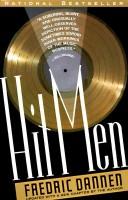
Fredric Dannen · 1990

The 1970s and 80s record business and the promoters who controlled radio play.

Recommended by: Daniel Ek

Where it sits in the reference 2

Companies
Industries

Topics

Company Histories