Updates

  1. Person pages list letters, writing, profiles and links as sortable tables with filters, and show each person's companies as links; Fund letters show each letter's description in its own column.
  2. Experts show a checked job title and a short description of each person; 30 more people have photographs.
  3. Every company, fund, university and publication the experts work for has a page listing the people there.
  4. Fund letters show each letter's thesis and filter by it; 225 person pages list the essays, columns and newsletter issues the person wrote.
  5. Person pages list every essay and newsletter issue a person wrote, and their own books as a table in List view.
  6. Recommends shows the five largest kinds of book and the rest under More; browse pictures load sooner.
  7. Podcasts and talks link the original episode, filter by Audio and video or Press, and list each publisher once.
  8. Pages are wider, Recommends has List and Grid, and a filter clicked again turns off.
  9. Book cards sit in a ruled grid with Open Library and Goodreads links and each book's one-line note.
  10. Funds is now Investors; each investor's styles are buttons that filter the table.
  11. Podcasts and talks on a person's page filter by year and publisher and show as a list or a grid of pictures.
  12. Quotes show only people's own words: 472 summaries written by list sites are gone.
  13. Country pages open from Browse again, and every link on the shelf lands on a page.
  14. Subject and person pages show their sections as tabs, and each book appears once on a person's page.
  15. Book cards show the quote, who said it and the source; grids show five cards to a row.
  16. On a phone, a menu holds the sections, search, Updates, Feedback and dark mode.
  17. Feedback takes a screenshot of the page with no browser prompt, opens a screenshot full size when you click it, and clears itself once sent.
  18. Book cards are centred, search names the topic each book sits in, and any text cut short shows whole on hover.
  19. Search groups its results by kind: people, companies, geographies, subjects, topics, books, funds, fund letters and papers.
  20. The Books table lists who recommended each book by name, and the browser tab names the section you are in.
  21. Feedback can take a screenshot of the page, or one you paste or choose, and opens in the corner beside Updates.
  22. Each rail button reopens its section where you left it, and Browse, Table and People show on every book and subject page.
  23. Filters grey out choices that hold nothing instead of hiding them, and Books › People filters by authors or recommenders.
  24. Feedback takes a subject line and up to three screenshots.
  25. Biographies are grouped by the person they are about: 41 new pages, from Abraham Lincoln to Lee Kuan Yew.
  26. Sport splits into 23 sports, and Religion into one topic per faith.
  27. Book lists show as cards: the cover, one recommendation quote and every recommender by name.
  28. Seventeen subjects that had two or three pages under different names now have one page each.
  29. Every page lists its Experts as authors and recommenders, with a link to them on the Experts tab.
  30. Economics, Financial history, Financial panics and Accounting are subjects of their own, with one page per financial crisis.
  31. Book, person and subject pages open inside the app, so the tabs stay in view.
  32. 996 more book covers, and photographs or logos for 227 more people and companies.
  33. Books › Browse shows every subject as cards, and the rail holds Fund letters, Papers, Experts, Books and Funds.
  34. Every topic over 150 books splits into narrower topics, each with a page of its own.

Send feedback

What is it?
Screenshots, up to 3 (optional)
or paste one with Ctrl+V

We use your email only to reply to you.

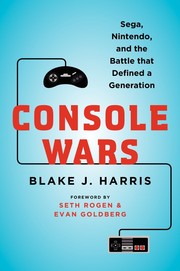
Console Wars

Console Wars

Blake J. Harris
2014
T3 429 pages · about 7h 9m to read Open Librarygoodreads

The console market Sony entered with PlayStation and eventually took.

Summary

Harris wrote a narrative account of the competition between Sega and Nintendo in the American video game market during the early 1990s, built substantially around Tom Kalinske, who ran Sega of America.

The business content is genuine. Nintendo held roughly ninety per cent of the American market and enforced it through licensing terms that restricted third-party publishers, including limits on how many titles a publisher could release and requirements that games be exclusive. Sega attacked this position through several decisions Harris documents: pricing the Genesis below the Super Nintendo, cutting the price further when Nintendo responded, bundling Sonic the Hedgehog with the console, marketing to an older demographic with aggressive comparative advertising that named the competitor directly, securing sports licences including the Electronic Arts relationship after a licensing dispute, and offering publishers better terms than Nintendo's.

The Electronic Arts episode is the most instructive. EA reverse-engineered the Genesis hardware and used that position to negotiate licensing terms far better than Sega would otherwise have offered, which then became the basis for third-party support.

Harris also covers Sega's subsequent collapse: the Sega CD and 32X add-ons that fragmented the platform, the Saturn's rushed and mishandled launch, and the arrival of Sony's PlayStation.

The book uses reconstructed dialogue throughout and is written from Kalinske's perspective, with Nintendo declining to participate. Harris acknowledges the reconstruction. Specific scenes should not be treated as evidence, though the commercial decisions and their sequence are well established. The platform competition dynamics, particularly the role of third-party publisher terms and of exclusive content, are the transferable content.

Key takeaways 7

  1. Nintendo enforced its market position through licensing terms that limited how many titles publishers could release and required exclusivity.
  2. Sega attacked the incumbent by offering third-party publishers better terms rather than by competing on hardware alone.
  3. Bundling a distinctive first-party title with the console changed the purchase decision more than specifications did.
  4. Comparative advertising naming the competitor directly worked in a market where the incumbent had ninety per cent share.
  5. Electronic Arts reverse-engineered the hardware and used that position to negotiate licensing terms far better than were on offer.
  6. Add-on hardware fragmented Sega's own installed base and destroyed developer confidence in the platform.
  7. A platform holder's terms with third-party developers determine the content that determines the platform's success.

Who should read it

Founders and operators in platform businesses who want a case study of attacking a dominant incumbent through developer terms and content.

Similar books 6

Chosen by shared topics, the entries that hold them, and the people who recommended both.

Jason Schreier · 2017

How games such as Uncharted 4, Halo Wars and Destiny were made, and the strain.
Fredric Dannen · 1990

The 1970s and 80s record business and the promoters who controlled radio play.

Recommended by: Daniel Ek

Akio Morita, Edwin M. Reingold, Mitsuko Shimomura · 1986

How Sony grew from Tokyo's ruins, and how Japanese and American business differ.
David Kushner · 2003

How John Carmack and John Romero made Doom and Quake and changed video games.

Jason Schreier · 2021

How renowned video game studios fell apart, and what happened to their staff.

Tristan Donovan · 2010

Video games from Atari and cartridge consoles to Nintendo and the global industry.

Where it sits in the reference 2

Companies
Industries

Topics

Company HistoriesGames and Puzzles