Updates

  1. Person pages list letters, writing, profiles and links as sortable tables with filters, and show each person's companies as links; Fund letters show each letter's description in its own column.
  2. Experts show a checked job title and a short description of each person; 30 more people have photographs.
  3. Every company, fund, university and publication the experts work for has a page listing the people there.
  4. Fund letters show each letter's thesis and filter by it; 225 person pages list the essays, columns and newsletter issues the person wrote.
  5. Person pages list every essay and newsletter issue a person wrote, and their own books as a table in List view.
  6. Recommends shows the five largest kinds of book and the rest under More; browse pictures load sooner.
  7. Podcasts and talks link the original episode, filter by Audio and video or Press, and list each publisher once.
  8. Pages are wider, Recommends has List and Grid, and a filter clicked again turns off.
  9. Book cards sit in a ruled grid with Open Library and Goodreads links and each book's one-line note.
  10. Funds is now Investors; each investor's styles are buttons that filter the table.
  11. Podcasts and talks on a person's page filter by year and publisher and show as a list or a grid of pictures.
  12. Quotes show only people's own words: 472 summaries written by list sites are gone.
  13. Country pages open from Browse again, and every link on the shelf lands on a page.
  14. Subject and person pages show their sections as tabs, and each book appears once on a person's page.
  15. Book cards show the quote, who said it and the source; grids show five cards to a row.
  16. On a phone, a menu holds the sections, search, Updates, Feedback and dark mode.
  17. Feedback takes a screenshot of the page with no browser prompt, opens a screenshot full size when you click it, and clears itself once sent.
  18. Book cards are centred, search names the topic each book sits in, and any text cut short shows whole on hover.
  19. Search groups its results by kind: people, companies, geographies, subjects, topics, books, funds, fund letters and papers.
  20. The Books table lists who recommended each book by name, and the browser tab names the section you are in.
  21. Feedback can take a screenshot of the page, or one you paste or choose, and opens in the corner beside Updates.
  22. Each rail button reopens its section where you left it, and Browse, Table and People show on every book and subject page.
  23. Filters grey out choices that hold nothing instead of hiding them, and Books › People filters by authors or recommenders.
  24. Feedback takes a subject line and up to three screenshots.
  25. Biographies are grouped by the person they are about: 41 new pages, from Abraham Lincoln to Lee Kuan Yew.
  26. Sport splits into 23 sports, and Religion into one topic per faith.
  27. Book lists show as cards: the cover, one recommendation quote and every recommender by name.
  28. Seventeen subjects that had two or three pages under different names now have one page each.
  29. Every page lists its Experts as authors and recommenders, with a link to them on the Experts tab.
  30. Economics, Financial history, Financial panics and Accounting are subjects of their own, with one page per financial crisis.
  31. Book, person and subject pages open inside the app, so the tabs stay in view.
  32. 996 more book covers, and photographs or logos for 227 more people and companies.
  33. Books › Browse shows every subject as cards, and the rail holds Fund letters, Papers, Experts, Books and Funds.
  34. Every topic over 150 books splits into narrower topics, each with a page of its own.

Send feedback

What is it?
Screenshots, up to 3 (optional)
or paste one with Ctrl+V

We use your email only to reply to you.

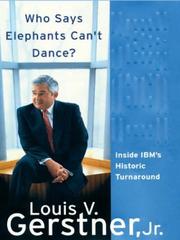
Who Says Elephants Can't Dance?

Who Says Elephants Can't Dance?

Louis V. Gerstner
2002
T1 332 pages · about 5h 32m to read Open Librarygoodreads

Insider account by the CEO who ran IBM's 1990s turnaround.

Summary

Gerstner ran IBM from 1993, when it was expected to be broken up after losing eight billion dollars in a year, until 2002. His account covers the decision to keep the company whole, the shift from hardware to services and middleware, the pricing change on mainframes, and the cultural change he attempted.

The central strategic decision was refusing to split IBM into independent units, which was the plan he inherited. Gerstner argued that IBM's only remaining advantage was its ability to integrate complex technology for large customers, and that this advantage existed only if the company stayed whole. From that followed the build-out of IBM Global Services, the decision to support competitors' products in its services work, the adoption of open standards and later of Linux, and the cut in mainframe prices that traded margin for the installed base that everything else depended on.

The cultural material is the second half, and Gerstner is blunt that culture was not a soft supporting factor but the thing that determined whether any strategy could execute. He describes the internal habits he attacked: the veto culture in which any unit could block a decision, the contention system, the presentation-driven meeting, and the compensation structure that paid people for their unit rather than for the company. The book is a chief executive memoir and it is self-serving in the usual ways, giving little credit to predecessors who had begun some of these shifts and to the mainframe revenue that funded the transition. It also stops in 2002, before the strategy Gerstner built ran out.

Key takeaways 7

  1. IBM's only durable advantage was integrating complex technology for large customers, and that advantage required keeping the company whole rather than splitting it.
  2. Cutting mainframe prices sharply traded near-term margin for retention of the installed base on which every other IBM business depended.
  3. Services became the growth engine only because IBM agreed to service competitors' hardware, which internal constituencies resisted.
  4. Culture is not one element of the game, it is the mechanism through which strategy either executes or does not.
  5. Large company decision processes fail when any unit can veto, because that converts every decision into a negotiation among people protecting their own results.
  6. Compensation tied to business unit performance guarantees that units will not cooperate, whatever the stated strategy says.
  7. A turnaround should begin with cash, cost and customer focus, and vision statements should come after the company can pay for them.

Who should read it

Executives leading a large-company turnaround or a shift from product to services, who want a first-hand account of the decisions and the cultural obstacles.

Who recommended it 2 · 1 direct

Aaron Leviereported

Similar books 6

Chosen by shared topics, the entries that hold them, and the people who recommended both.

Bryce G. Hoffman · 2012

The 2006-2010 turnaround told with close management access.

Recommended by: Mohnish Pabrai

Steve Miller · 2008

Insider account from a serial restructuring CEO.

Risto Siilasmaa · 2018

Nokia's chairman on selling the phone unit to Microsoft and buying Alcatel-Lucent.
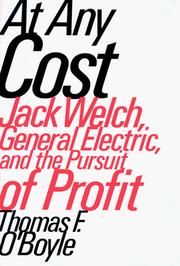
Thomas F. O'Boyle · 1998

The contemporaneous dissent, twenty years ahead of the consensus.
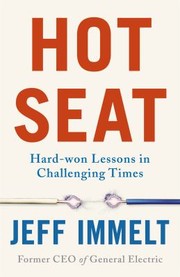
Jeff Immelt, Amy Wallace · 2021

Insider account: Immelt's defence of his sixteen years as CEO.
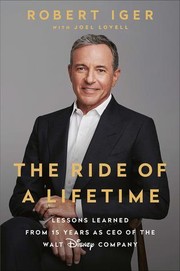
Robert Iger · 2019

Running Disney and buying Pixar, Marvel, Lucasfilm and Fox to add creative talent.

Where it sits in the reference 5

Companies
Business themes
Business themes
Investment styles
Business themes

Topics

Company HistoriesLeadershipBiography and MemoirExecutives and Corporate Insiders