Updates

  1. Person pages list letters, writing, profiles and links as sortable tables with filters, and show each person's companies as links; Fund letters show each letter's description in its own column.
  2. Experts show a checked job title and a short description of each person; 30 more people have photographs.
  3. Every company, fund, university and publication the experts work for has a page listing the people there.
  4. Fund letters show each letter's thesis and filter by it; 225 person pages list the essays, columns and newsletter issues the person wrote.
  5. Person pages list every essay and newsletter issue a person wrote, and their own books as a table in List view.
  6. Recommends shows the five largest kinds of book and the rest under More; browse pictures load sooner.
  7. Podcasts and talks link the original episode, filter by Audio and video or Press, and list each publisher once.
  8. Pages are wider, Recommends has List and Grid, and a filter clicked again turns off.
  9. Book cards sit in a ruled grid with Open Library and Goodreads links and each book's one-line note.
  10. Funds is now Investors; each investor's styles are buttons that filter the table.
  11. Podcasts and talks on a person's page filter by year and publisher and show as a list or a grid of pictures.
  12. Quotes show only people's own words: 472 summaries written by list sites are gone.
  13. Country pages open from Browse again, and every link on the shelf lands on a page.
  14. Subject and person pages show their sections as tabs, and each book appears once on a person's page.
  15. Book cards show the quote, who said it and the source; grids show five cards to a row.
  16. On a phone, a menu holds the sections, search, Updates, Feedback and dark mode.
  17. Feedback takes a screenshot of the page with no browser prompt, opens a screenshot full size when you click it, and clears itself once sent.
  18. Book cards are centred, search names the topic each book sits in, and any text cut short shows whole on hover.
  19. Search groups its results by kind: people, companies, geographies, subjects, topics, books, funds, fund letters and papers.
  20. The Books table lists who recommended each book by name, and the browser tab names the section you are in.
  21. Feedback can take a screenshot of the page, or one you paste or choose, and opens in the corner beside Updates.
  22. Each rail button reopens its section where you left it, and Browse, Table and People show on every book and subject page.
  23. Filters grey out choices that hold nothing instead of hiding them, and Books › People filters by authors or recommenders.
  24. Feedback takes a subject line and up to three screenshots.
  25. Biographies are grouped by the person they are about: 41 new pages, from Abraham Lincoln to Lee Kuan Yew.
  26. Sport splits into 23 sports, and Religion into one topic per faith.
  27. Book lists show as cards: the cover, one recommendation quote and every recommender by name.
  28. Seventeen subjects that had two or three pages under different names now have one page each.
  29. Every page lists its Experts as authors and recommenders, with a link to them on the Experts tab.
  30. Economics, Financial history, Financial panics and Accounting are subjects of their own, with one page per financial crisis.
  31. Book, person and subject pages open inside the app, so the tabs stay in view.
  32. 996 more book covers, and photographs or logos for 227 more people and companies.
  33. Books › Browse shows every subject as cards, and the rail holds Fund letters, Papers, Experts, Books and Funds.
  34. Every topic over 150 books splits into narrower topics, each with a page of its own.

Send feedback

What is it?
Screenshots, up to 3 (optional)
or paste one with Ctrl+V

We use your email only to reply to you.

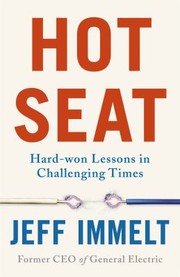
Hot Seat: What I Learned Leading a Great Ame

Hot Seat: What I Learned Leading a Great American Company

Jeff Immelt, Amy Wallace
2021
T3 Open Librarygoodreads

Insider account: Immelt's defence of his sixteen years as CEO.

Summary

Jeff Immelt became chief executive of General Electric four days before the September 2001 attacks and left in 2017 with the company's market value down by roughly half. This memoir, written with Amy Wallace, is his account and his defence. He organises it around the crises he inherited or met: the destruction of the aircraft insurance and leasing businesses after 2001, the collapse of GE Capital's funding in 2008, the Fukushima accident involving GE-designed reactors, the collapse of oil prices after 2014, and the deteriorating economics of gas turbines.

Immelt makes several substantive arguments. He says Jack Welch's GE relied heavily on GE Capital earnings and on accounting flexibility that was no longer available to him, so his GE started from a weaker base than the share price implied. He defends the decision to shrink GE Capital and to buy Alstom's power business, arguing that the industrial logic was sound even though the timing was wrong. He accepts responsibility for GE's culture of relentless optimism, in which executives filtered bad news upward, and he concedes that the digital initiative built around Predix was too broad.

The book is contested at almost every point. Thomas Gryta and Ted Mann's reporting in Lights Out documents earnings management, service-contract accounting and insurance reserve shortfalls in more damaging detail than Immelt allows. Readers should treat this as advocacy from an interested party who nonetheless had access to every decision. Its value lies in the specificity of the operating problems described, particularly the difficulty of running a finance business inside an industrial company after the funding markets change.

Key takeaways 7

  1. GE Capital's earnings had become load-bearing for the whole company, and no industrial performance available to Immelt could replace them.
  2. The GE that Immelt inherited was more fragile than its 2001 valuation suggested, because prior results depended on financial and accounting flexibility.
  3. A culture that punishes bad news produces forecasts that management cannot use.
  4. The Alstom acquisition rested on a demand forecast for gas turbines that the industry as a whole got wrong.
  5. Conglomerate structure is defensible only when the centre adds something the businesses cannot buy in the market.
  6. Immelt argues that GE's post-2008 regulatory designation as a systemically important institution made GE Capital permanently uneconomic.
  7. Chief executives of large public companies spend most of their time on capital allocation and succession, and Immelt says he handled the second badly.

Who should read it

Operators and investors studying conglomerate breakups, industrial companies with captive finance arms, and how a chief executive accounts for a long decline.

Similar books 6

Chosen by shared topics, the entries that hold them, and the people who recommended both.
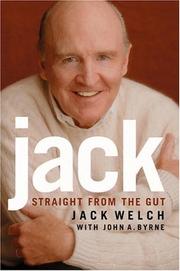
Jack Welch, John A. Byrne · 2001

Running General Electric from 1981 to 2001, as told on retiring.

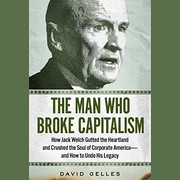
David Gelles · 2022

Polemic treating Welch's GE as the template for shareholder primacy.
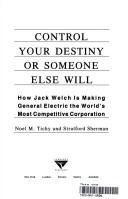
Noel M. Tichy, Stratford Sherman · 1993

The admiring contemporary account of Welch's restructuring.
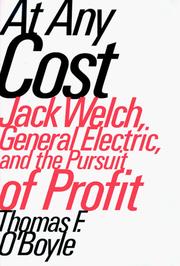
Thomas F. O'Boyle · 1998

The contemporaneous dissent, twenty years ahead of the consensus.
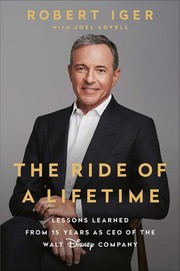
Robert Iger · 2019

Running Disney and buying Pixar, Marvel, Lucasfilm and Fox to add creative talent.

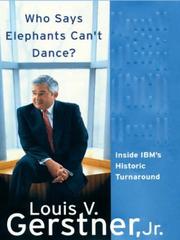
Louis V. Gerstner · 2002

How IBM was kept whole in 1993 and turned from hardware toward services.

Recommended by: Mohnish Pabrai, Aaron Levie

Where it sits in the reference 3

Companies
Business themes
Business themes

Topics

Biography and MemoirLeadershipCompany HistoriesExecutives and Corporate Insiders