Updates

  1. Person pages list letters, writing, profiles and links as sortable tables with filters, and show each person's companies as links; Fund letters show each letter's description in its own column.
  2. Experts show a checked job title and a short description of each person; 30 more people have photographs.
  3. Every company, fund, university and publication the experts work for has a page listing the people there.
  4. Fund letters show each letter's thesis and filter by it; 225 person pages list the essays, columns and newsletter issues the person wrote.
  5. Person pages list every essay and newsletter issue a person wrote, and their own books as a table in List view.
  6. Recommends shows the five largest kinds of book and the rest under More; browse pictures load sooner.
  7. Podcasts and talks link the original episode, filter by Audio and video or Press, and list each publisher once.
  8. Pages are wider, Recommends has List and Grid, and a filter clicked again turns off.
  9. Book cards sit in a ruled grid with Open Library and Goodreads links and each book's one-line note.
  10. Funds is now Investors; each investor's styles are buttons that filter the table.
  11. Podcasts and talks on a person's page filter by year and publisher and show as a list or a grid of pictures.
  12. Quotes show only people's own words: 472 summaries written by list sites are gone.
  13. Country pages open from Browse again, and every link on the shelf lands on a page.
  14. Subject and person pages show their sections as tabs, and each book appears once on a person's page.
  15. Book cards show the quote, who said it and the source; grids show five cards to a row.
  16. On a phone, a menu holds the sections, search, Updates, Feedback and dark mode.
  17. Feedback takes a screenshot of the page with no browser prompt, opens a screenshot full size when you click it, and clears itself once sent.
  18. Book cards are centred, search names the topic each book sits in, and any text cut short shows whole on hover.
  19. Search groups its results by kind: people, companies, geographies, subjects, topics, books, funds, fund letters and papers.
  20. The Books table lists who recommended each book by name, and the browser tab names the section you are in.
  21. Feedback can take a screenshot of the page, or one you paste or choose, and opens in the corner beside Updates.
  22. Each rail button reopens its section where you left it, and Browse, Table and People show on every book and subject page.
  23. Filters grey out choices that hold nothing instead of hiding them, and Books › People filters by authors or recommenders.
  24. Feedback takes a subject line and up to three screenshots.
  25. Biographies are grouped by the person they are about: 41 new pages, from Abraham Lincoln to Lee Kuan Yew.
  26. Sport splits into 23 sports, and Religion into one topic per faith.
  27. Book lists show as cards: the cover, one recommendation quote and every recommender by name.
  28. Seventeen subjects that had two or three pages under different names now have one page each.
  29. Every page lists its Experts as authors and recommenders, with a link to them on the Experts tab.
  30. Economics, Financial history, Financial panics and Accounting are subjects of their own, with one page per financial crisis.
  31. Book, person and subject pages open inside the app, so the tabs stay in view.
  32. 996 more book covers, and photographs or logos for 227 more people and companies.
  33. Books › Browse shows every subject as cards, and the rail holds Fund letters, Papers, Experts, Books and Funds.
  34. Every topic over 150 books splits into narrower topics, each with a page of its own.

Send feedback

What is it?
Screenshots, up to 3 (optional)
or paste one with Ctrl+V

We use your email only to reply to you.

The Man Who Broke Capitalism

The Man Who Broke Capitalism

David Gelles
2022
T3 137 pages · about 2h 17m to read Open Librarygoodreads

Polemic treating Welch's GE as the template for shareholder primacy.

Summary

Gelles, a New York Times reporter, argues that Jack Welch's twenty years at General Electric established a management model that spread across American business and did serious damage, and that Welch's reputation as the century's greatest manager should be reconsidered.

His case has three parts. Downsizing: Welch cut over one hundred thousand jobs in his first years and made large-scale layoffs a routine management tool rather than a response to distress. Dealmaking: GE made hundreds of acquisitions and divestitures, which Gelles argues substituted portfolio activity for operating improvement and made the company impossible to analyse. Financialisation: GE Capital grew to produce roughly half of the company's profits, which meant an industrial company's reported earnings depended on a lightly regulated finance business funded in commercial paper markets, and this is what nearly destroyed GE in 2008.

Gelles also documents the earnings management, arguing that GE's remarkably smooth reported earnings growth was produced by adjusting reserves and timing gains at GE Capital, and that the SEC later found accounting violations.

The diffusion argument follows Welch's executives into Boeing, Home Depot, Albertsons and elsewhere, where Gelles traces similar outcomes.

The book is argued from a position and Gelles attributes to Welch a great deal that was happening across the economy for other reasons, including competitive pressure, capital market structure and technology. The specific evidence on GE Capital, on earnings management and on the successor companies is well documented.

Key takeaways 7

  1. General Electric's reported earnings smoothness was produced by adjusting reserves and timing gains at GE Capital rather than by operating consistency.
  2. GE Capital grew to produce roughly half of the company's profits, which made an industrial company dependent on wholesale funding markets it did not control.
  3. Welch made large-scale layoffs a routine management tool used during profitable periods rather than a response to distress.
  4. Continuous acquisition and divestiture substituted portfolio activity for operating improvement and made the company's results impossible to analyse from outside.
  5. Forced ranking that dismissed the bottom tier of employees each year produced the reporting behaviour and internal competition that the system rewarded.
  6. Executives trained under this model took it to other large companies, where Gelles traces similar outcomes at Boeing, Home Depot and elsewhere.
  7. A management reputation built on twenty years of reported results should be assessed against what happened to the company afterwards.

Who should read it

Executives and investors reassessing the shareholder value management model and the specific case of GE's financialisation.

Similar books 6

Chosen by shared topics, the entries that hold them, and the people who recommended both.
Noel M. Tichy, Stratford Sherman · 1993

The admiring contemporary account of Welch's restructuring.
Thomas F. O'Boyle · 1998

The contemporaneous dissent, twenty years ahead of the consensus.
Jeff Immelt, Amy Wallace · 2021

Insider account: Immelt's defence of his sixteen years as CEO.
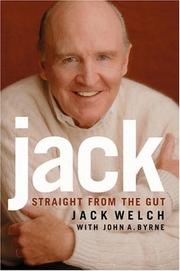
Jack Welch, John A. Byrne · 2001

Running General Electric from 1981 to 2001, as told on retiring.

Robert Slater · 1998

Contemporary admiring account; useful as a record of what people believed.

Where it sits in the reference 5

Companies
Biographies
Business themes
Investment styles
Business themes

Topics

Biography and MemoirCompany HistoriesBusiness and ManagementExecutives and Corporate Insiders