Updates

  1. Person pages list letters, writing, profiles and links as sortable tables with filters, and show each person's companies as links; Fund letters show each letter's description in its own column.
  2. Experts show a checked job title and a short description of each person; 30 more people have photographs.
  3. Every company, fund, university and publication the experts work for has a page listing the people there.
  4. Fund letters show each letter's thesis and filter by it; 225 person pages list the essays, columns and newsletter issues the person wrote.
  5. Person pages list every essay and newsletter issue a person wrote, and their own books as a table in List view.
  6. Recommends shows the five largest kinds of book and the rest under More; browse pictures load sooner.
  7. Podcasts and talks link the original episode, filter by Audio and video or Press, and list each publisher once.
  8. Pages are wider, Recommends has List and Grid, and a filter clicked again turns off.
  9. Book cards sit in a ruled grid with Open Library and Goodreads links and each book's one-line note.
  10. Funds is now Investors; each investor's styles are buttons that filter the table.
  11. Podcasts and talks on a person's page filter by year and publisher and show as a list or a grid of pictures.
  12. Quotes show only people's own words: 472 summaries written by list sites are gone.
  13. Country pages open from Browse again, and every link on the shelf lands on a page.
  14. Subject and person pages show their sections as tabs, and each book appears once on a person's page.
  15. Book cards show the quote, who said it and the source; grids show five cards to a row.
  16. On a phone, a menu holds the sections, search, Updates, Feedback and dark mode.
  17. Feedback takes a screenshot of the page with no browser prompt, opens a screenshot full size when you click it, and clears itself once sent.
  18. Book cards are centred, search names the topic each book sits in, and any text cut short shows whole on hover.
  19. Search groups its results by kind: people, companies, geographies, subjects, topics, books, funds, fund letters and papers.
  20. The Books table lists who recommended each book by name, and the browser tab names the section you are in.
  21. Feedback can take a screenshot of the page, or one you paste or choose, and opens in the corner beside Updates.
  22. Each rail button reopens its section where you left it, and Browse, Table and People show on every book and subject page.
  23. Filters grey out choices that hold nothing instead of hiding them, and Books › People filters by authors or recommenders.
  24. Feedback takes a subject line and up to three screenshots.
  25. Biographies are grouped by the person they are about: 41 new pages, from Abraham Lincoln to Lee Kuan Yew.
  26. Sport splits into 23 sports, and Religion into one topic per faith.
  27. Book lists show as cards: the cover, one recommendation quote and every recommender by name.
  28. Seventeen subjects that had two or three pages under different names now have one page each.
  29. Every page lists its Experts as authors and recommenders, with a link to them on the Experts tab.
  30. Economics, Financial history, Financial panics and Accounting are subjects of their own, with one page per financial crisis.
  31. Book, person and subject pages open inside the app, so the tabs stay in view.
  32. 996 more book covers, and photographs or logos for 227 more people and companies.
  33. Books › Browse shows every subject as cards, and the rail holds Fund letters, Papers, Experts, Books and Funds.
  34. Every topic over 150 books splits into narrower topics, each with a page of its own.

Send feedback

What is it?
Screenshots, up to 3 (optional)
or paste one with Ctrl+V

We use your email only to reply to you.

The Turnaround Kid

The Turnaround Kid

Steve Miller
2008
T3 Open Librarygoodreads

Insider account from a serial restructuring CEO.

Summary

Miller spent his career as a restructuring executive and wrote a memoir covering the assignments he is known for: the Chrysler rescue under Lee Iacocca, where he negotiated with the hundreds of banks holding the company's debt; Bethlehem Steel, where he oversaw the bankruptcy and the sale of assets to Wilbur Ross's ISG; Federal-Mogul; and Delphi, the auto parts business spun off from General Motors, which he took into Chapter 11 in 2005.

The recurring analytical content concerns legacy costs. Miller argues that the American manufacturers and their suppliers made pension and retiree healthcare commitments in periods when the ratio of workers to retirees made them appear affordable, and that when the ratio inverted the obligations became unpayable. At Bethlehem the company was supporting many times more retirees than employees. At Delphi the labour cost per hour under inherited General Motors agreements was multiples of what competitors paid. He argues that bankruptcy became the only mechanism by which these commitments could be reset, since neither party would agree to reduce them voluntarily, and he is direct that this transfers the loss to retirees and to the Pension Benefit Guaranty Corporation.

The practical content covers what he does on arrival: establish the cash position immediately, determine which businesses have a future, communicate the same message to every stakeholder, and move quickly because credibility decays.

Miller is candid about being the person who delivers these outcomes and about the personal cost, including his wife's illness during the Delphi period. He is less reflective about whether the alternatives he rejected were viable, and the Delphi outcome in particular is contested by the unions and salaried retirees who lost benefits. The book is an executive's account and readers should treat the framing accordingly.

Key takeaways 7

  1. Legacy pension and retiree healthcare commitments became unpayable when the ratio of active workers to retirees inverted.
  2. Bethlehem Steel supported many times more retirees than active employees, which made the operating business irrelevant to its solvency.
  3. Bankruptcy became the only mechanism for resetting labour and benefit commitments because neither party would reduce them voluntarily.
  4. Establishing the actual cash position is the first task on arriving at a distressed company, because reported figures are unreliable.
  5. A restructuring executive's credibility decays from the moment of arrival, so decisions must be made faster than the analysis would prefer.
  6. Delivering the same message to every stakeholder is necessary because inconsistency destroys the negotiating position with all of them.
  7. Resetting obligations through bankruptcy transfers the loss to retirees and to the public pension guarantee system rather than eliminating it.

Who should read it

Directors, operators and investors dealing with distressed companies carrying legacy obligations, who want a practitioner's account of the sequence and the trade-offs.

Similar books 6

Chosen by shared topics, the entries that hold them, and the people who recommended both.

Stuart Slatter, David Lovett · 1999

The systematic practitioner framework.
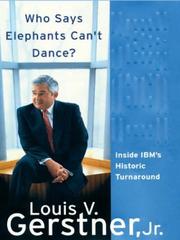
Louis V. Gerstner · 2002

How IBM was kept whole in 1993 and turned from hardware toward services.

Recommended by: Mohnish Pabrai, Aaron Levie

Bryce G. Hoffman · 2012

The 2006-2010 turnaround told with close management access.

Recommended by: Mohnish Pabrai
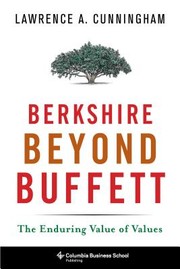
Lawrence A. Cunningham · 2014

Berkshire as an operating company: its subsidiaries' culture and whether it lasts.

Recommended by: Mohnish Pabrai

Where it sits in the reference 4

Business themes
Business themes
Investment styles
Business themes

Topics

Biography and MemoirBusiness and ManagementExecutives and Corporate Insiders