Updates

  1. Person pages list letters, writing, profiles and links as sortable tables with filters, and show each person's companies as links; Fund letters show each letter's description in its own column.
  2. Experts show a checked job title and a short description of each person; 30 more people have photographs.
  3. Every company, fund, university and publication the experts work for has a page listing the people there.
  4. Fund letters show each letter's thesis and filter by it; 225 person pages list the essays, columns and newsletter issues the person wrote.
  5. Person pages list every essay and newsletter issue a person wrote, and their own books as a table in List view.
  6. Recommends shows the five largest kinds of book and the rest under More; browse pictures load sooner.
  7. Podcasts and talks link the original episode, filter by Audio and video or Press, and list each publisher once.
  8. Pages are wider, Recommends has List and Grid, and a filter clicked again turns off.
  9. Book cards sit in a ruled grid with Open Library and Goodreads links and each book's one-line note.
  10. Funds is now Investors; each investor's styles are buttons that filter the table.
  11. Podcasts and talks on a person's page filter by year and publisher and show as a list or a grid of pictures.
  12. Quotes show only people's own words: 472 summaries written by list sites are gone.
  13. Country pages open from Browse again, and every link on the shelf lands on a page.
  14. Subject and person pages show their sections as tabs, and each book appears once on a person's page.
  15. Book cards show the quote, who said it and the source; grids show five cards to a row.
  16. On a phone, a menu holds the sections, search, Updates, Feedback and dark mode.
  17. Feedback takes a screenshot of the page with no browser prompt, opens a screenshot full size when you click it, and clears itself once sent.
  18. Book cards are centred, search names the topic each book sits in, and any text cut short shows whole on hover.
  19. Search groups its results by kind: people, companies, geographies, subjects, topics, books, funds, fund letters and papers.
  20. The Books table lists who recommended each book by name, and the browser tab names the section you are in.
  21. Feedback can take a screenshot of the page, or one you paste or choose, and opens in the corner beside Updates.
  22. Each rail button reopens its section where you left it, and Browse, Table and People show on every book and subject page.
  23. Filters grey out choices that hold nothing instead of hiding them, and Books › People filters by authors or recommenders.
  24. Feedback takes a subject line and up to three screenshots.
  25. Biographies are grouped by the person they are about: 41 new pages, from Abraham Lincoln to Lee Kuan Yew.
  26. Sport splits into 23 sports, and Religion into one topic per faith.
  27. Book lists show as cards: the cover, one recommendation quote and every recommender by name.
  28. Seventeen subjects that had two or three pages under different names now have one page each.
  29. Every page lists its Experts as authors and recommenders, with a link to them on the Experts tab.
  30. Economics, Financial history, Financial panics and Accounting are subjects of their own, with one page per financial crisis.
  31. Book, person and subject pages open inside the app, so the tabs stay in view.
  32. 996 more book covers, and photographs or logos for 227 more people and companies.
  33. Books › Browse shows every subject as cards, and the rail holds Fund letters, Papers, Experts, Books and Funds.
  34. Every topic over 150 books splits into narrower topics, each with a page of its own.

Send feedback

What is it?
Screenshots, up to 3 (optional)
or paste one with Ctrl+V

We use your email only to reply to you.

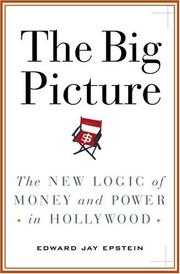
The Big Picture

The Big Picture

Edward Jay Epstein
2005
T2 396 pages · about 6h 36m to read Open Librarygoodreads

Where studio money actually comes from, line by line.

Summary

Edward Jay Epstein investigated the economics of Hollywood using studio financial documents, and this book reports what they show. His central finding is that the theatrical box office, which is what the press reports and what the industry discusses, is not where the studios make money.

The accounting he reconstructs shows that a major studio's revenue comes predominantly from home video, television licensing, pay television and international distribution, with theatrical release functioning as a marketing event that establishes a title's value in those channels. He documents the specific splits: the exhibitor's share of box office, the marketing cost that studios bear, and the resulting theatrical contribution, which is frequently negative even for successful films. He also covers the six companies that controlled distribution, which he calls the sexopoly, and explains the barriers that kept the group closed: the library, the distribution infrastructure, the relationships with exhibitors and broadcasters, and the ability to absorb losses.

The second half covers the social and political machinery of the business: the talent agencies and their control of packaging, the accounting practices that make participation in net profits worthless, the studios' relationship with technology and their handling of each new distribution format. Epstein's data comes from a specific period in the early 2000s, and the economics have changed enormously since: home video collapsed, streaming replaced television licensing, and the studios' ownership changed. The analytical method, of following the actual cash rather than the reported box office, remains the right approach.

Key takeaways 7

  1. Theatrical box office is a marketing event that establishes value in other channels rather than the studios' main revenue source.
  2. Home video and television licensing supplied the majority of studio revenue during the period Epstein documents.
  3. Successful films frequently produce negative theatrical contribution once the exhibitor's share and marketing costs are counted.
  4. Six companies controlled distribution and the barrier to entry was the library and the distribution infrastructure rather than the ability to make films.
  5. Net profit participation in studio contracts is structured so that it almost never pays, and gross participation is the only meaningful form.
  6. Talent agencies capture value by packaging talent and selling the package, which places them between the studio and the people it needs.
  7. Epstein argues that following the actual cash rather than reported box office reverses most conclusions about which films succeed.

Who should read it

Investors and operators in film and media who want the cash economics of the studio business rather than its public accounting.

Similar books 6

Chosen by shared topics, the entries that hold them, and the people who recommended both.
James B. Stewart · 2005

Michael Eisner's twenty years running Disney, from turnaround to shareholder revolt.

Recommended by: Kara Swisher

Robert Iger · 2019

Running Disney and buying Pixar, Marvel, Lucasfilm and Fox to add creative talent.

Where it sits in the reference 3

Business themes
Industries
Business themes

Topics

Business and ManagementSociology and CultureMedia and technology in society